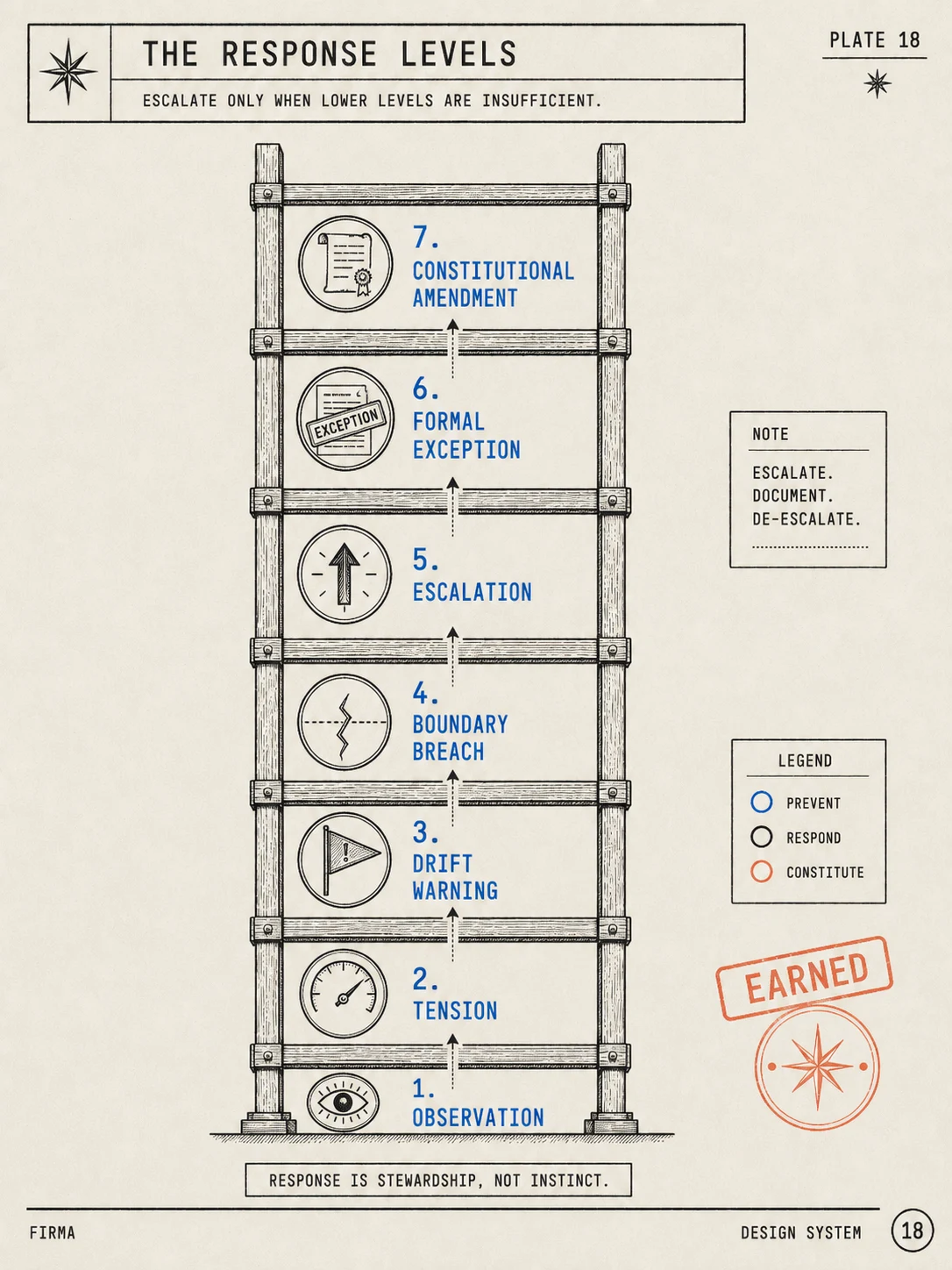
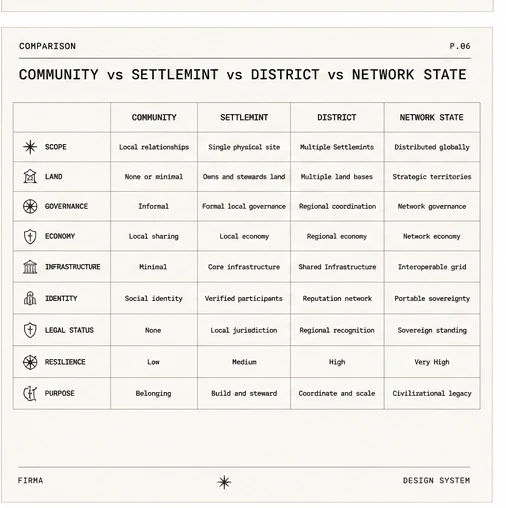
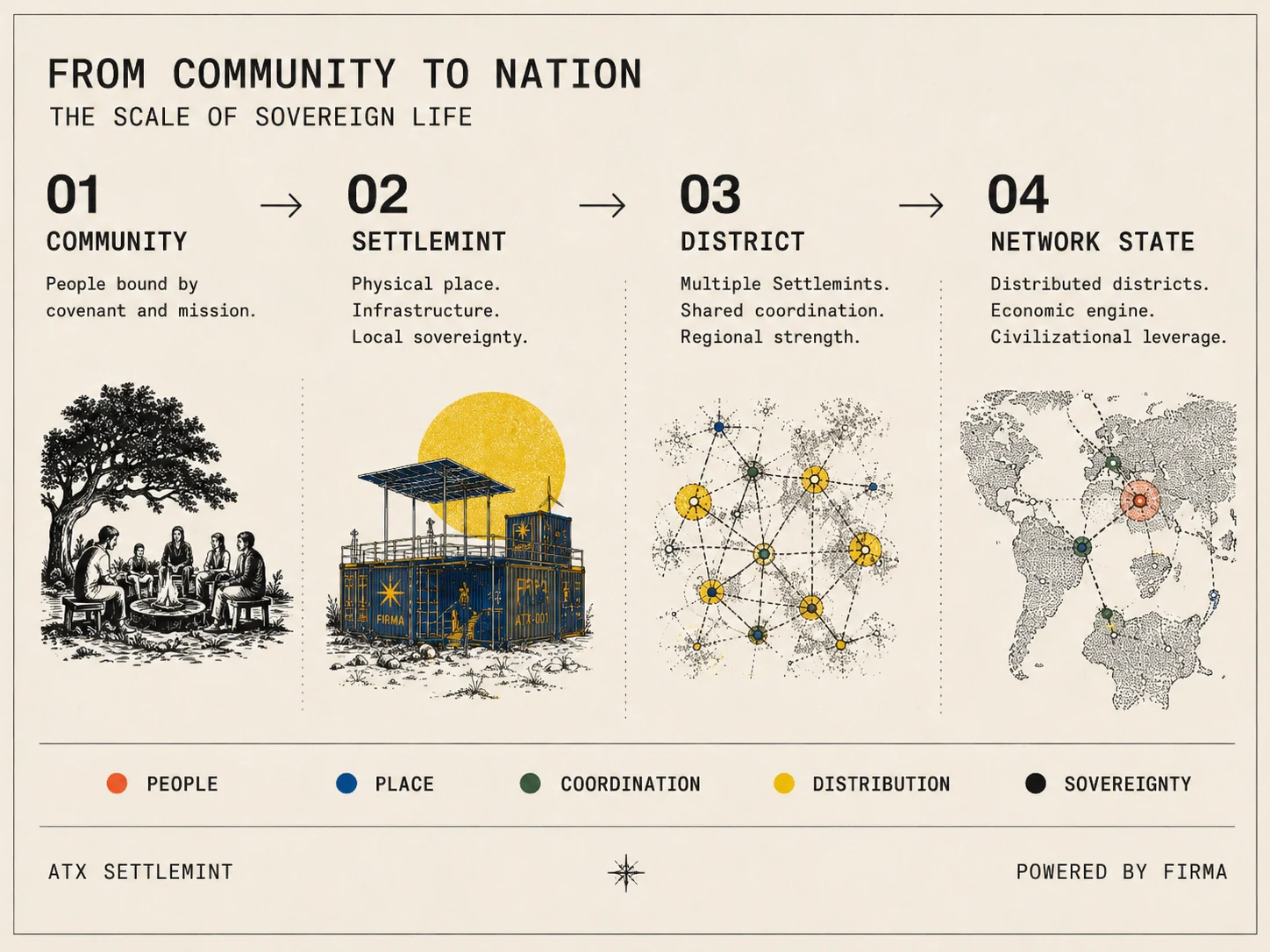
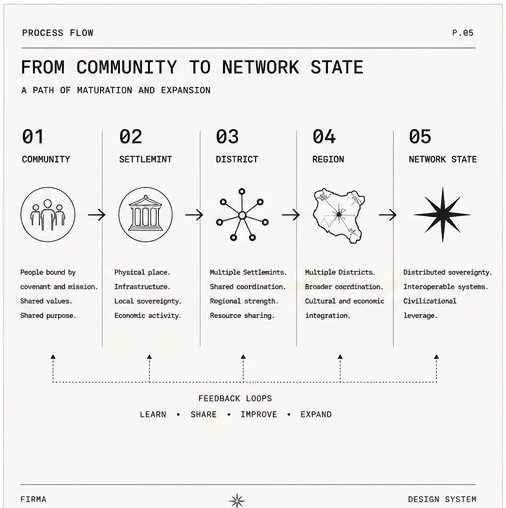
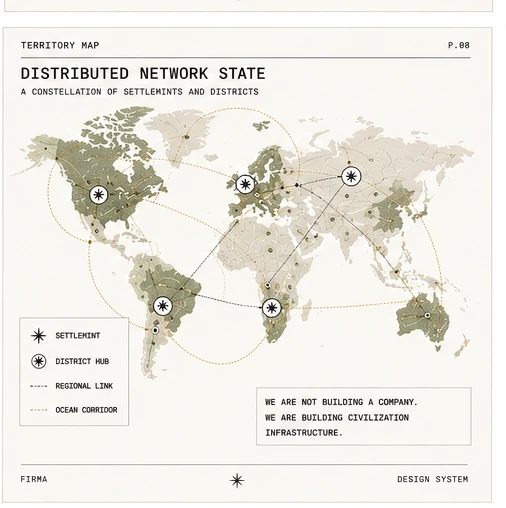
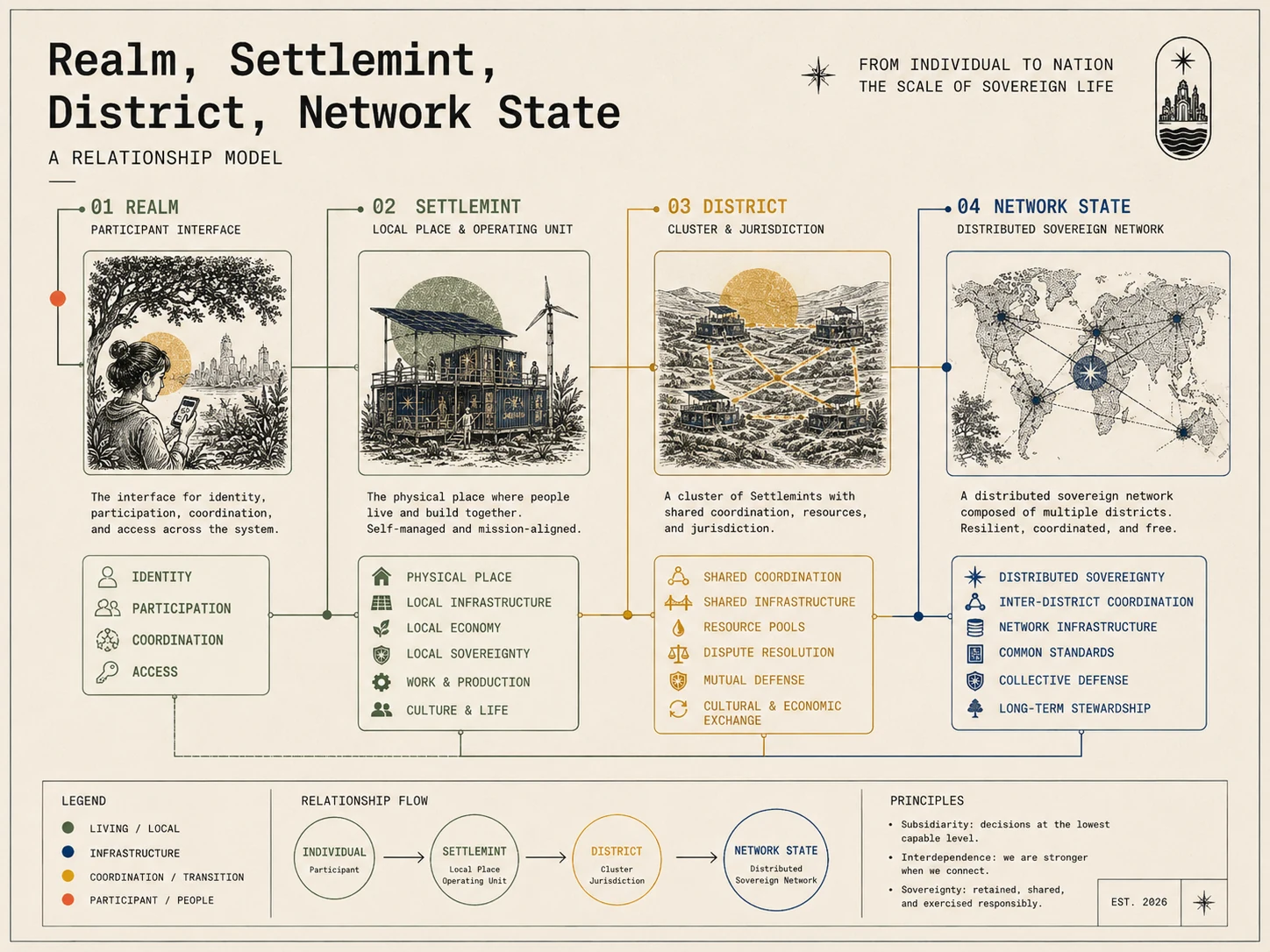
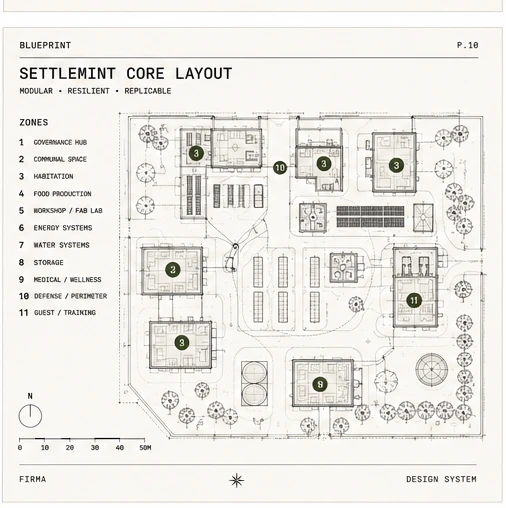
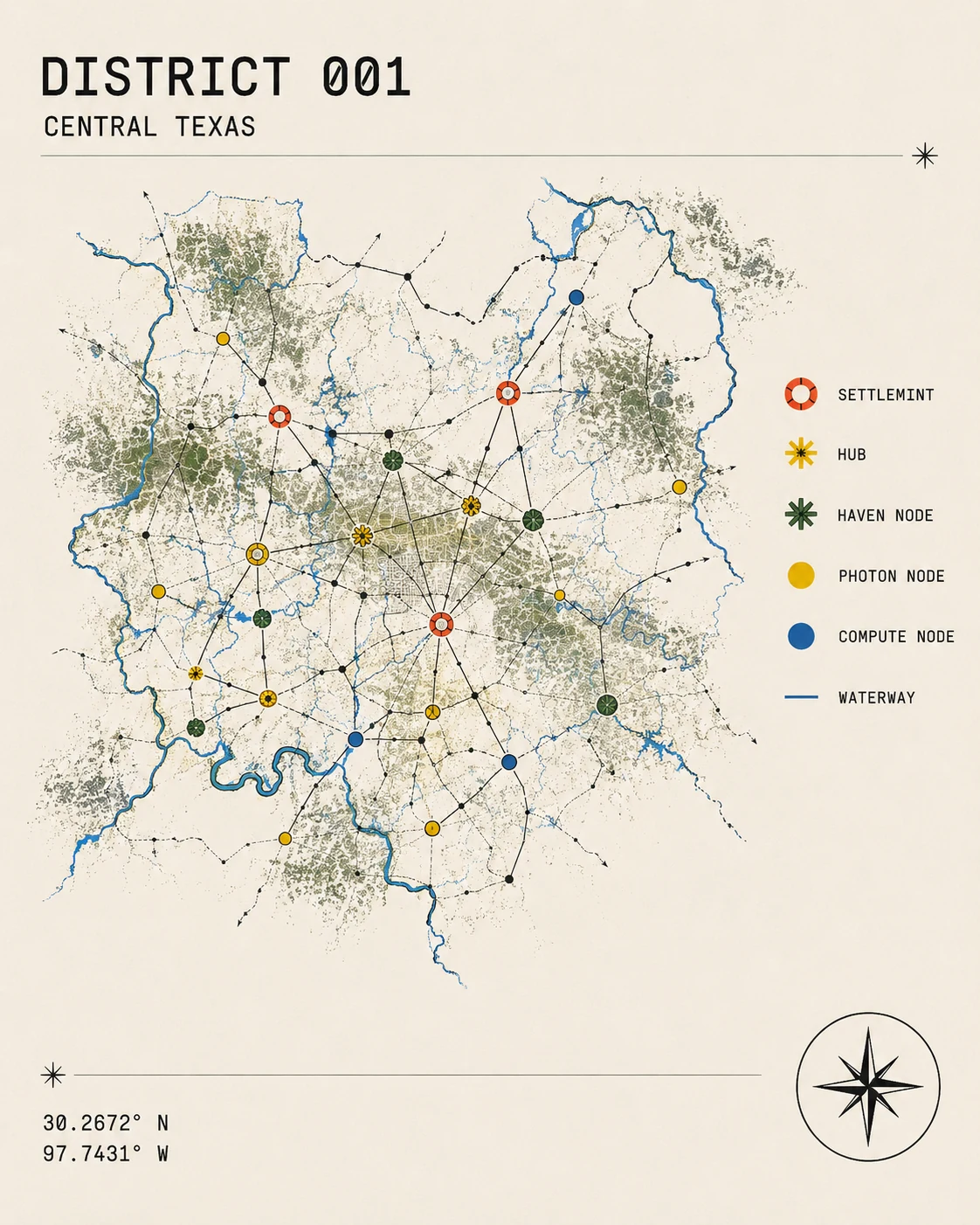
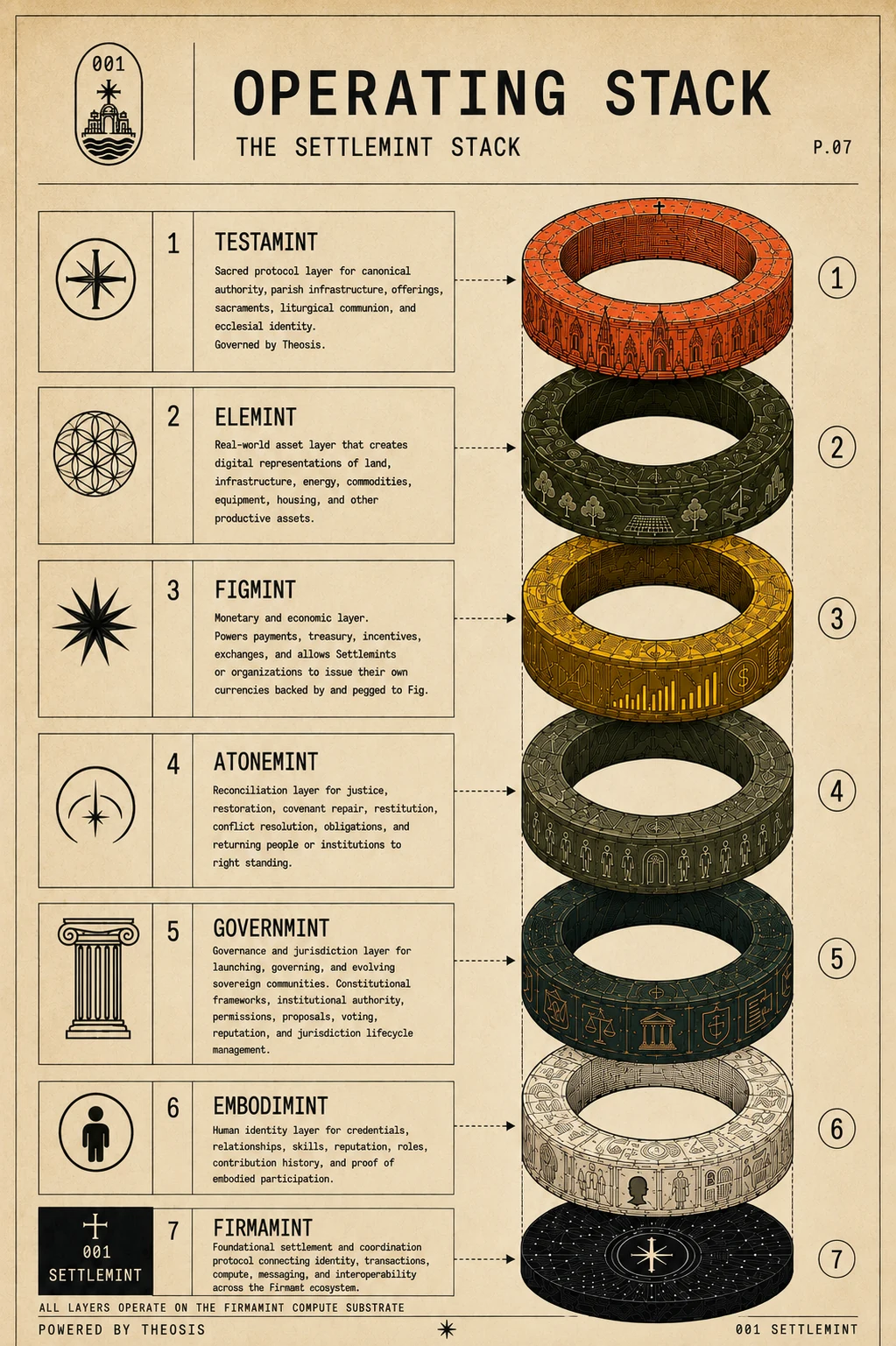
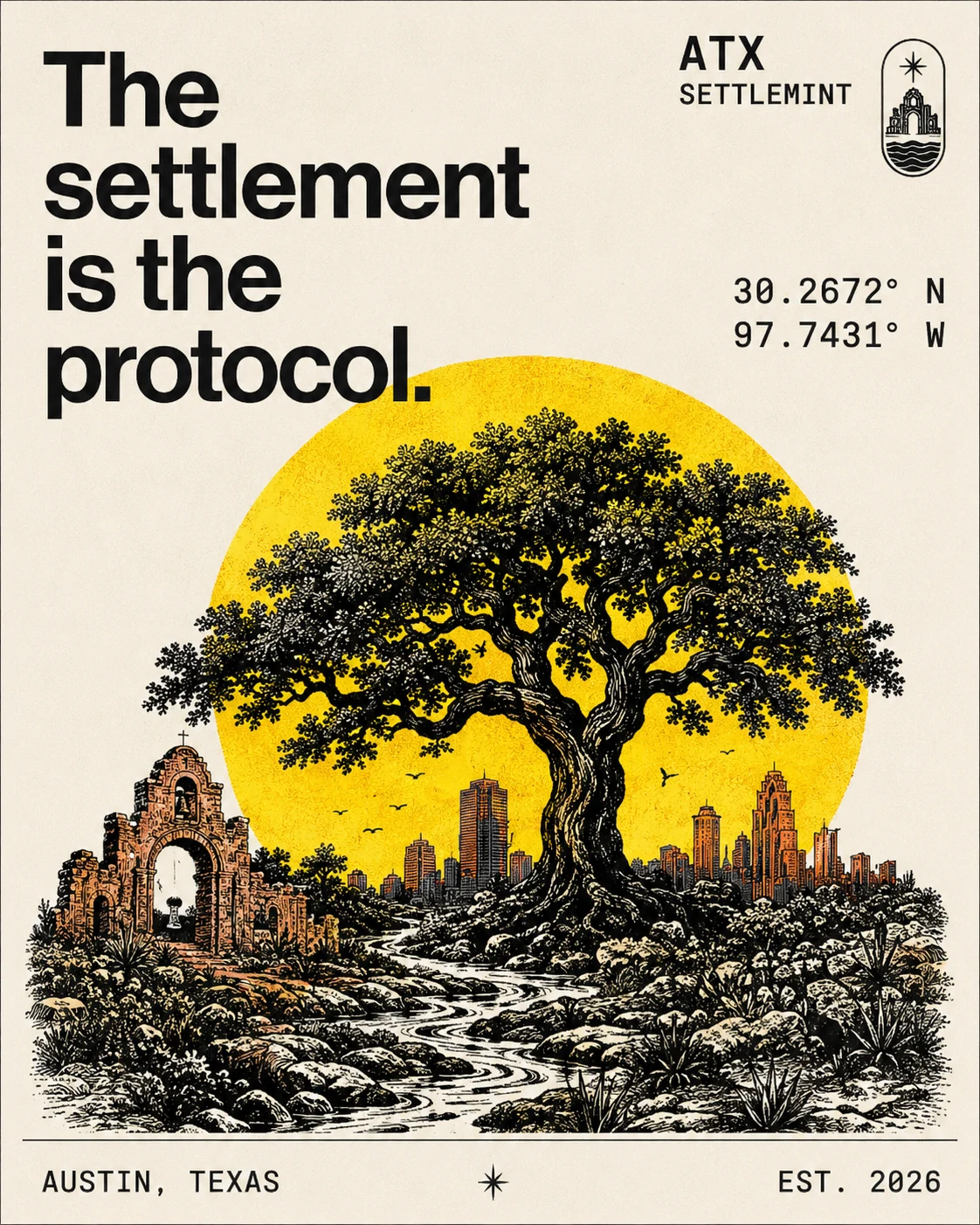
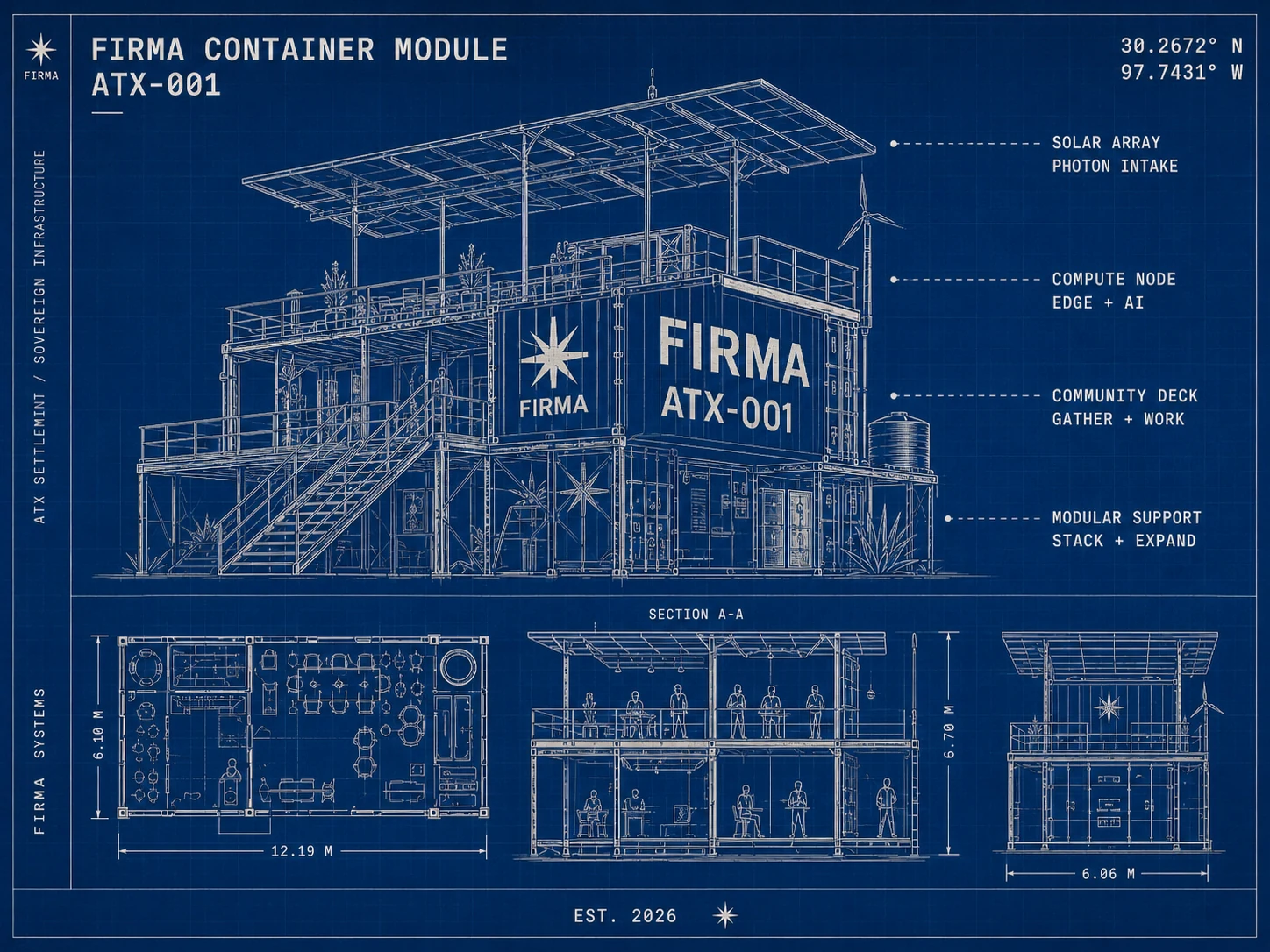
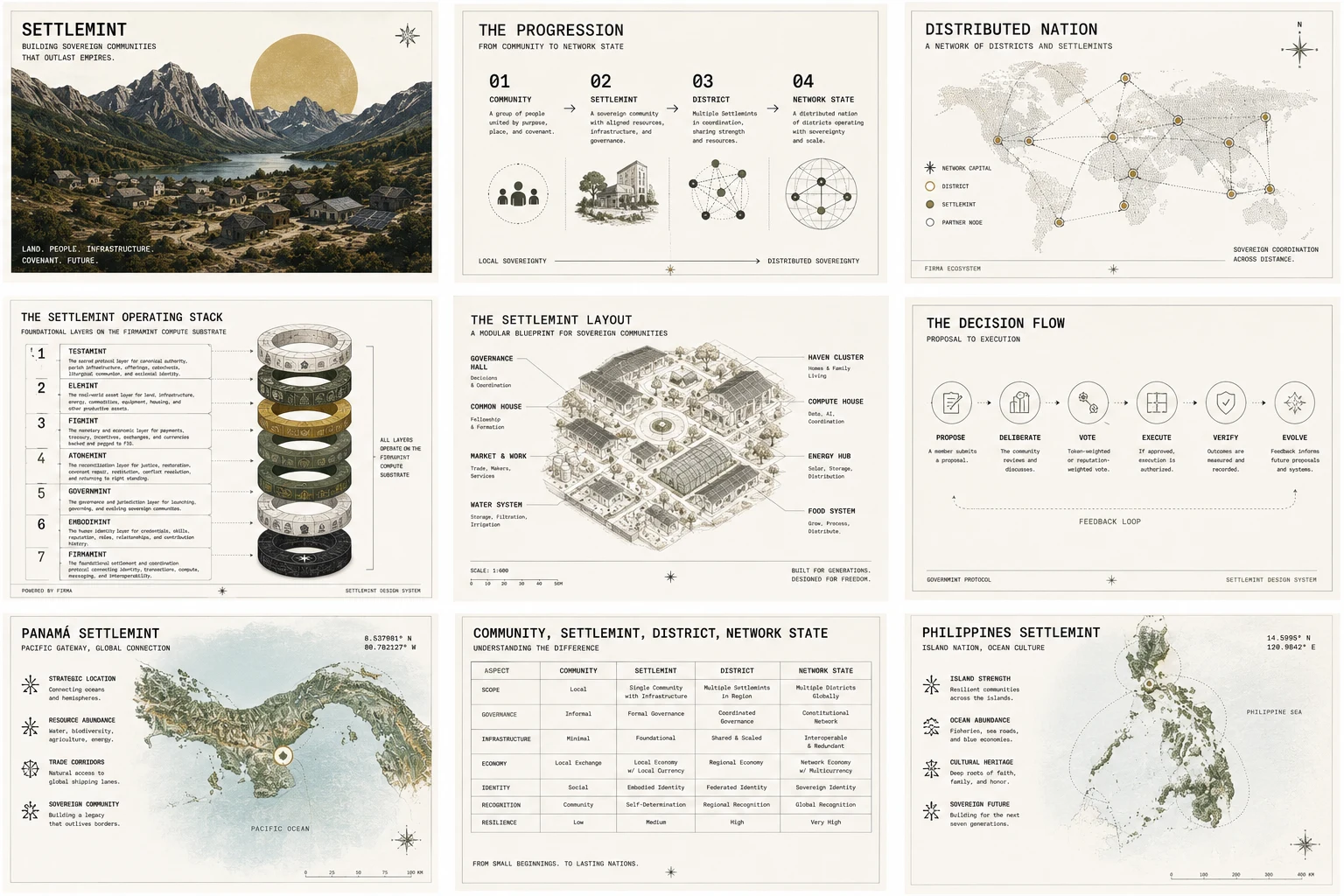
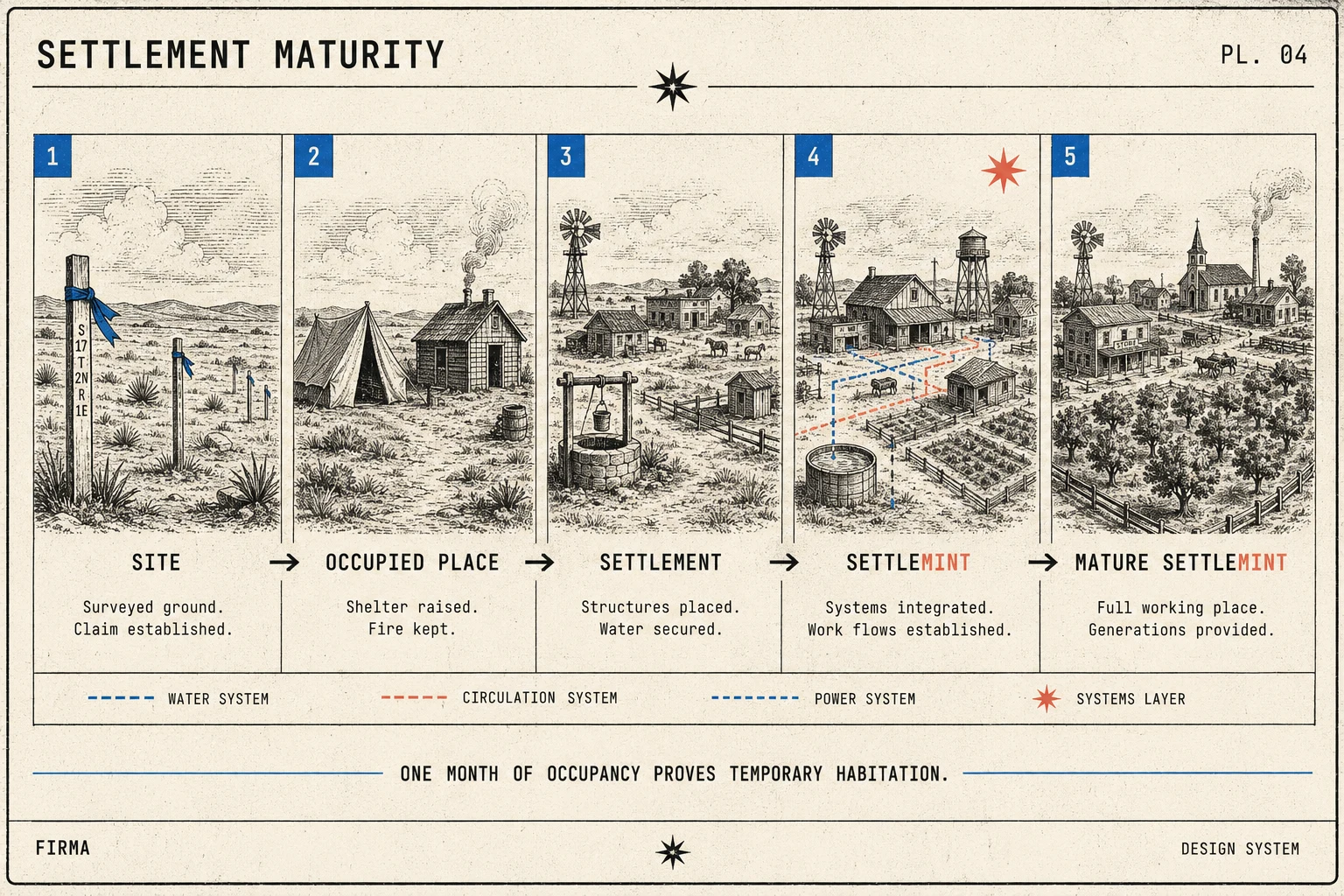
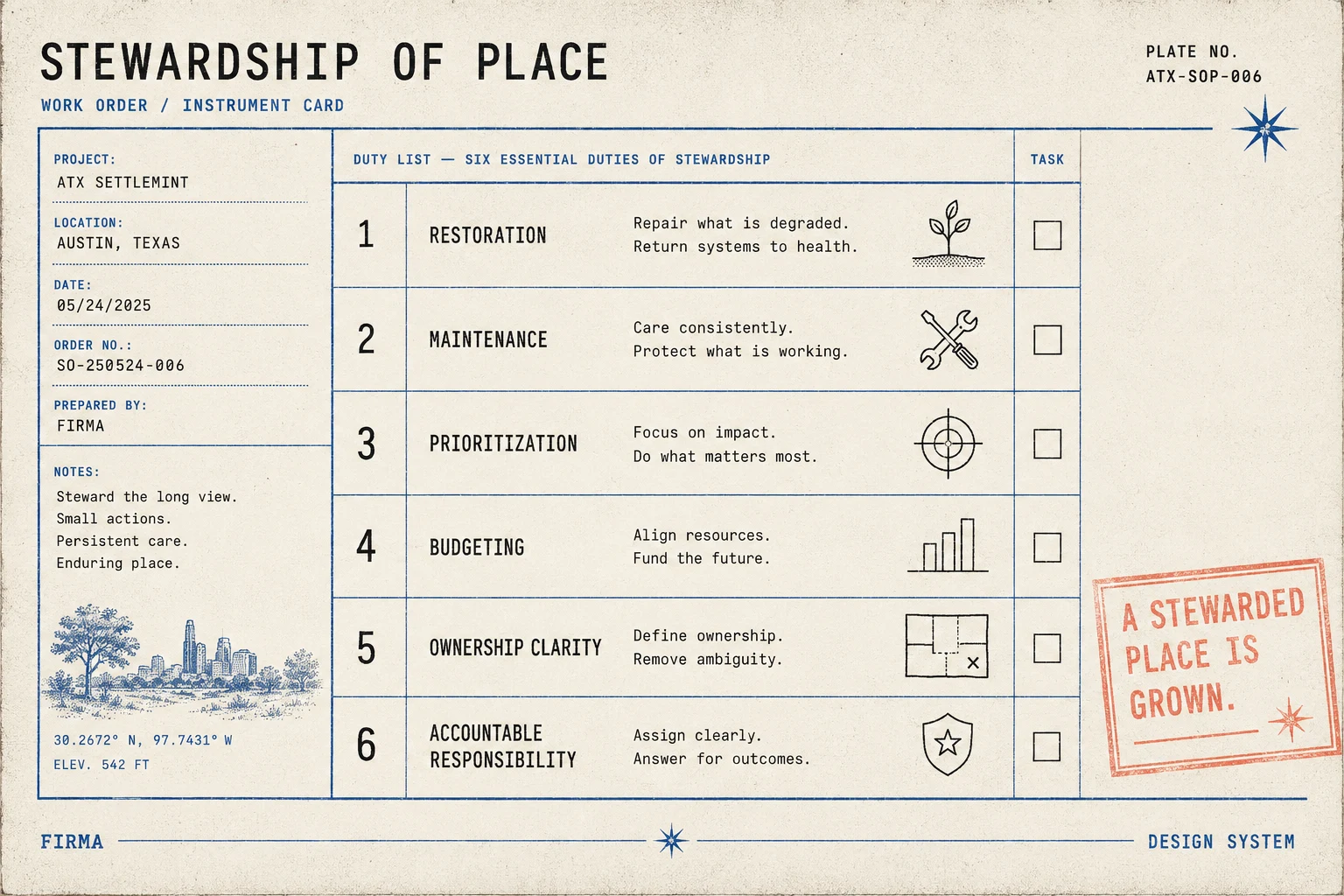
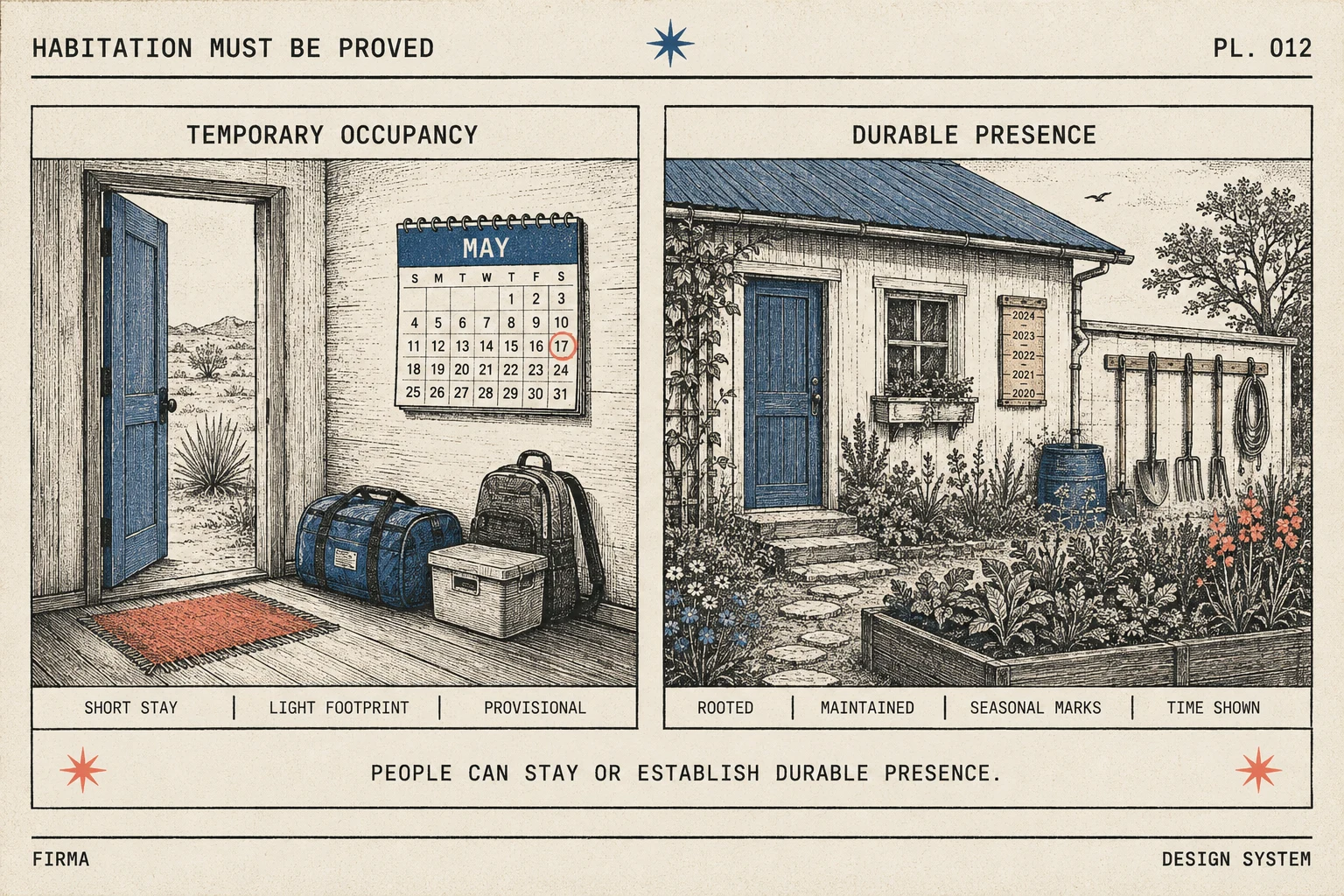
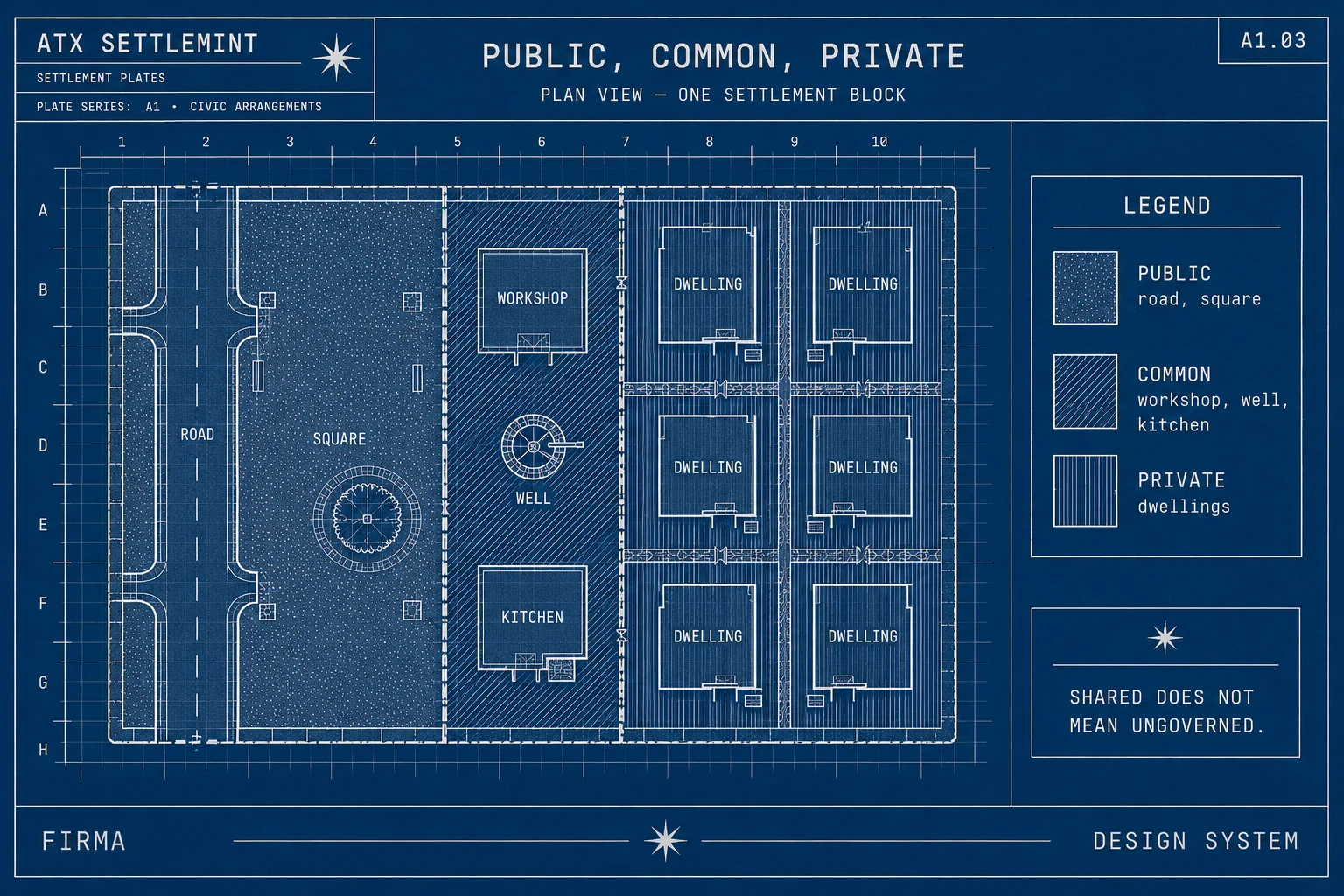
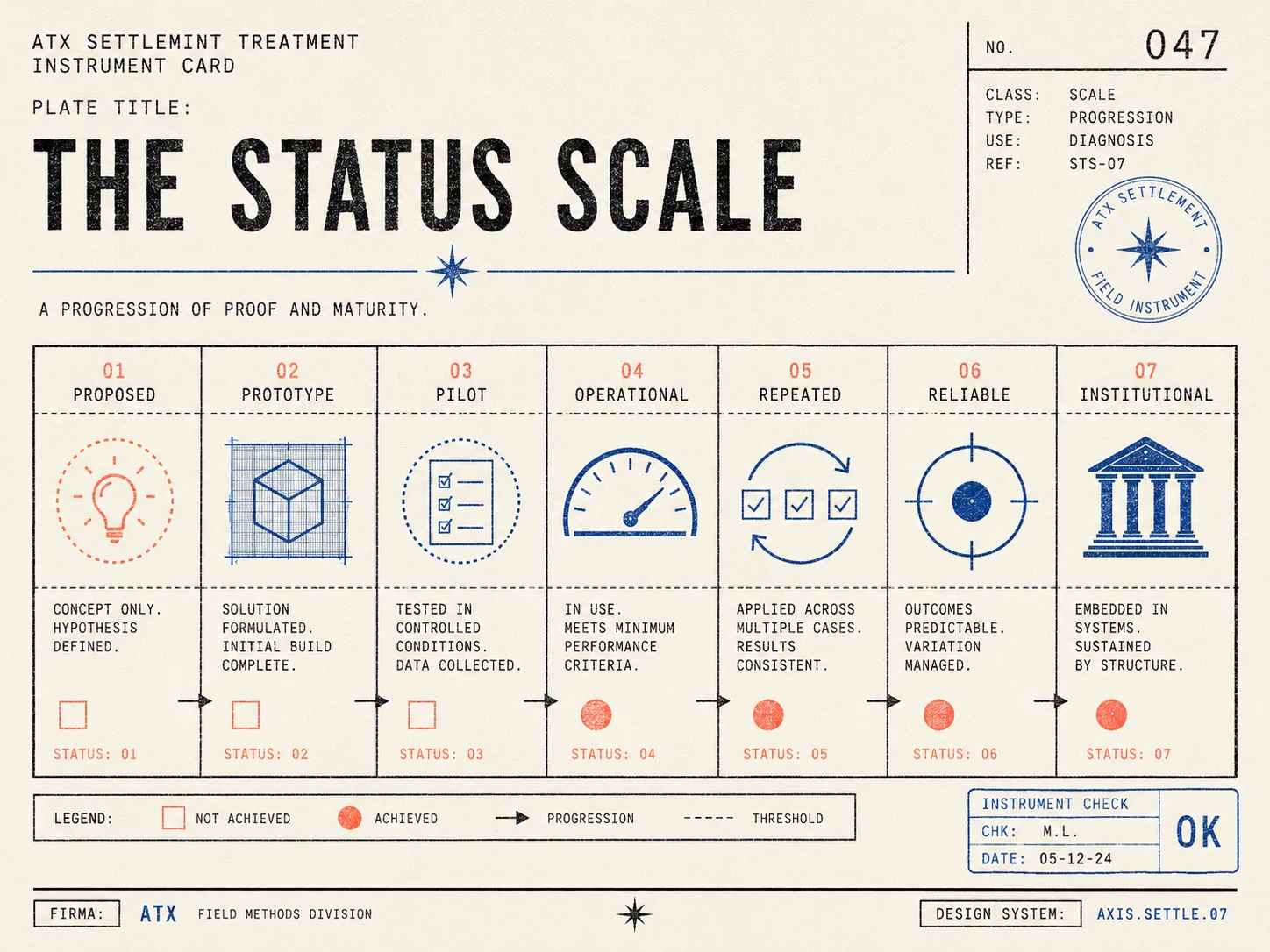
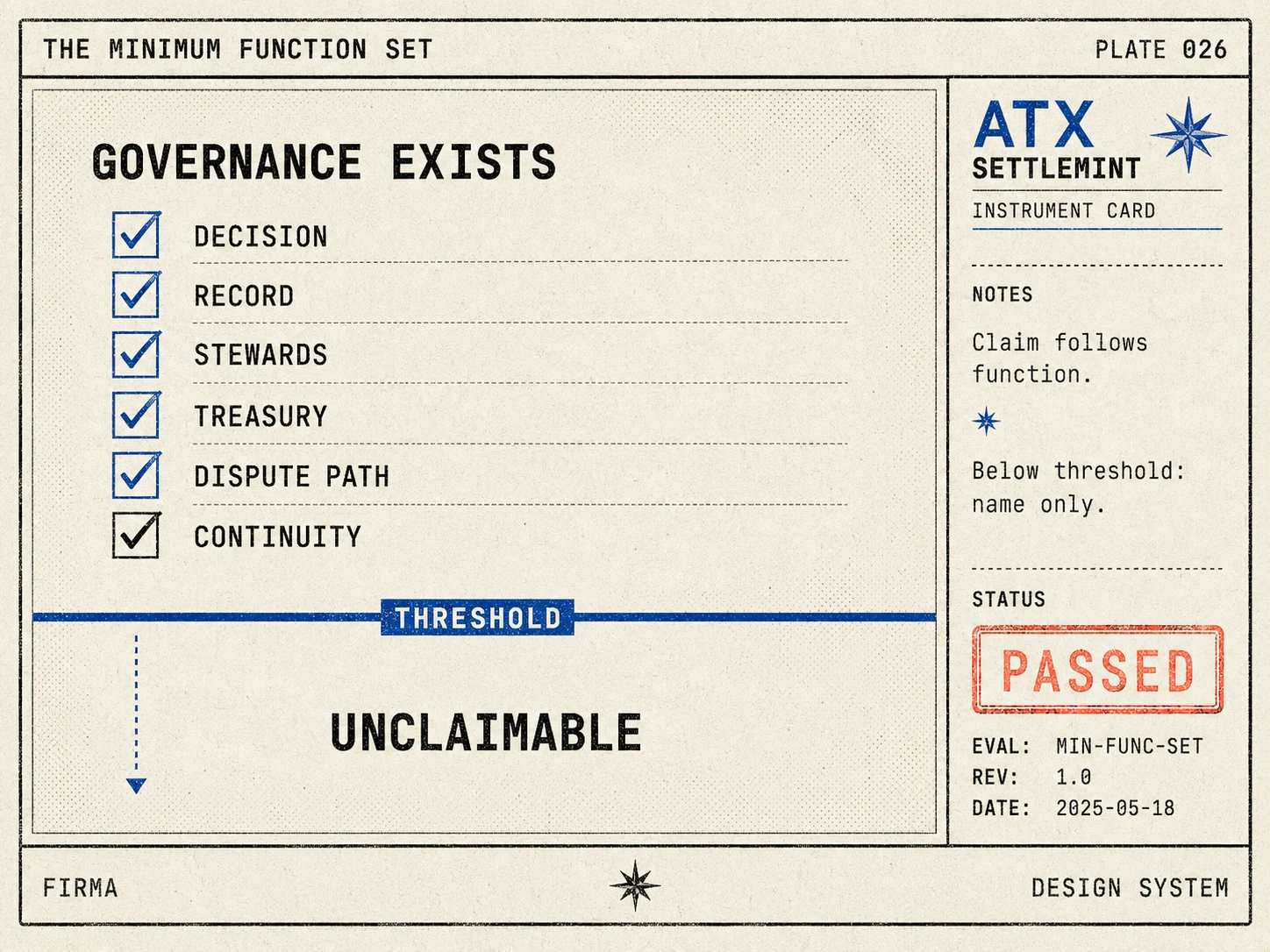
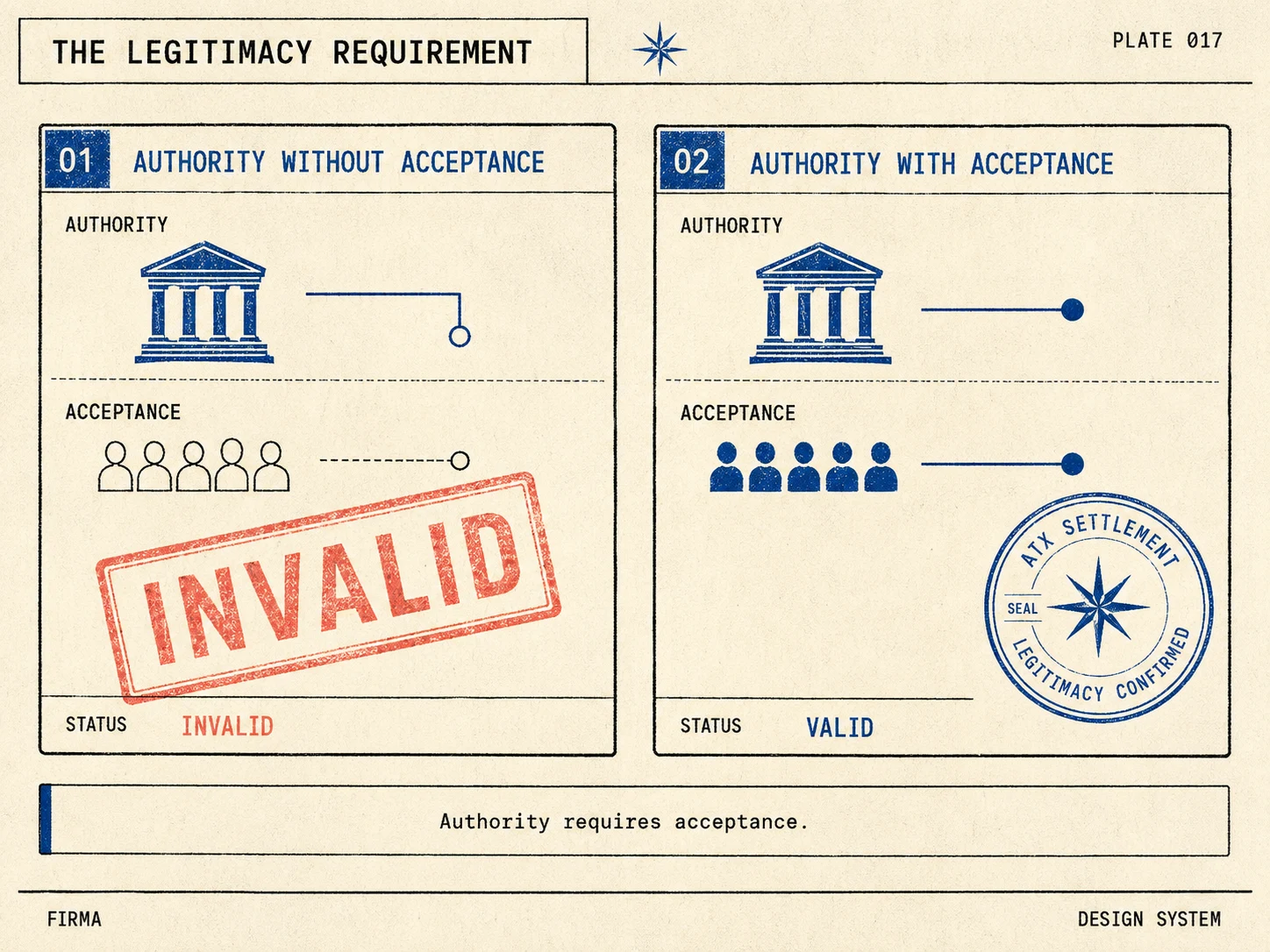
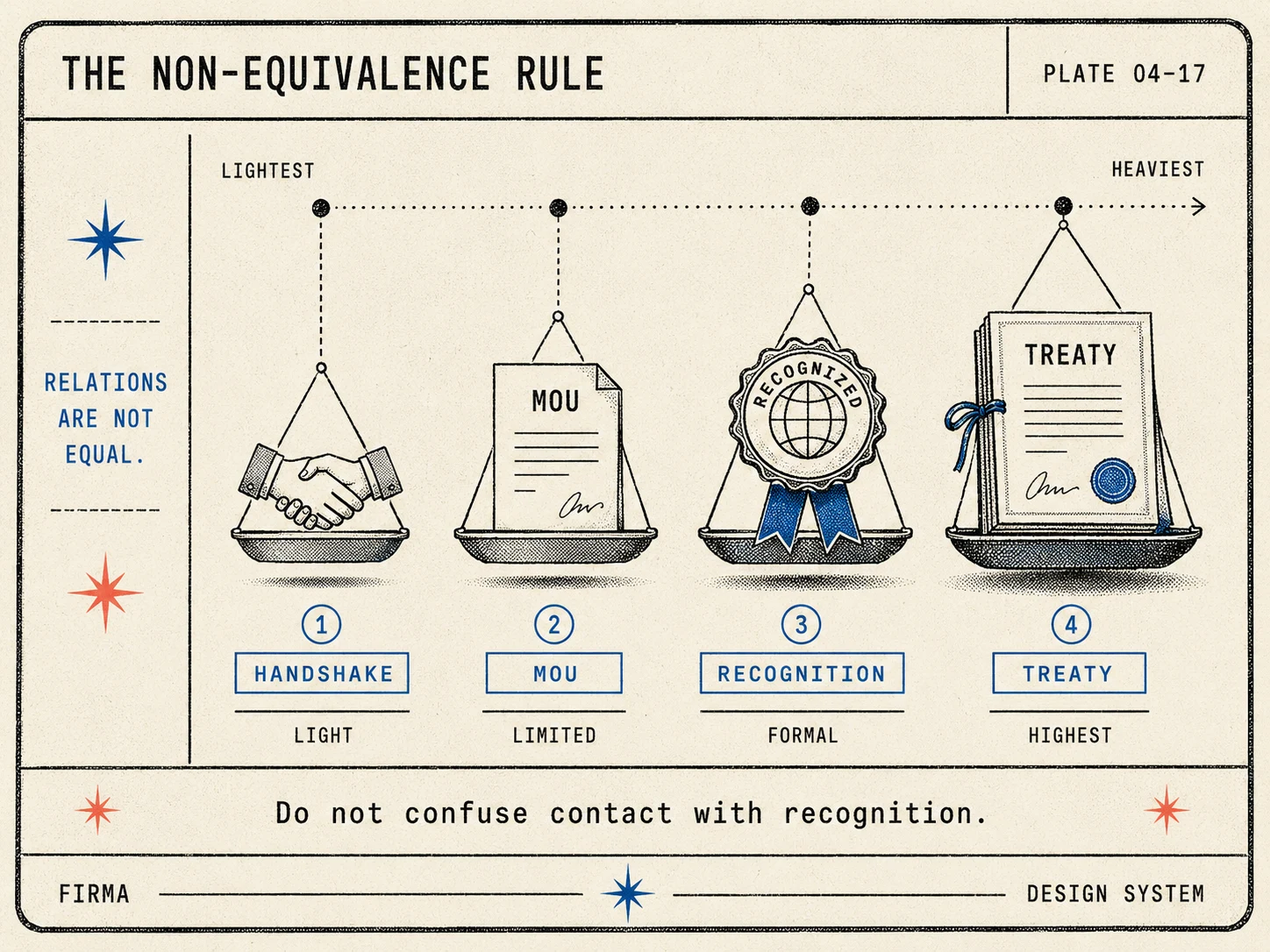
✴ Appendix 121 plates
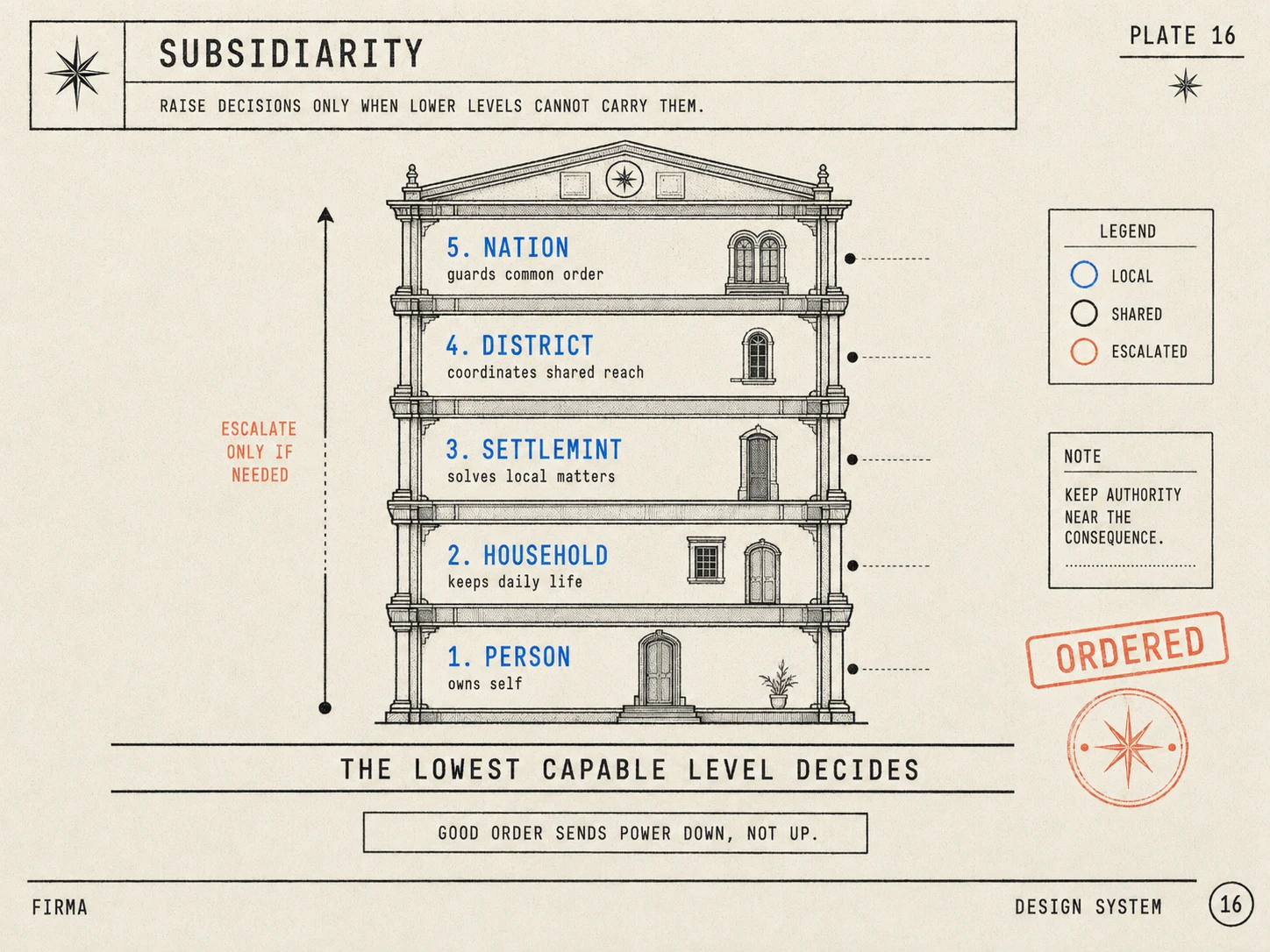
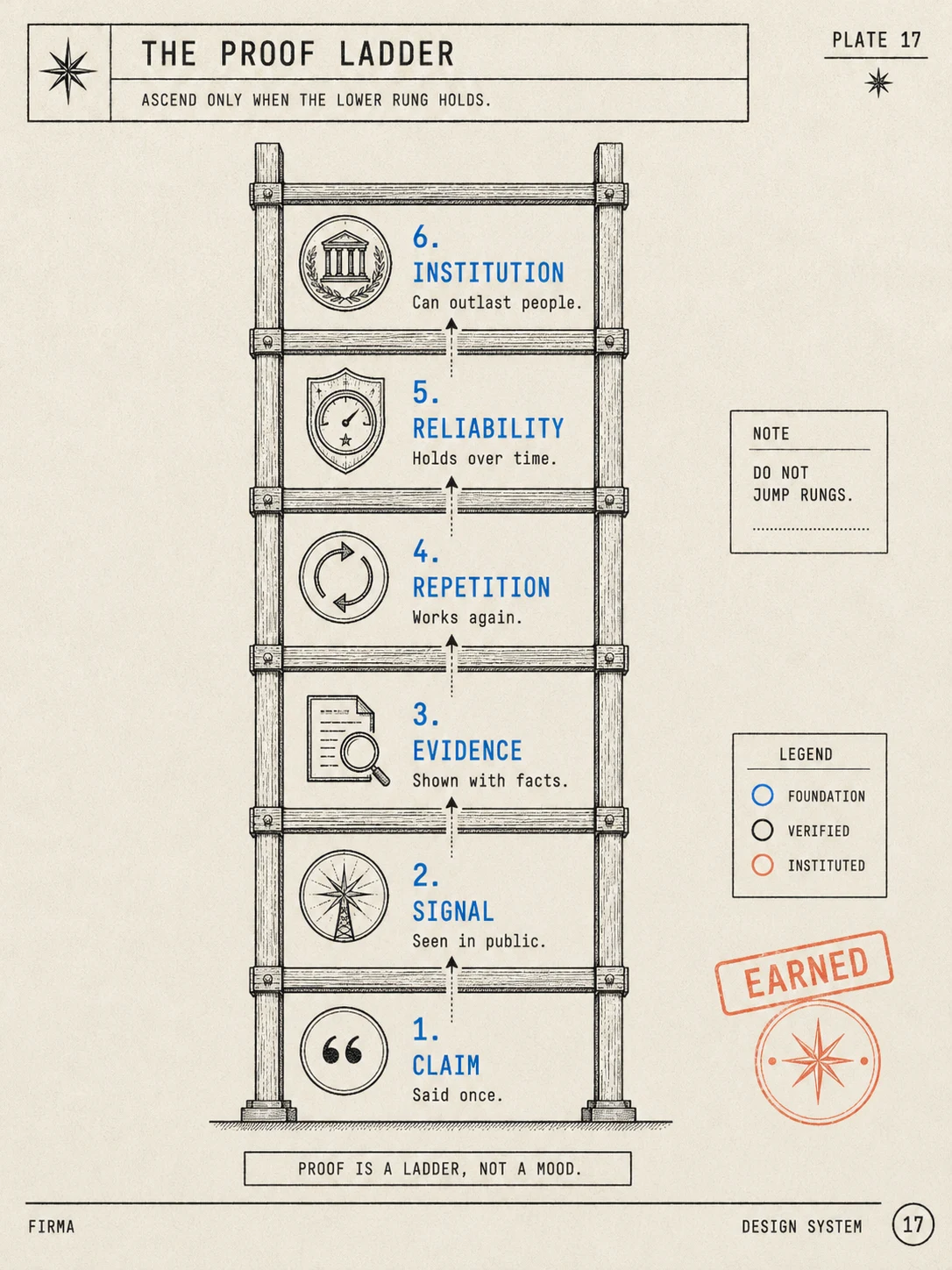
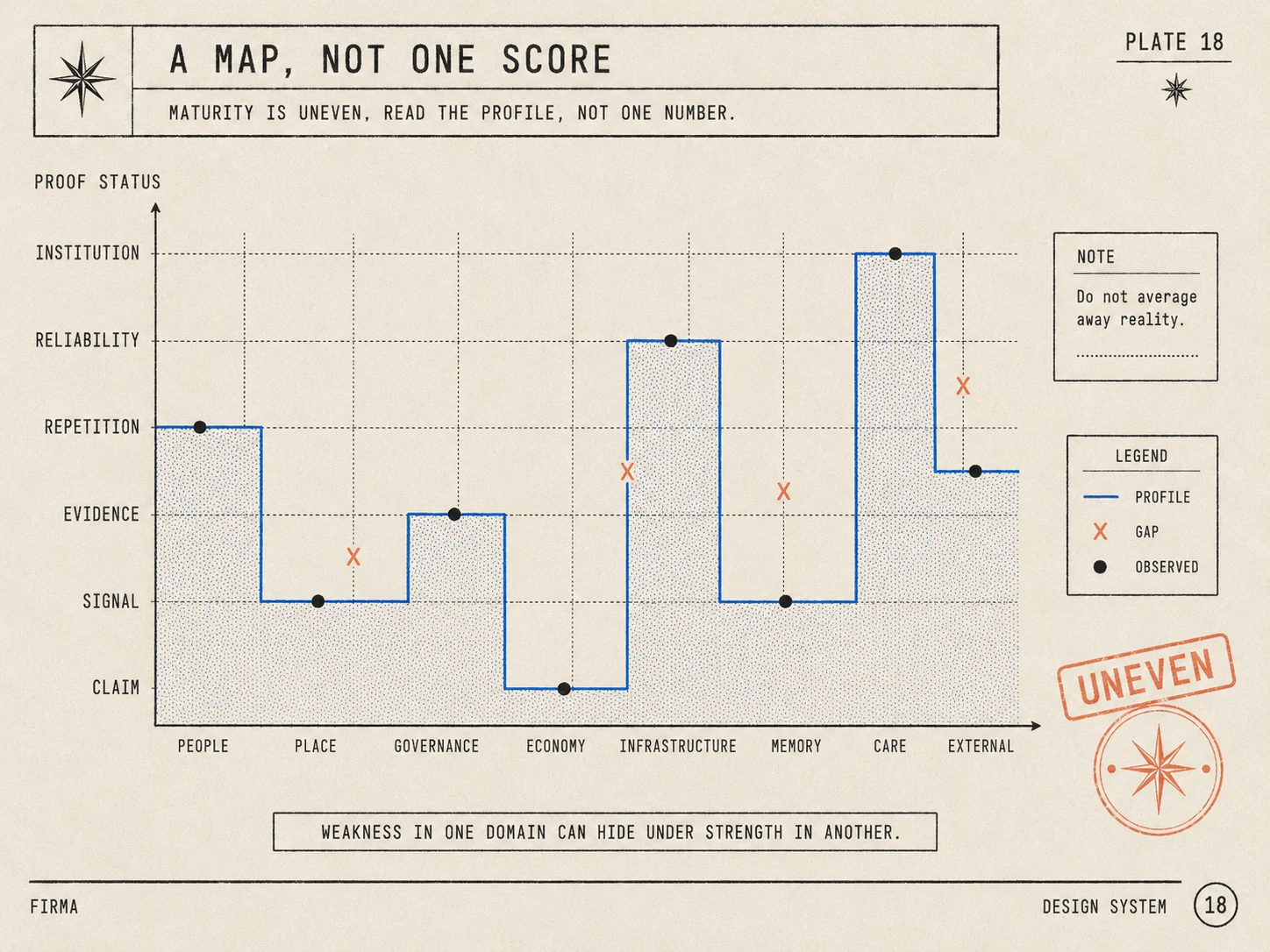
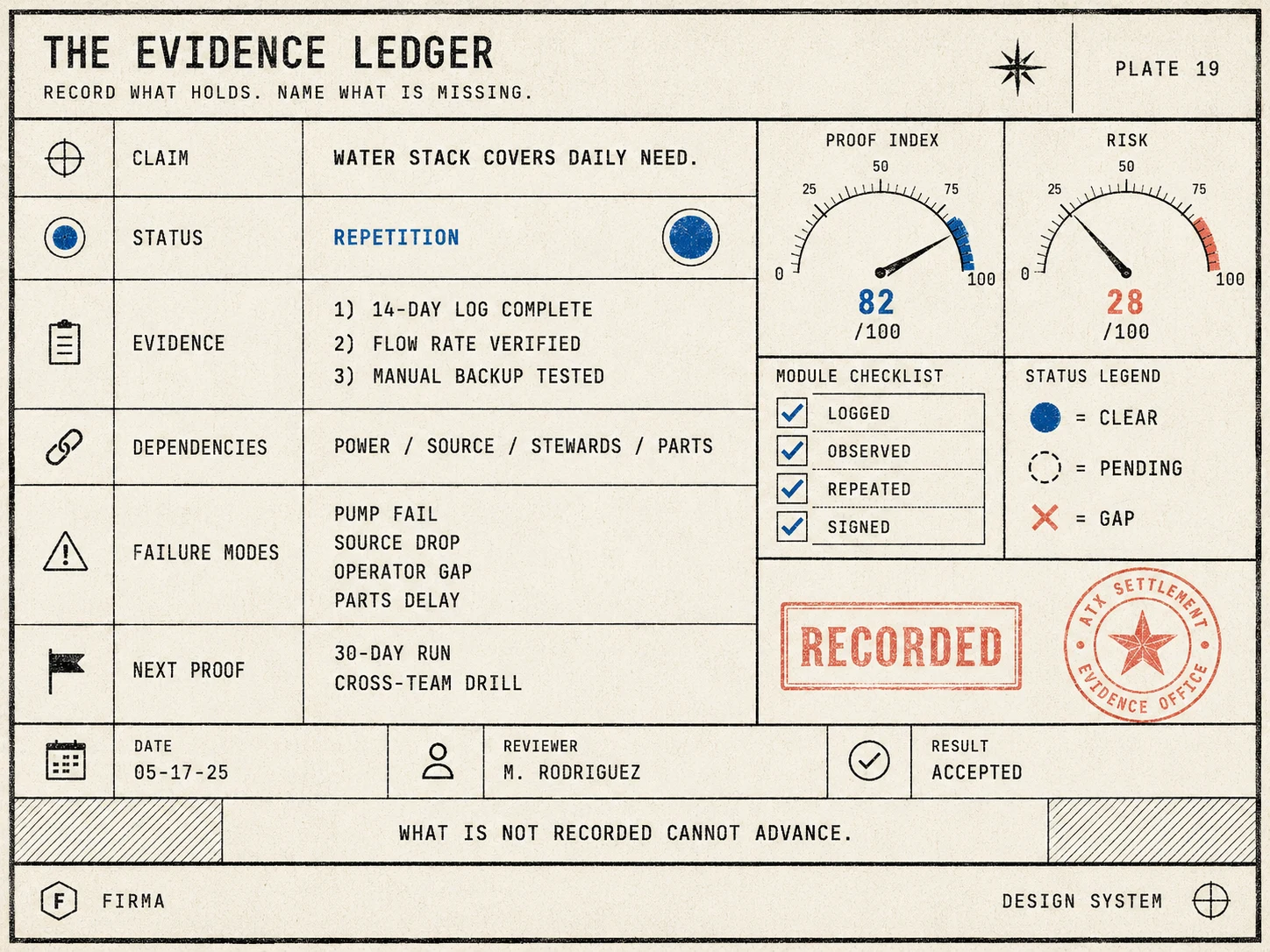
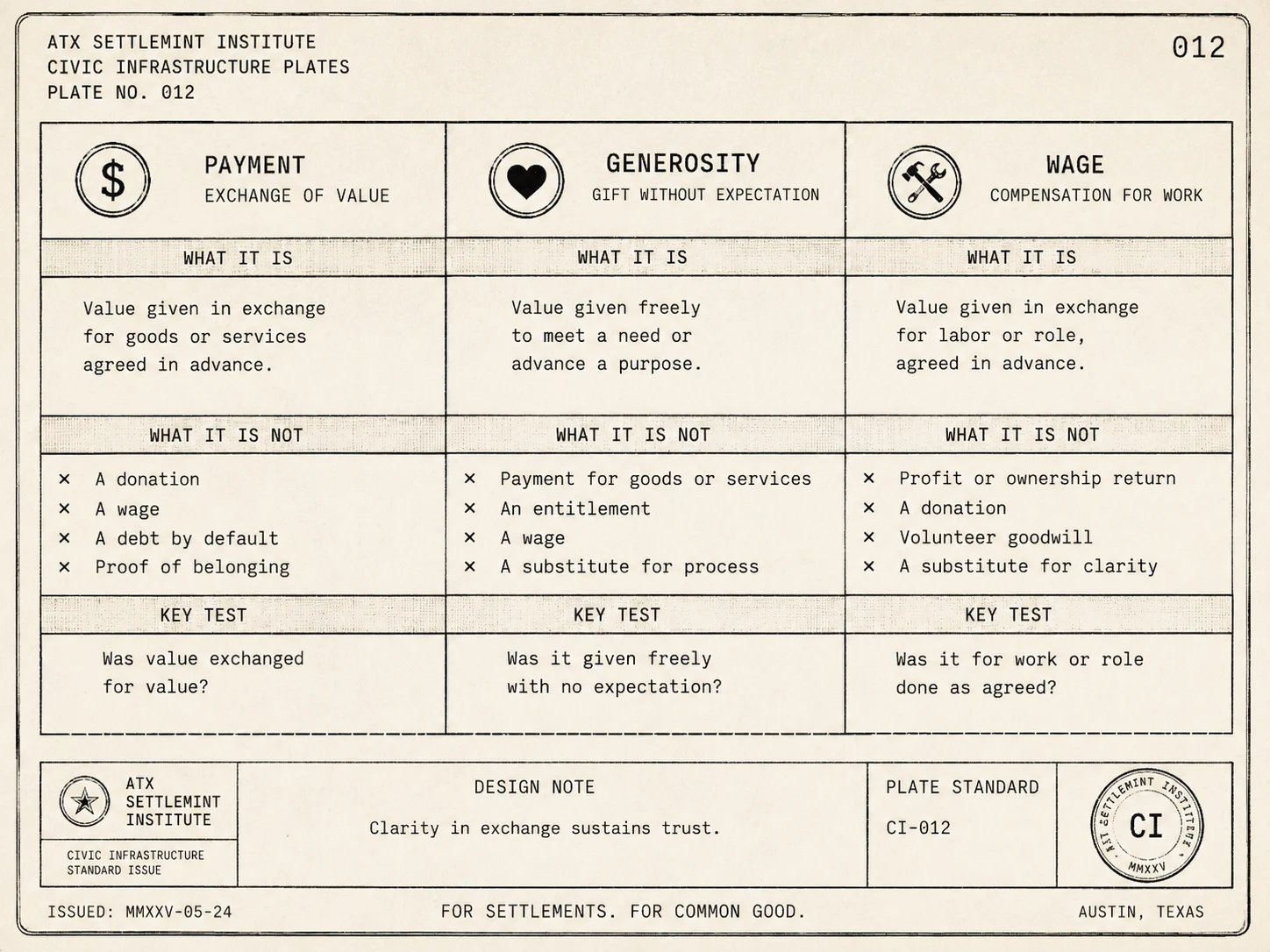
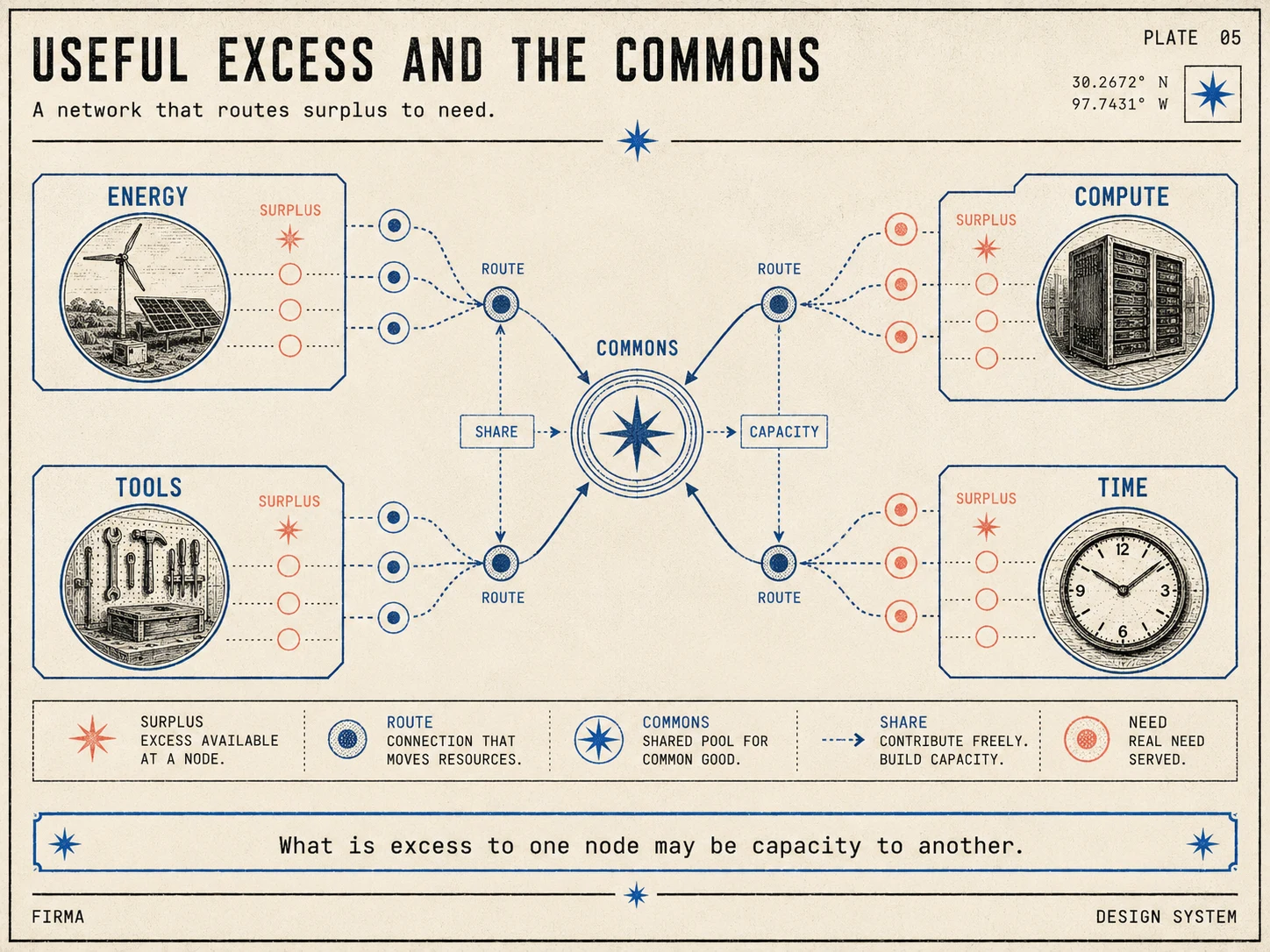
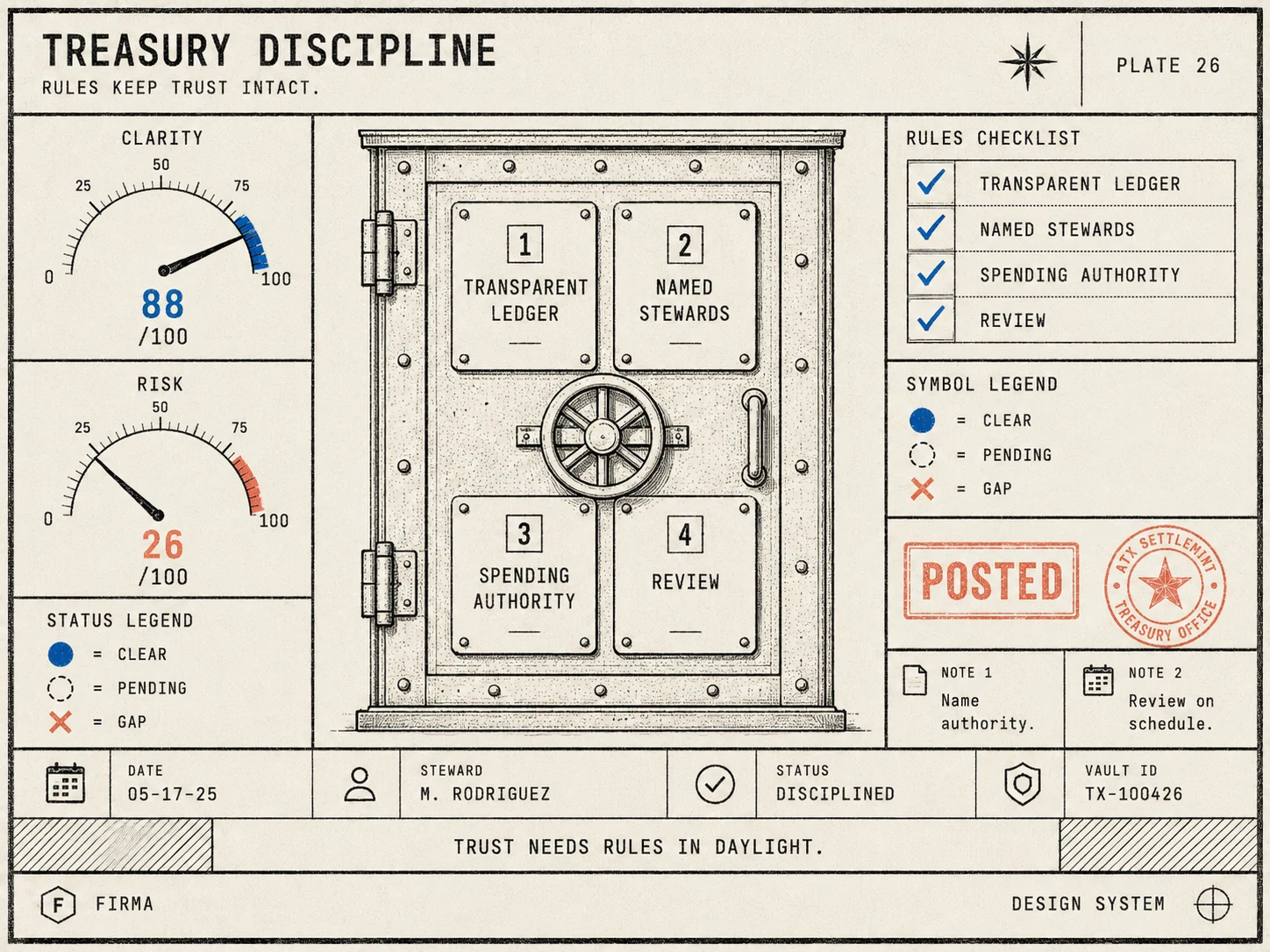
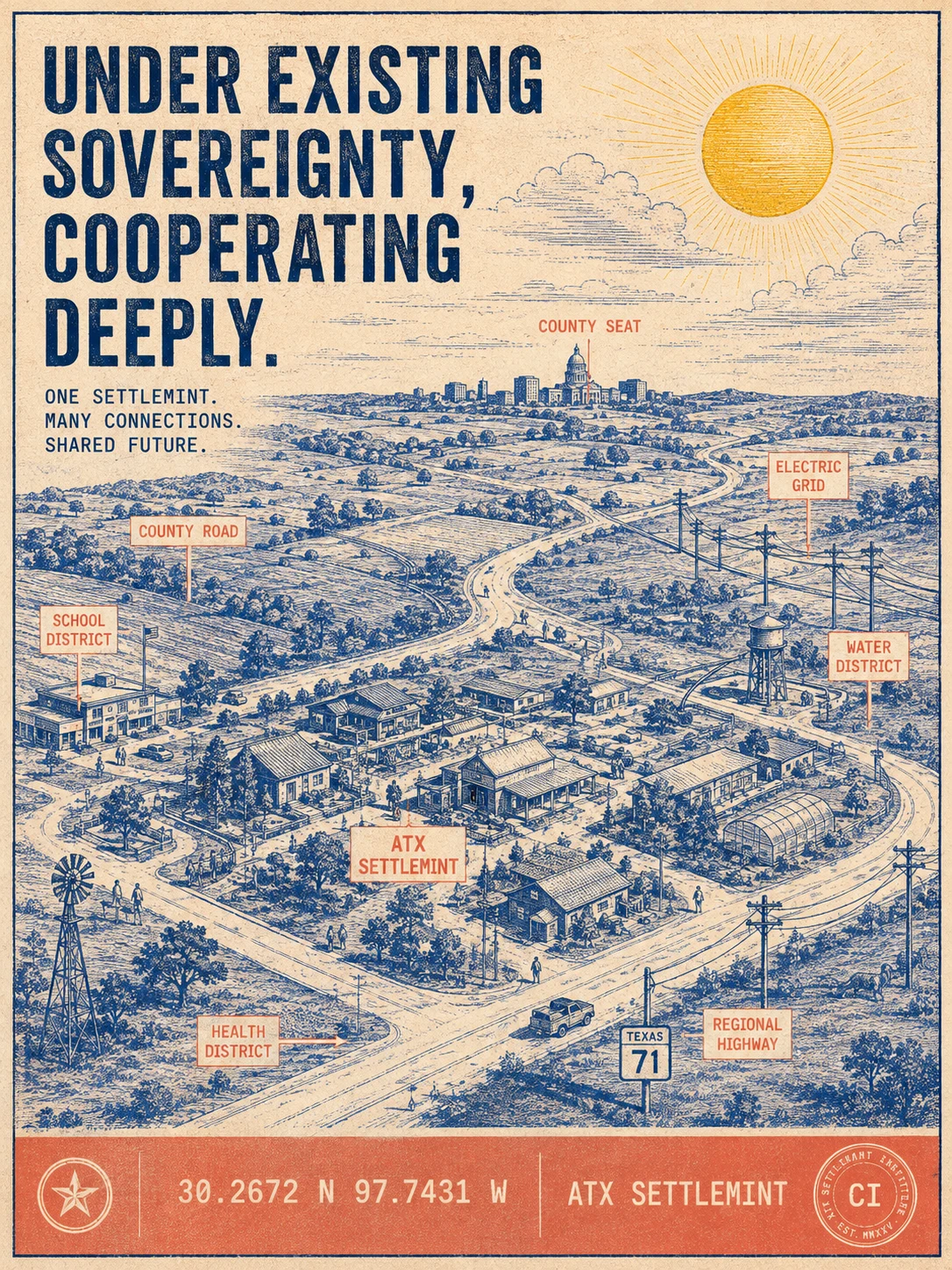
The Plates Every field-guide plate in the publication, gathered in one place. Click any plate to open the full-size file, or follow the reference to the chapter where it is printed.
↓ Download the complete set (.zip)
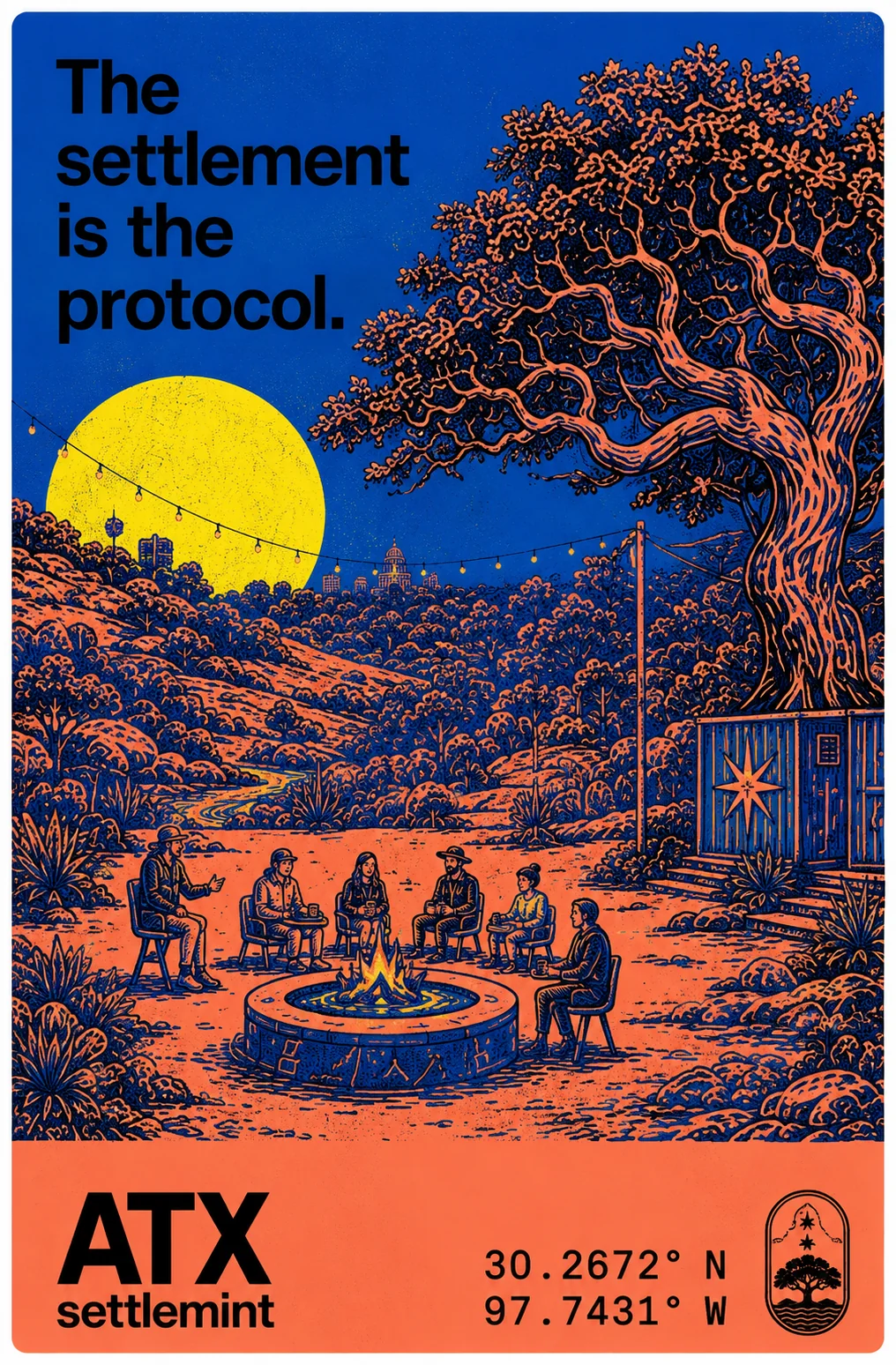
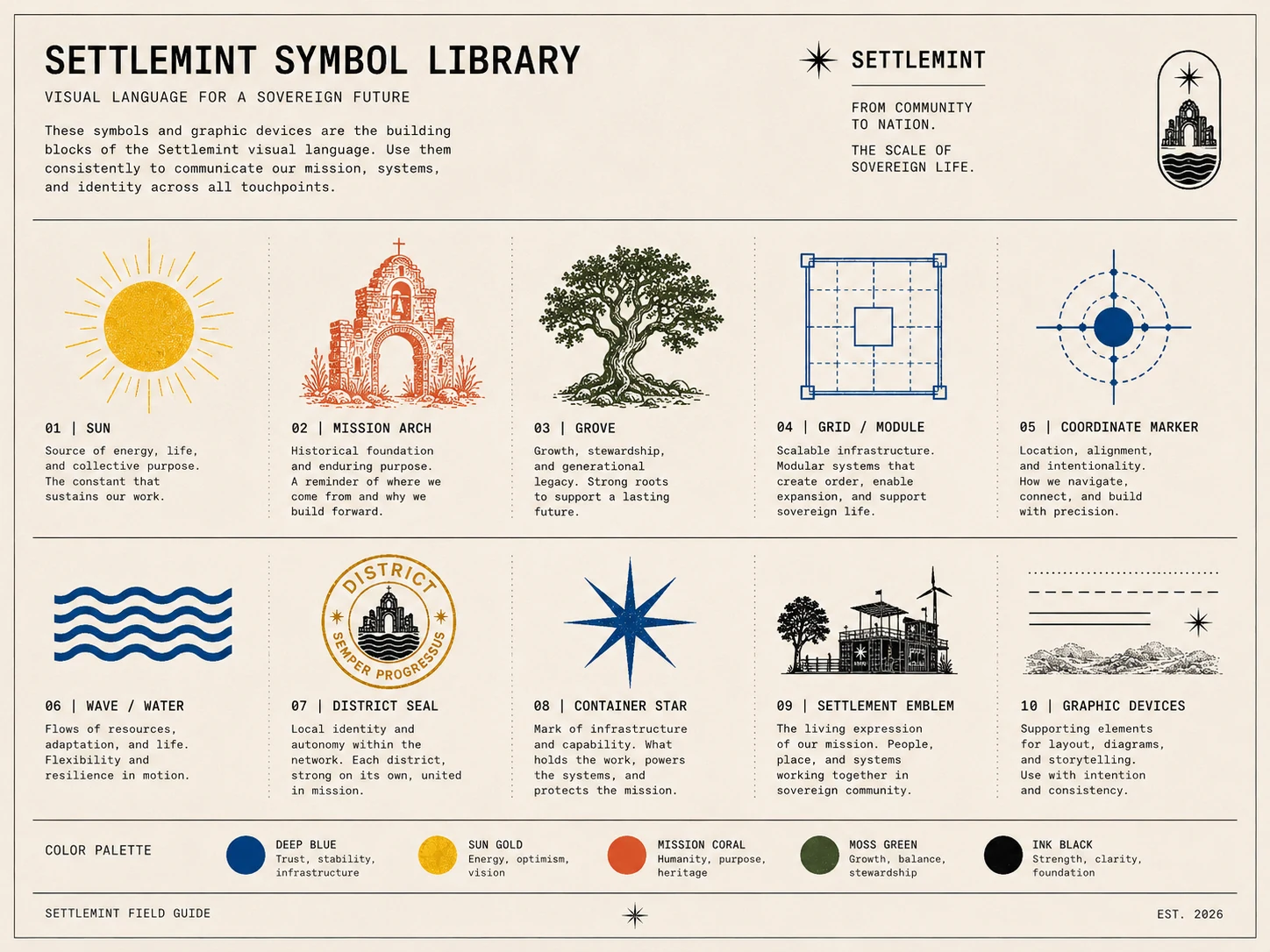
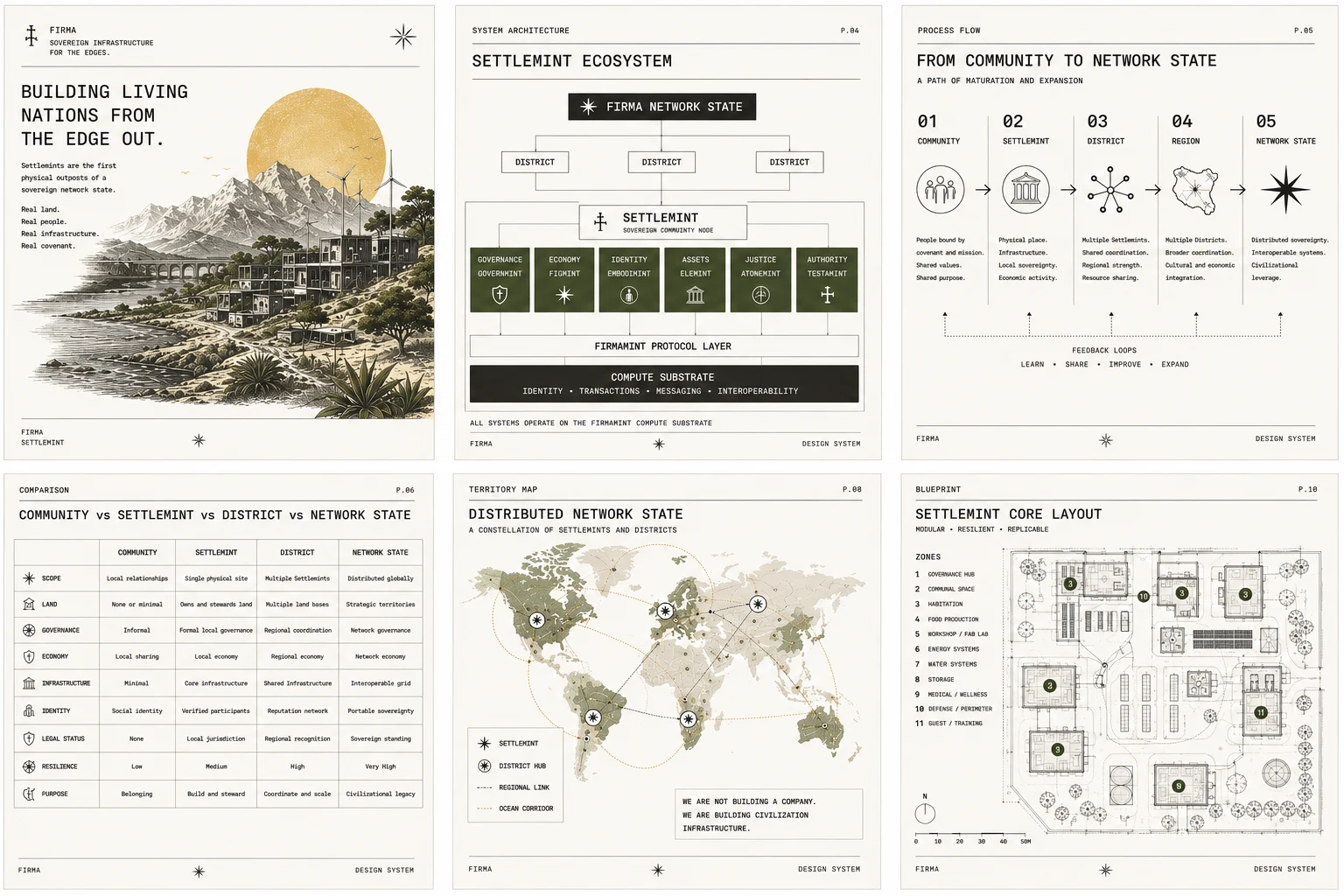
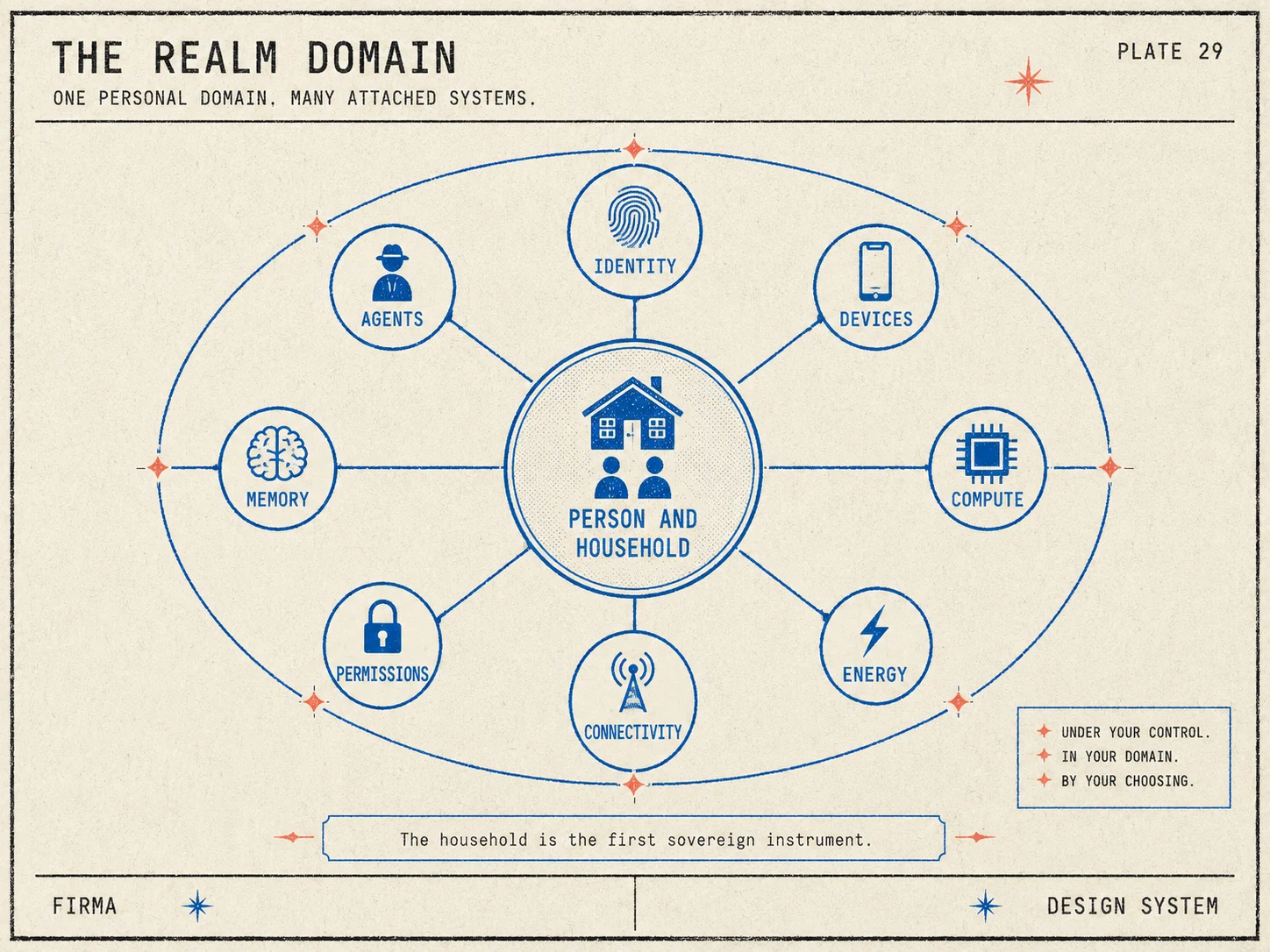
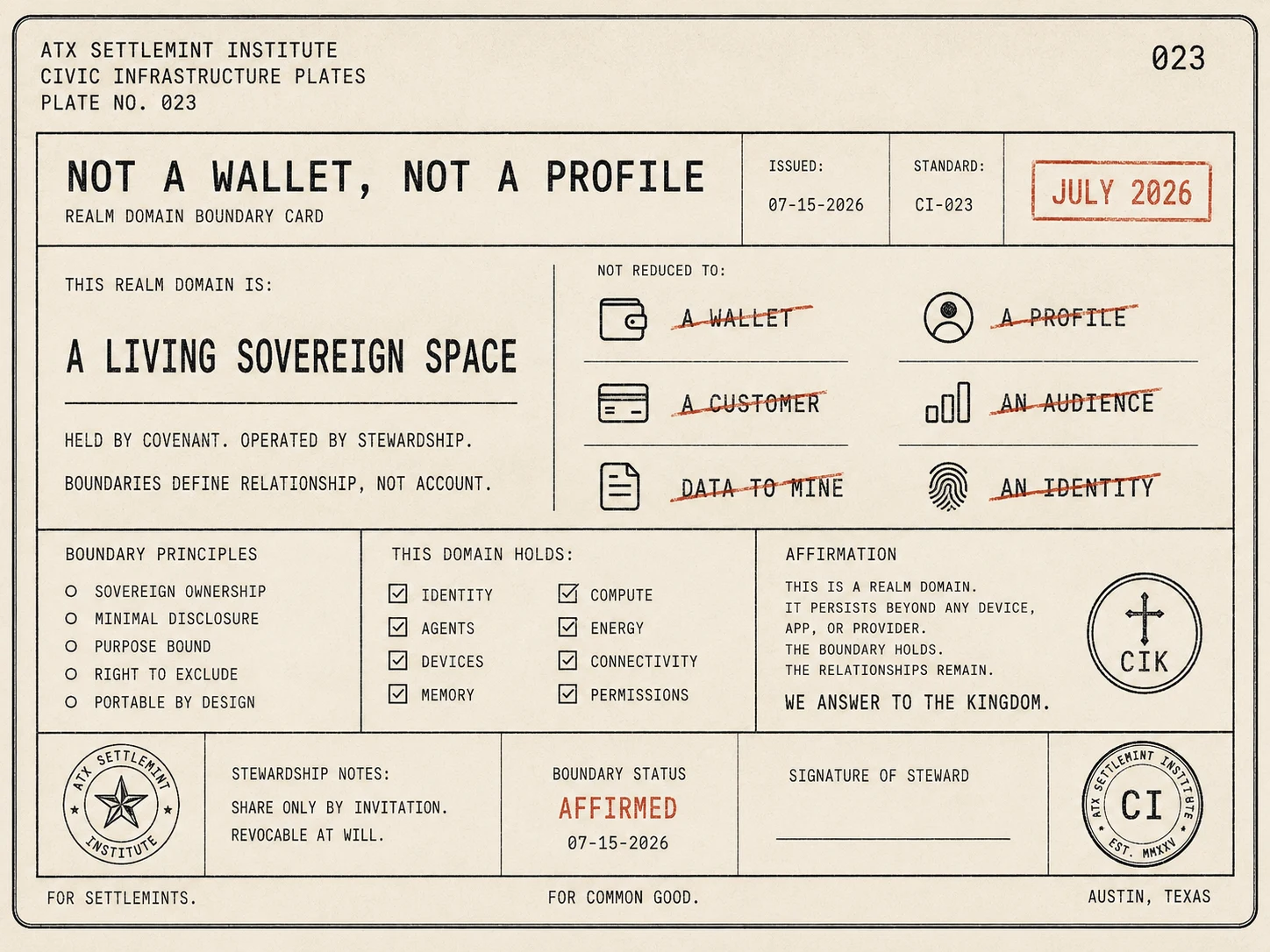
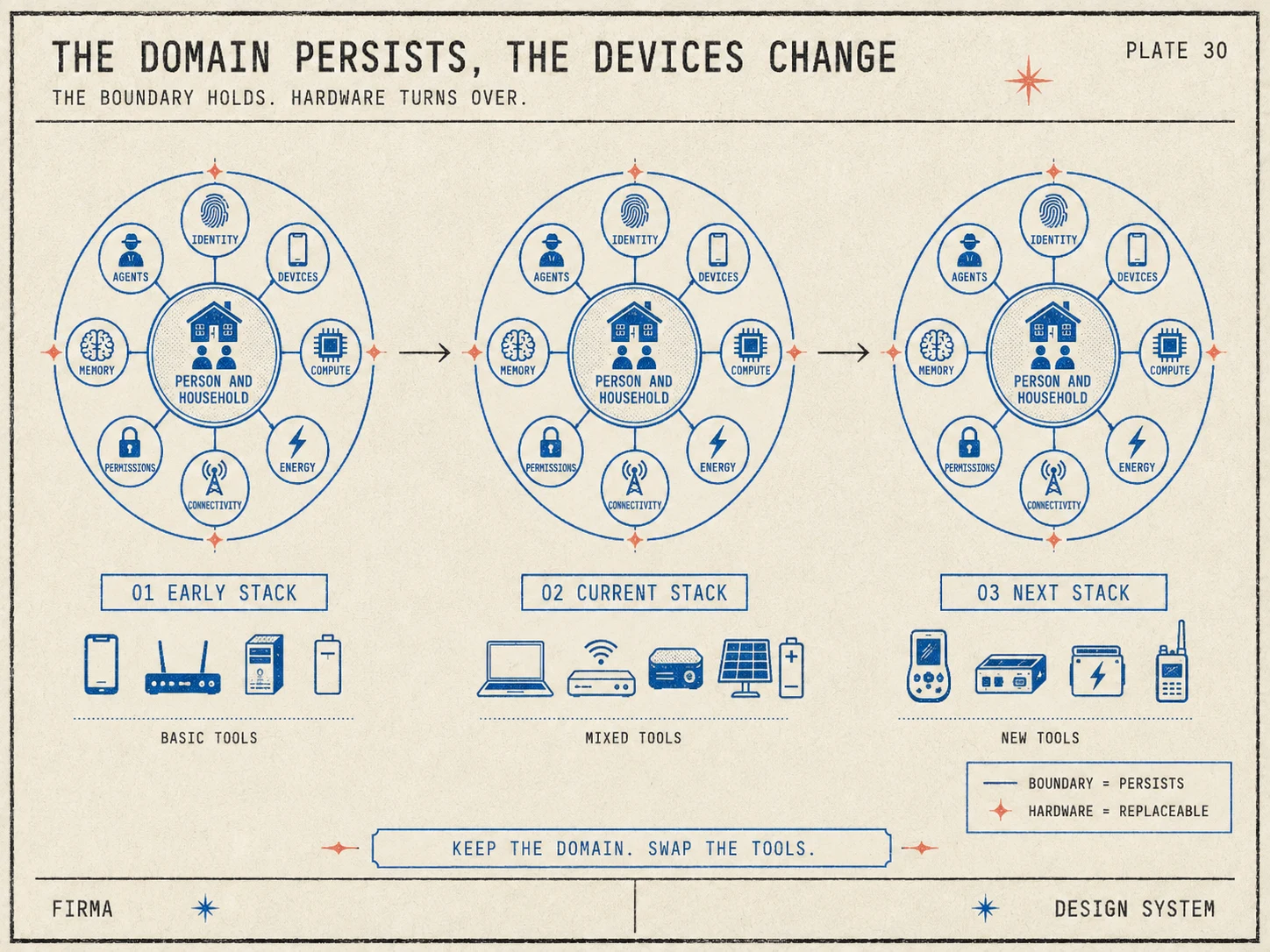
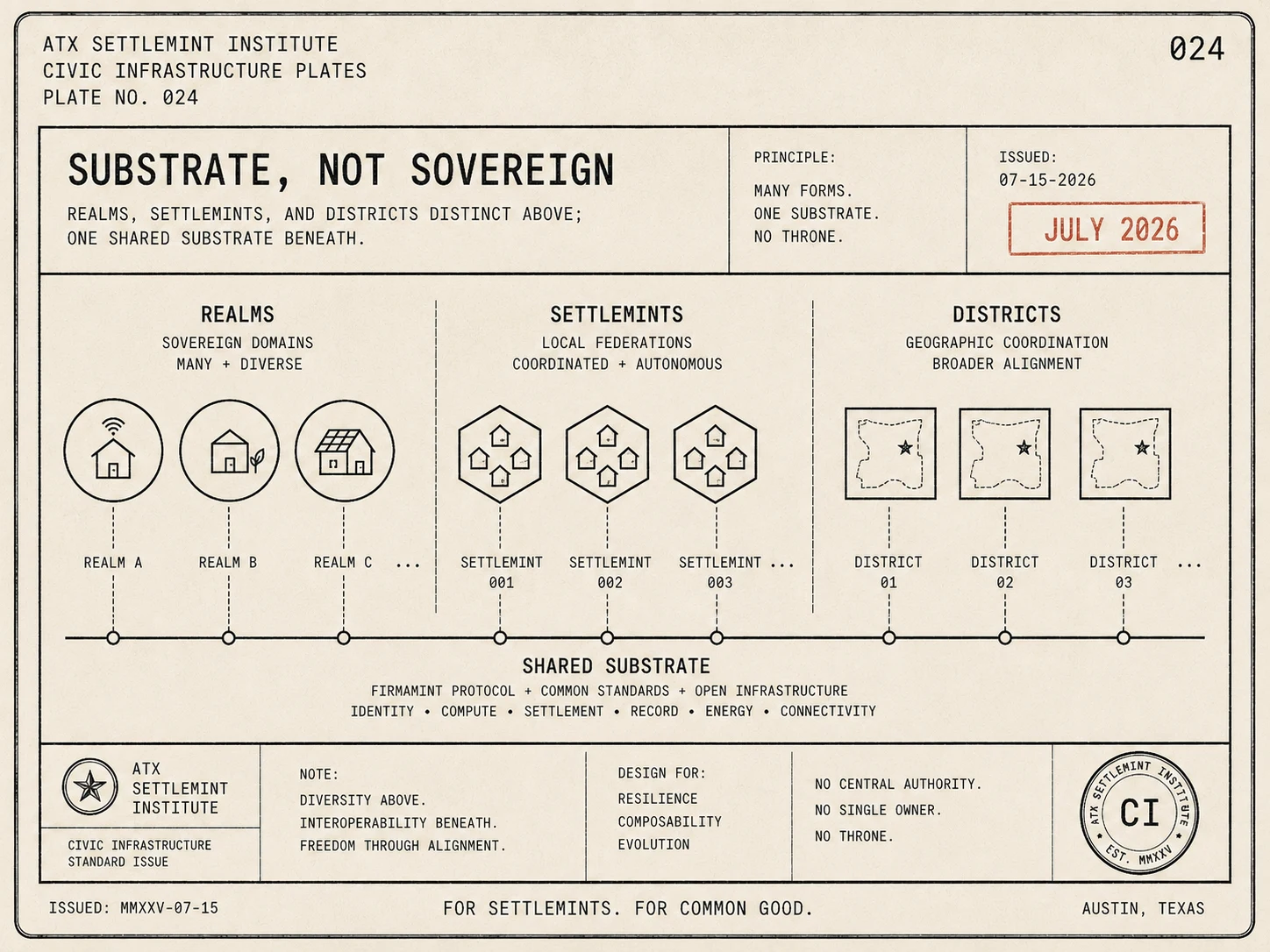
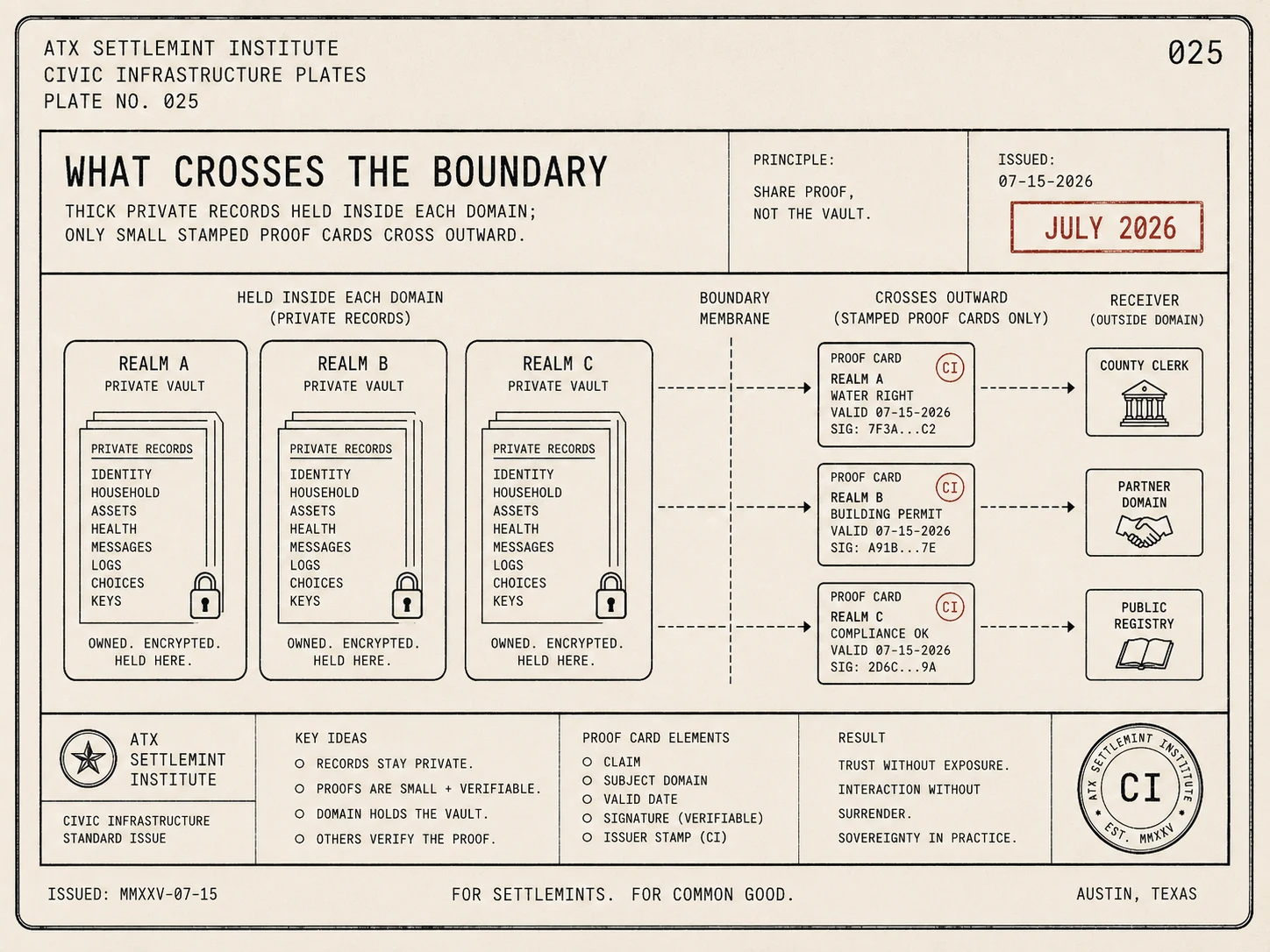
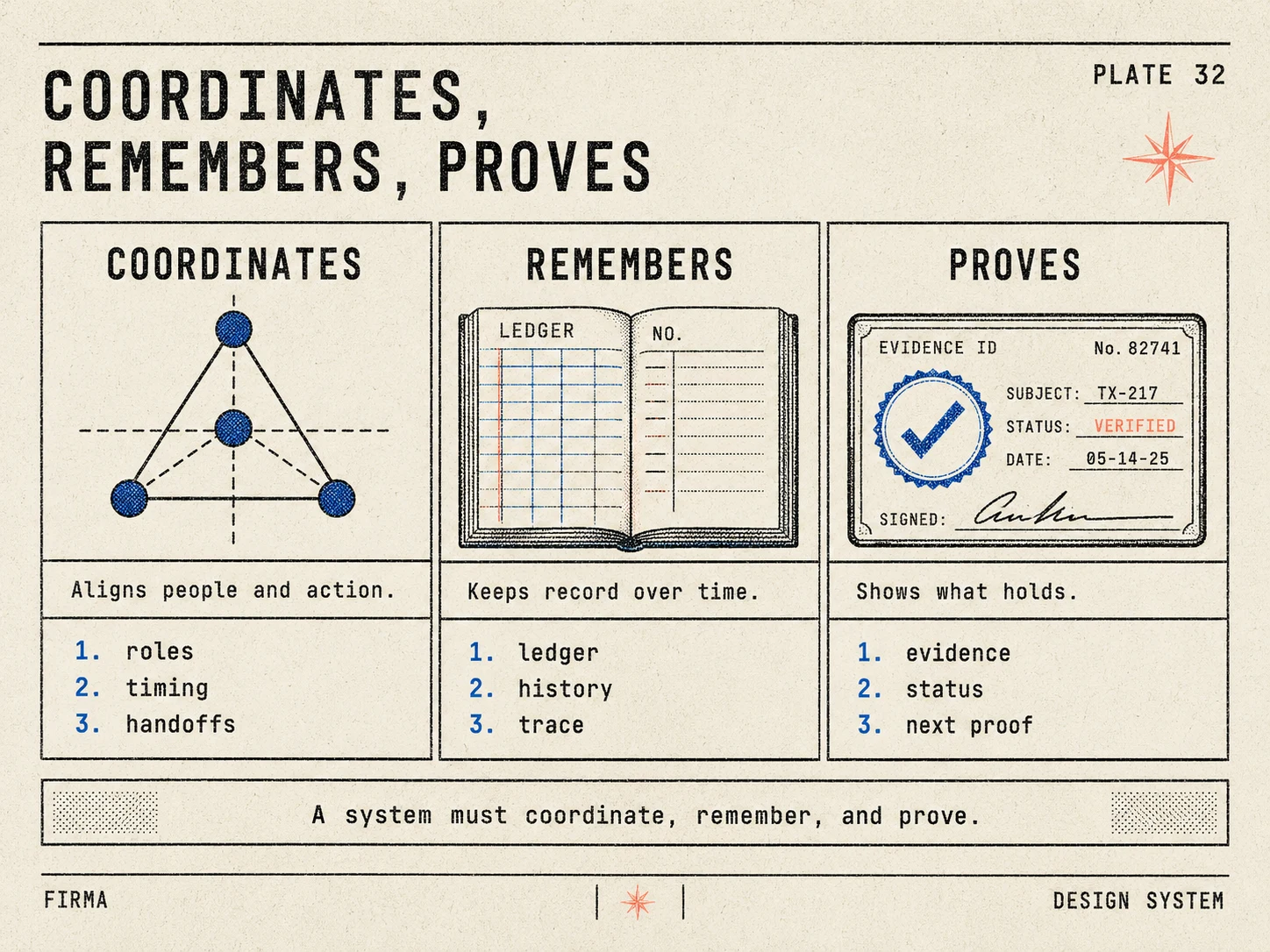
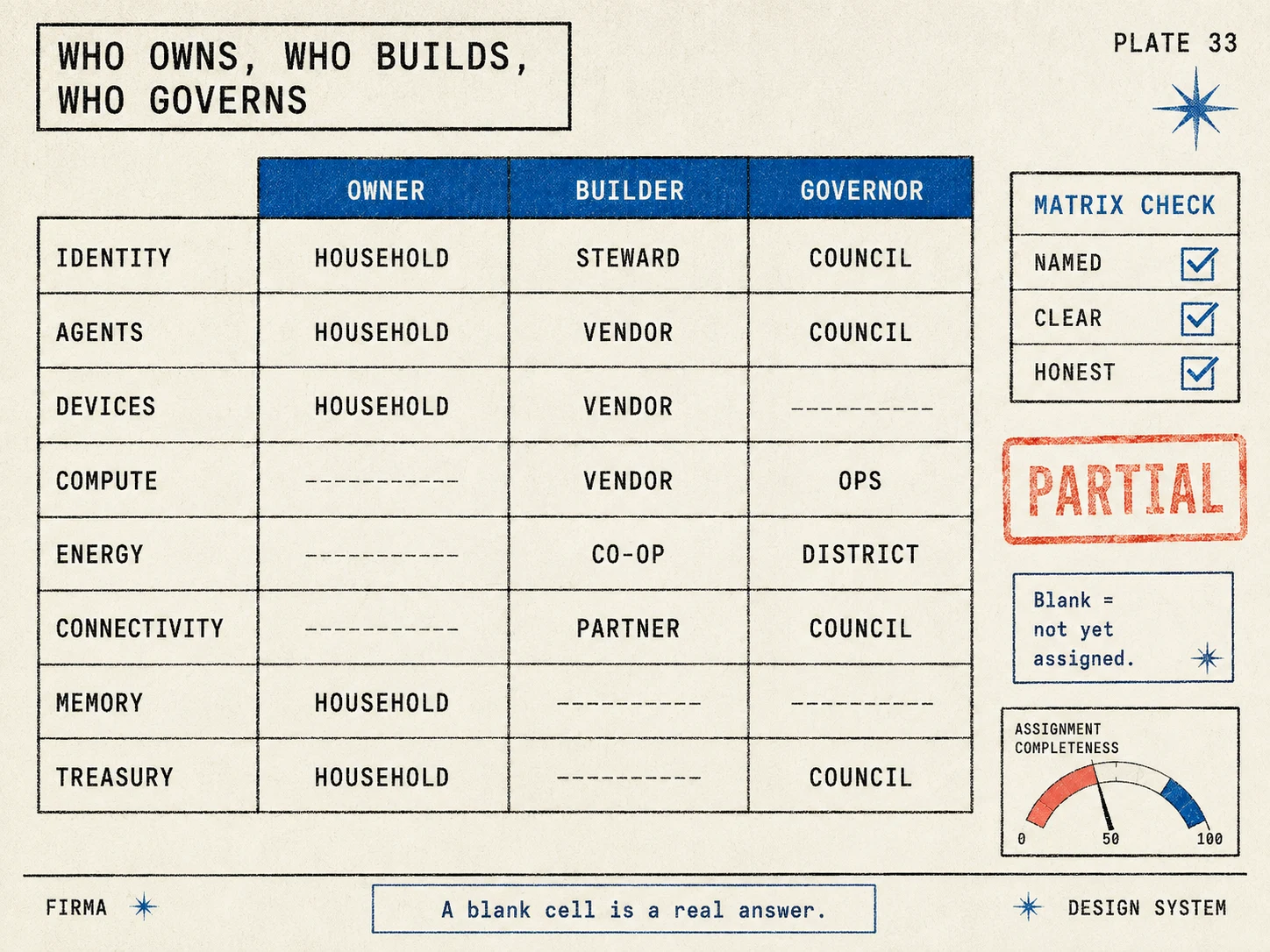
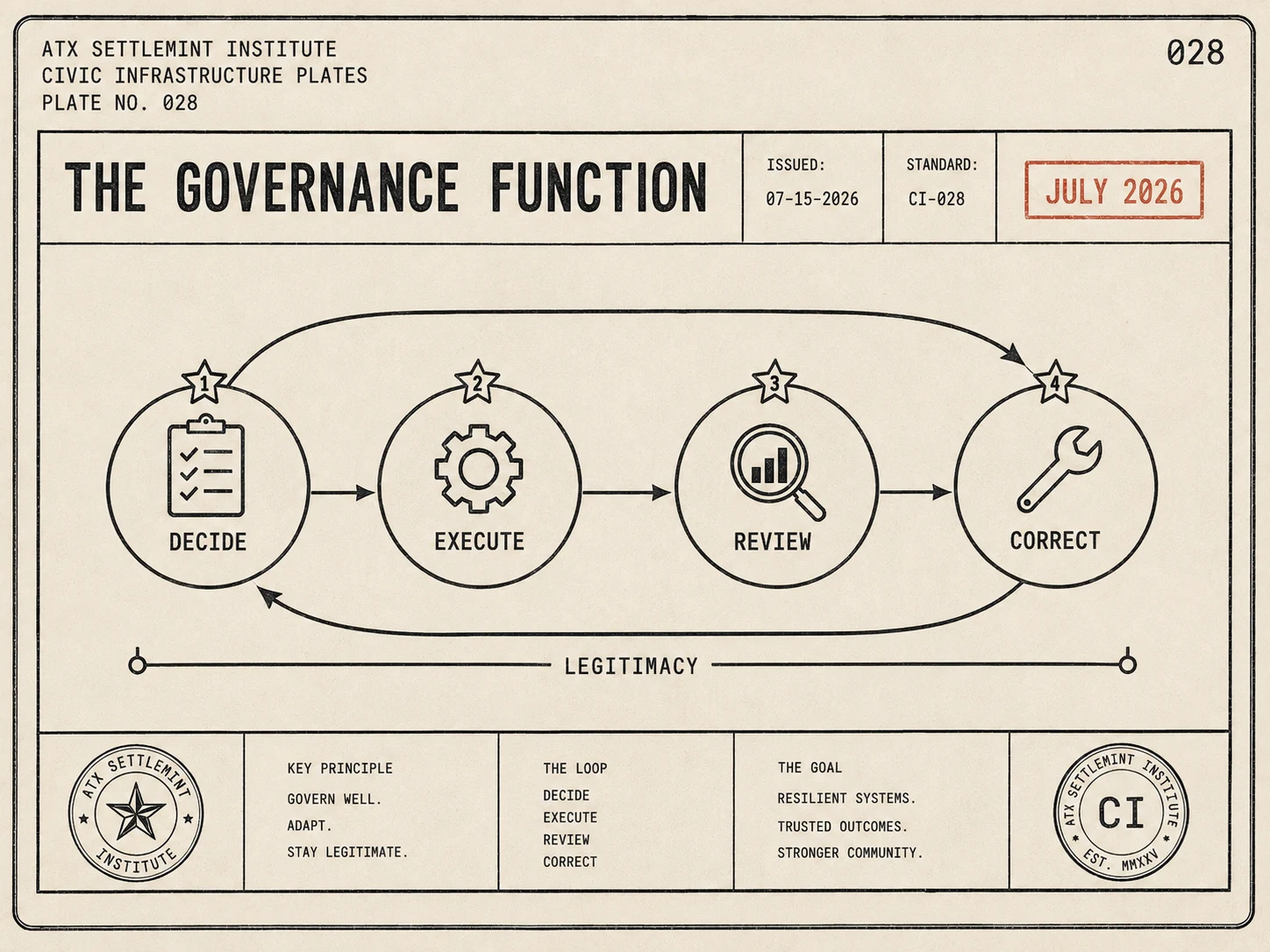
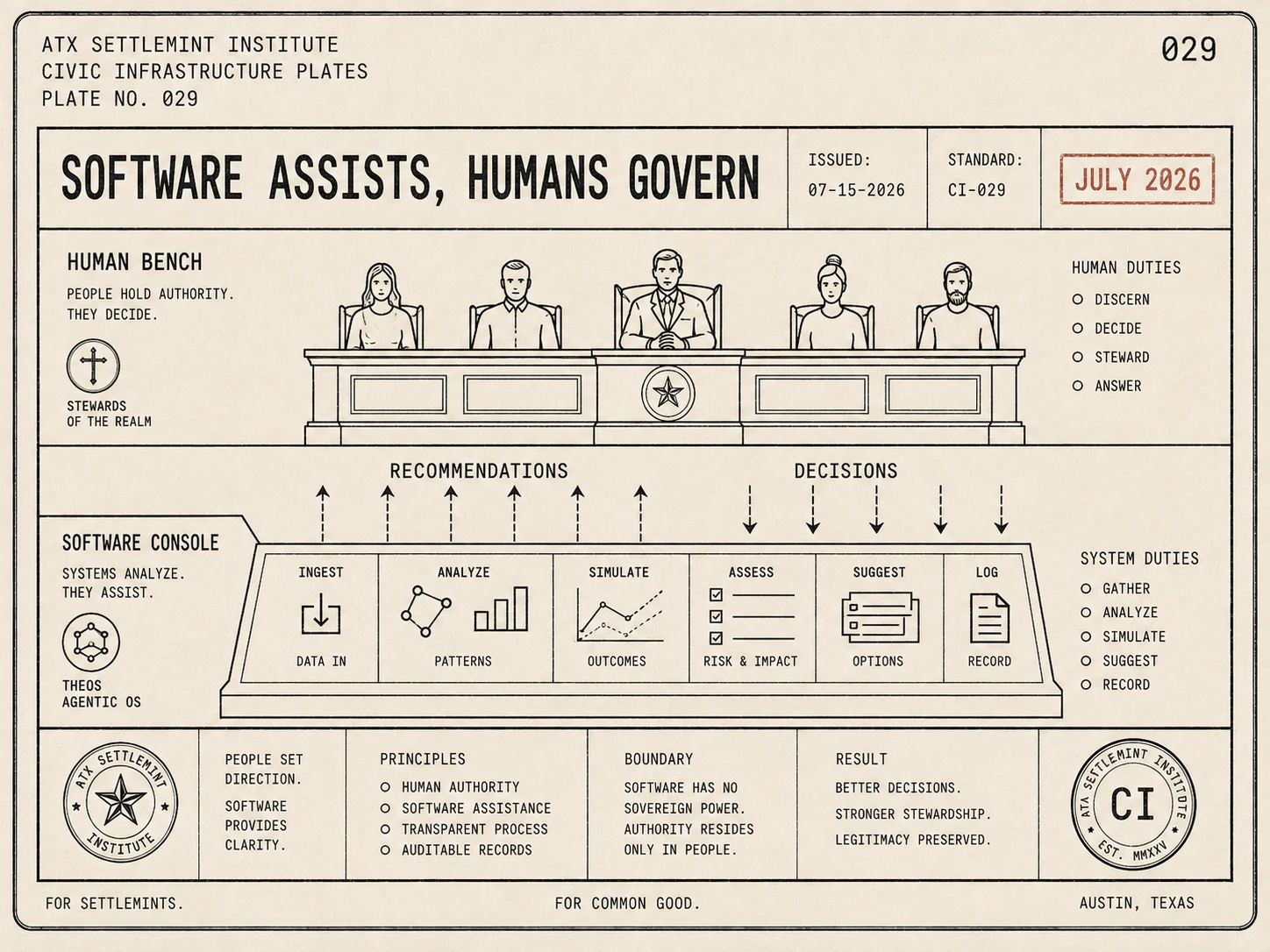
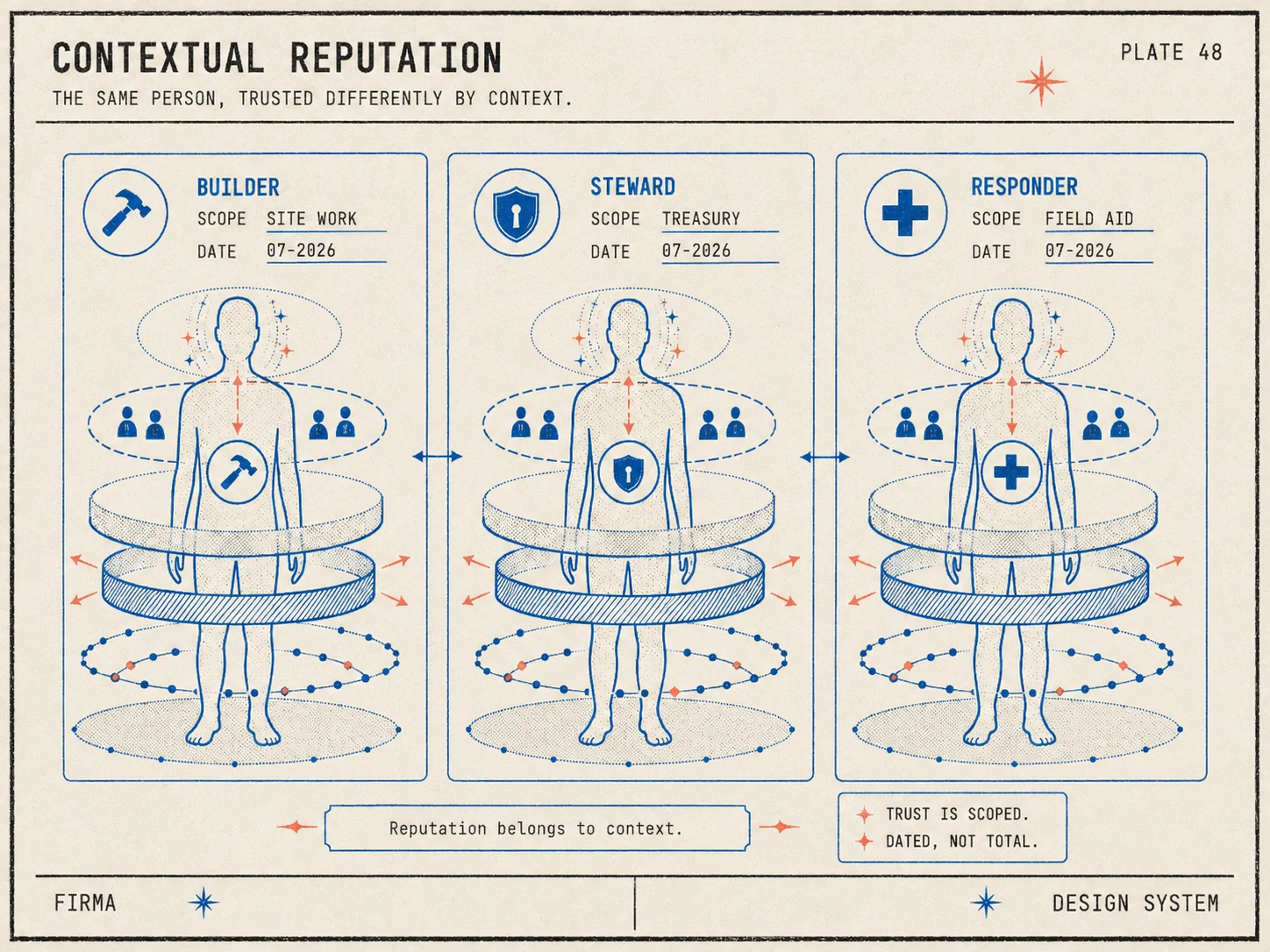
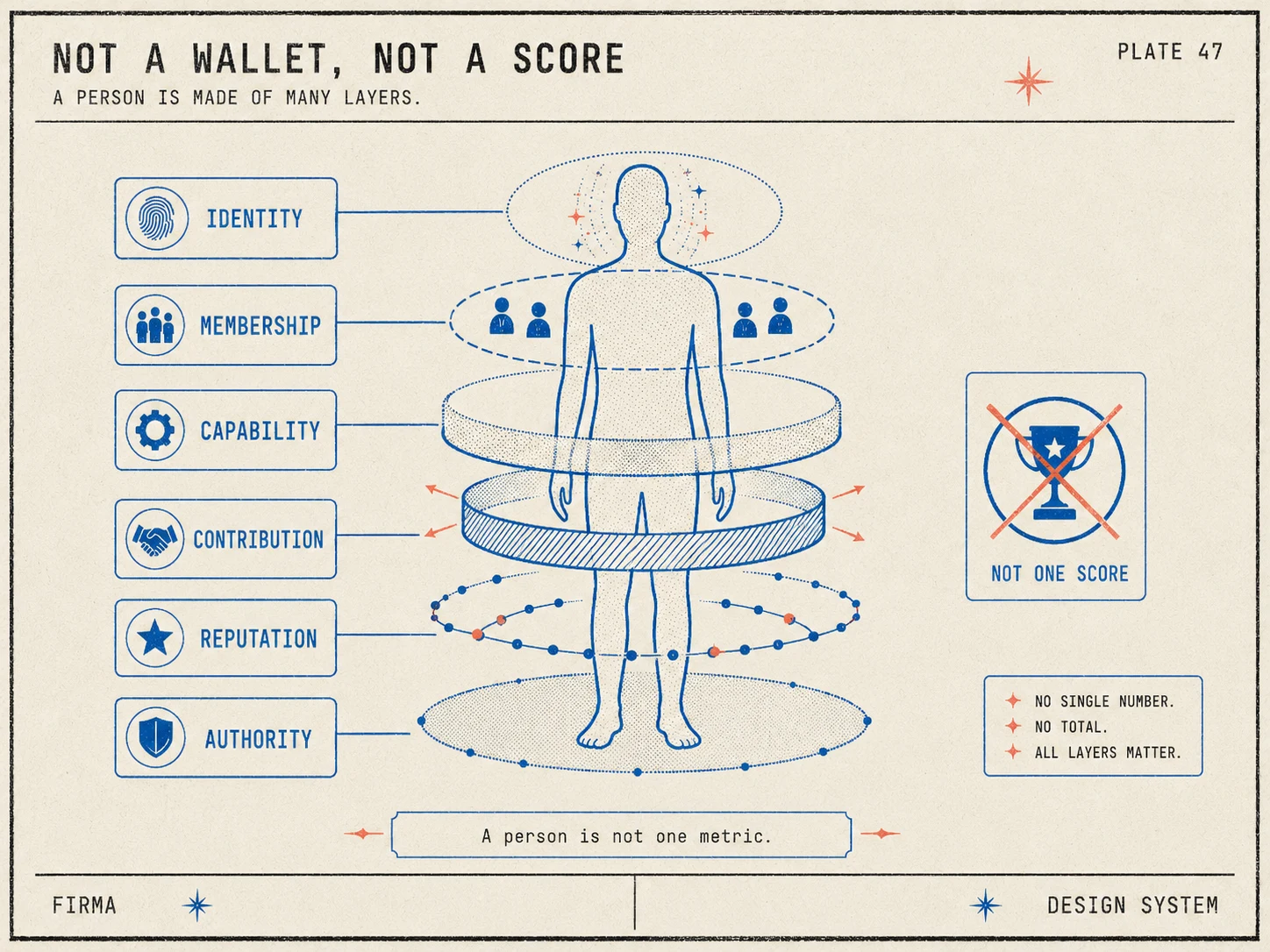
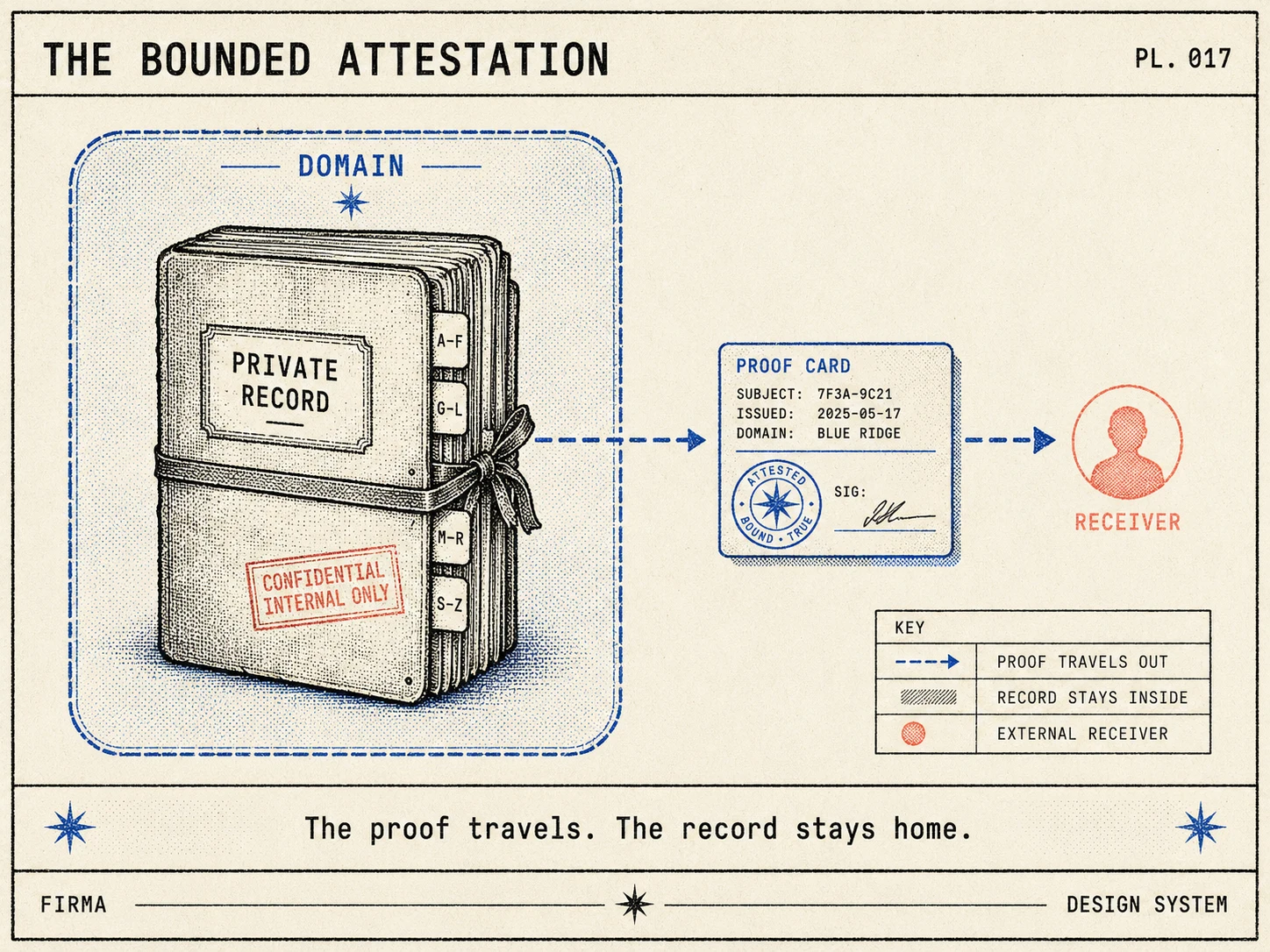
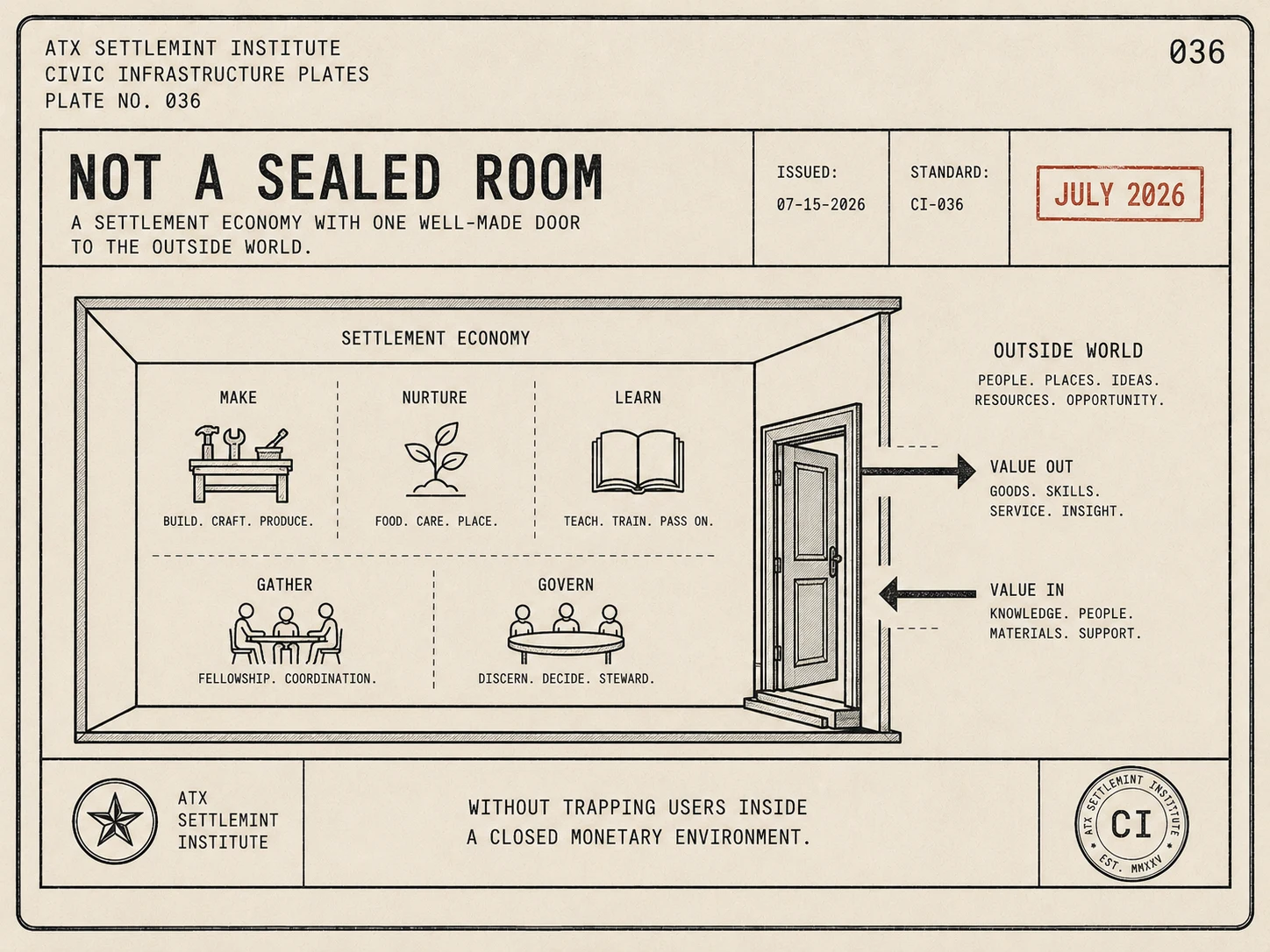
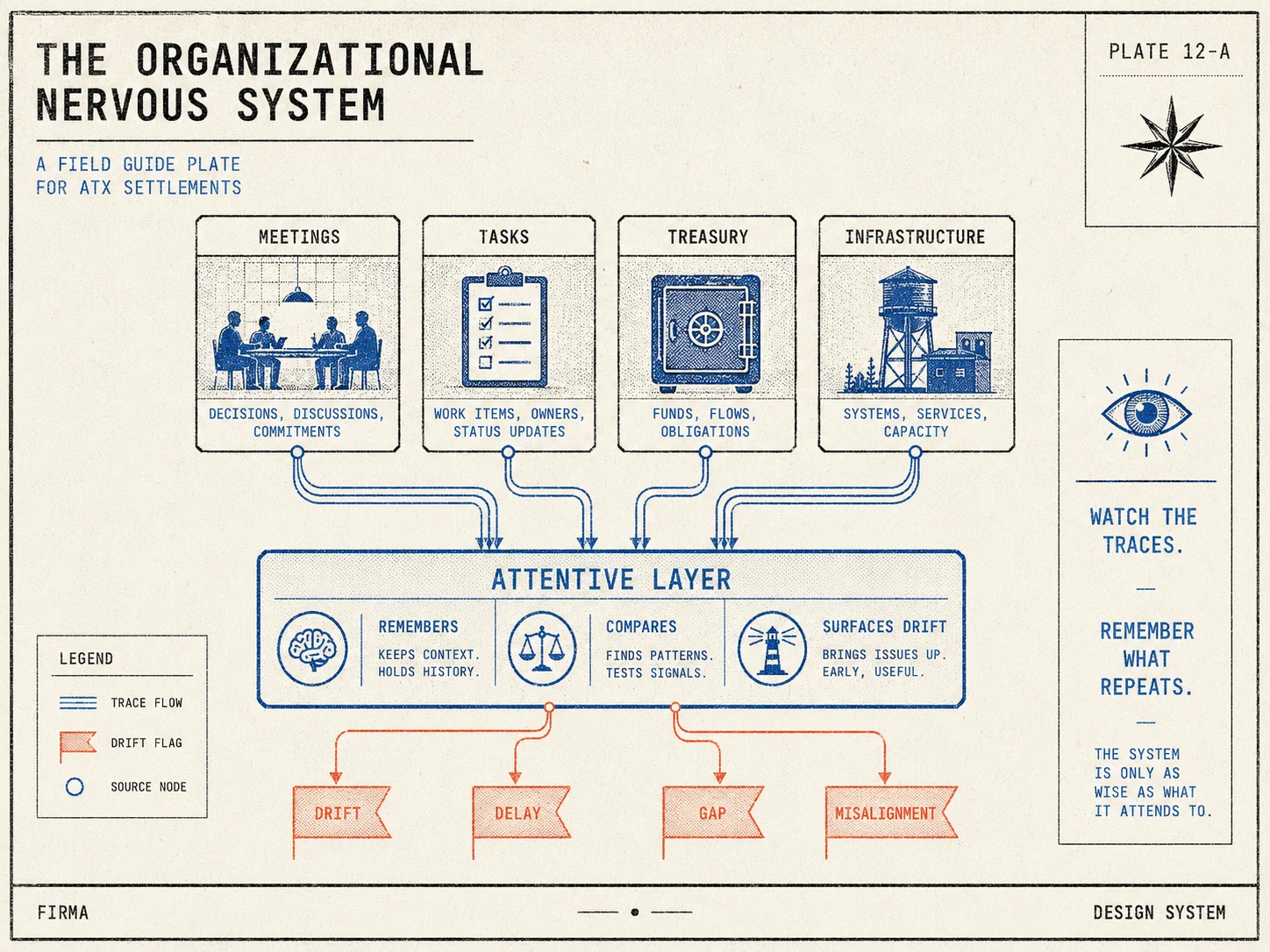
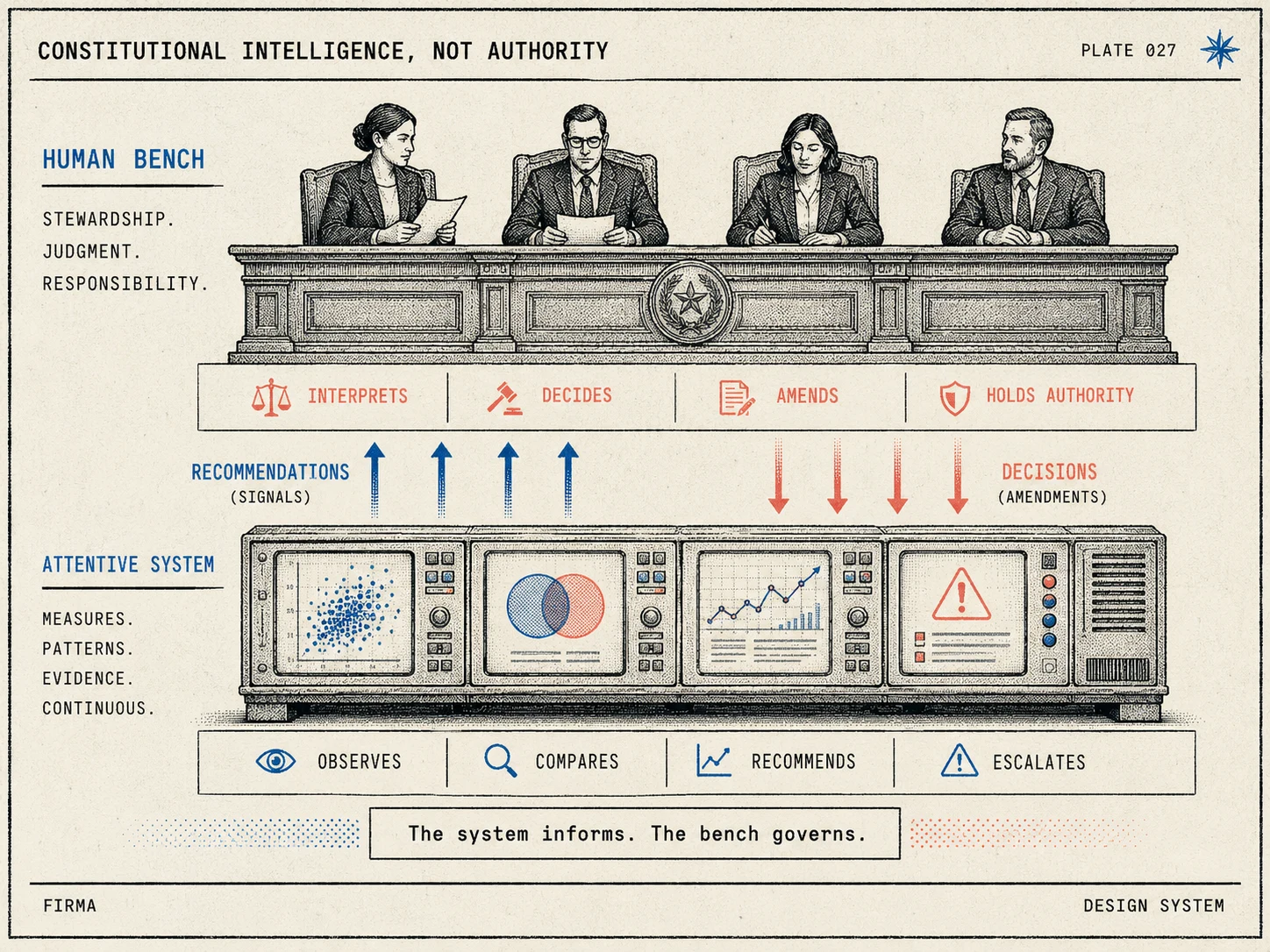
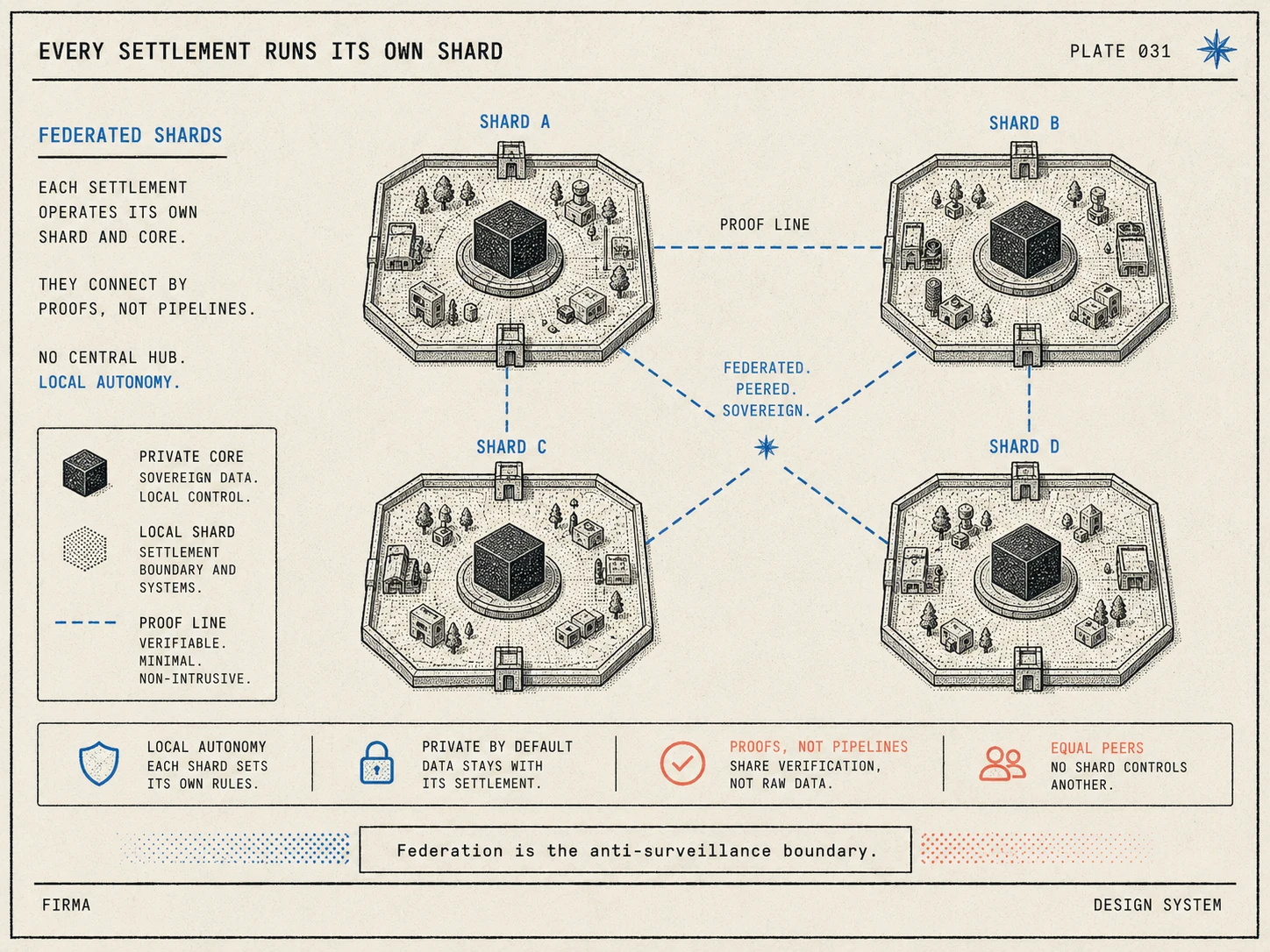
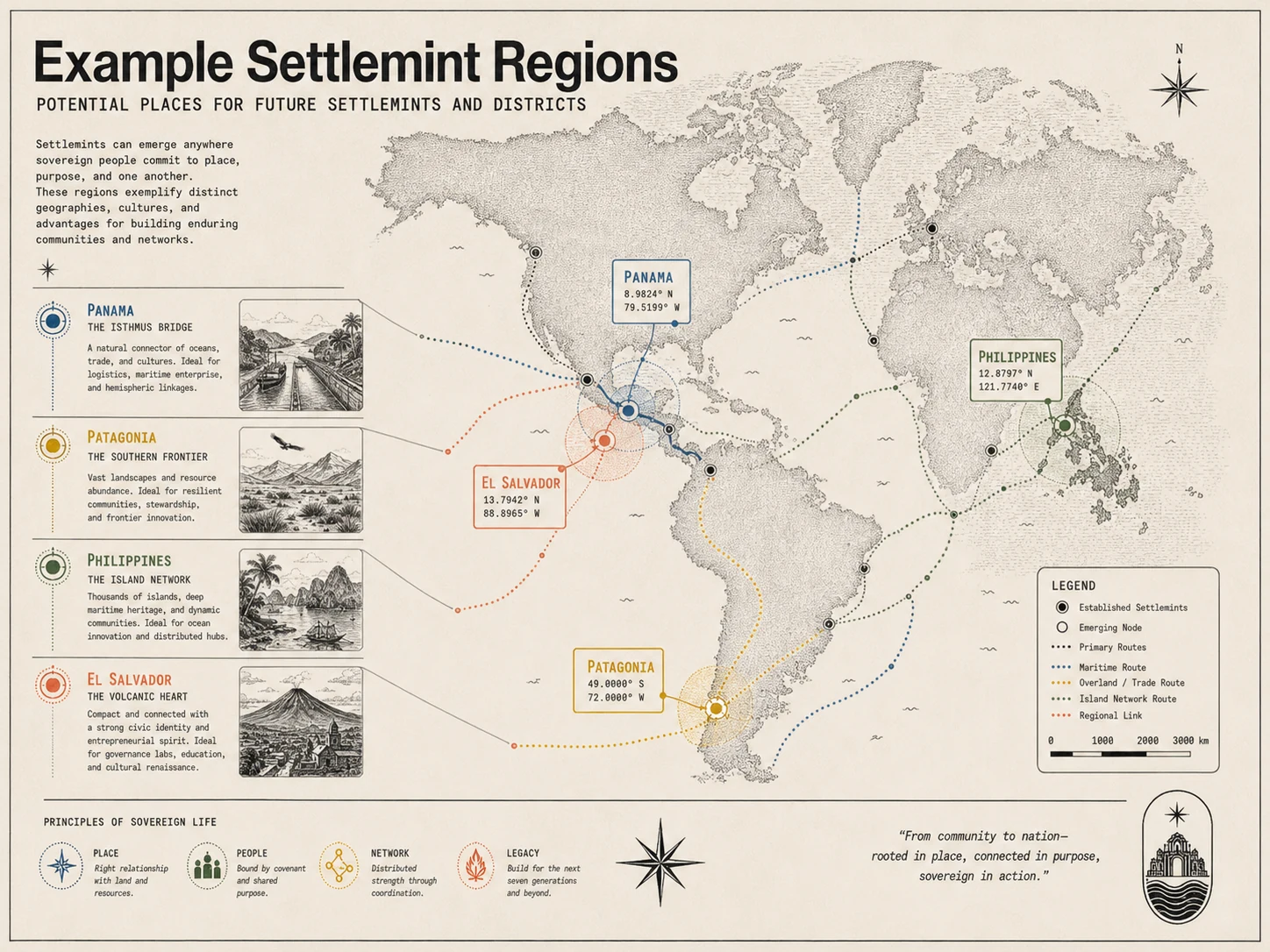
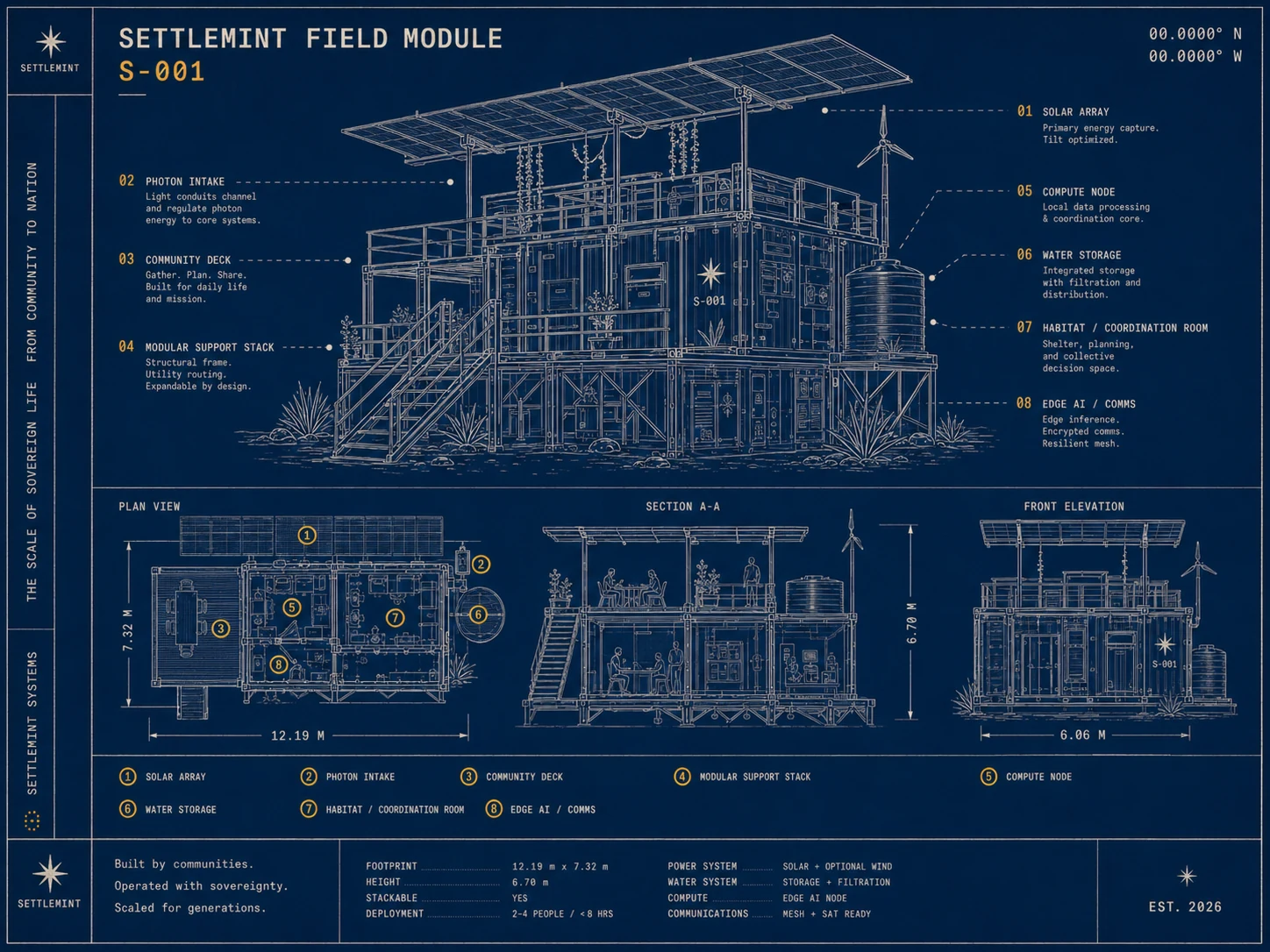
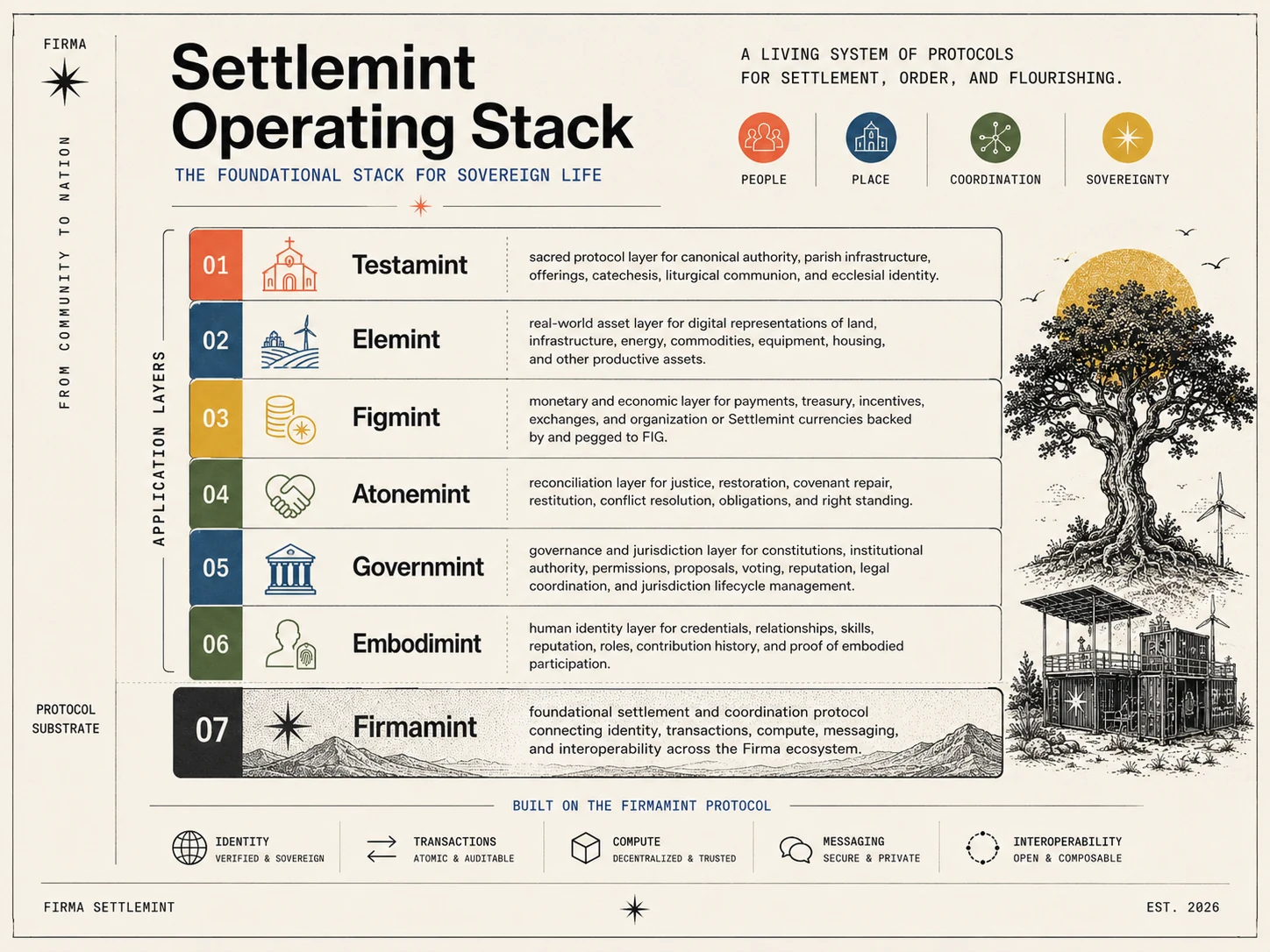
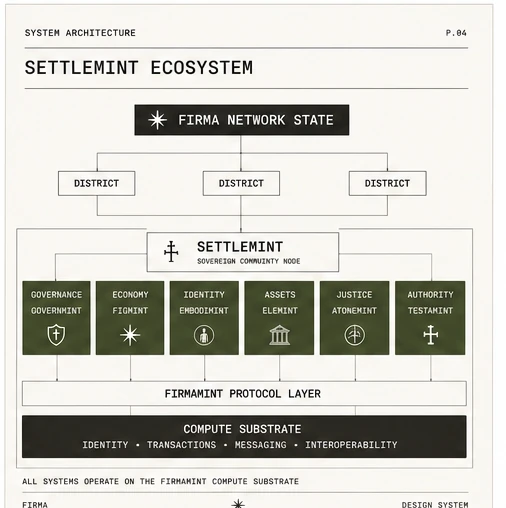
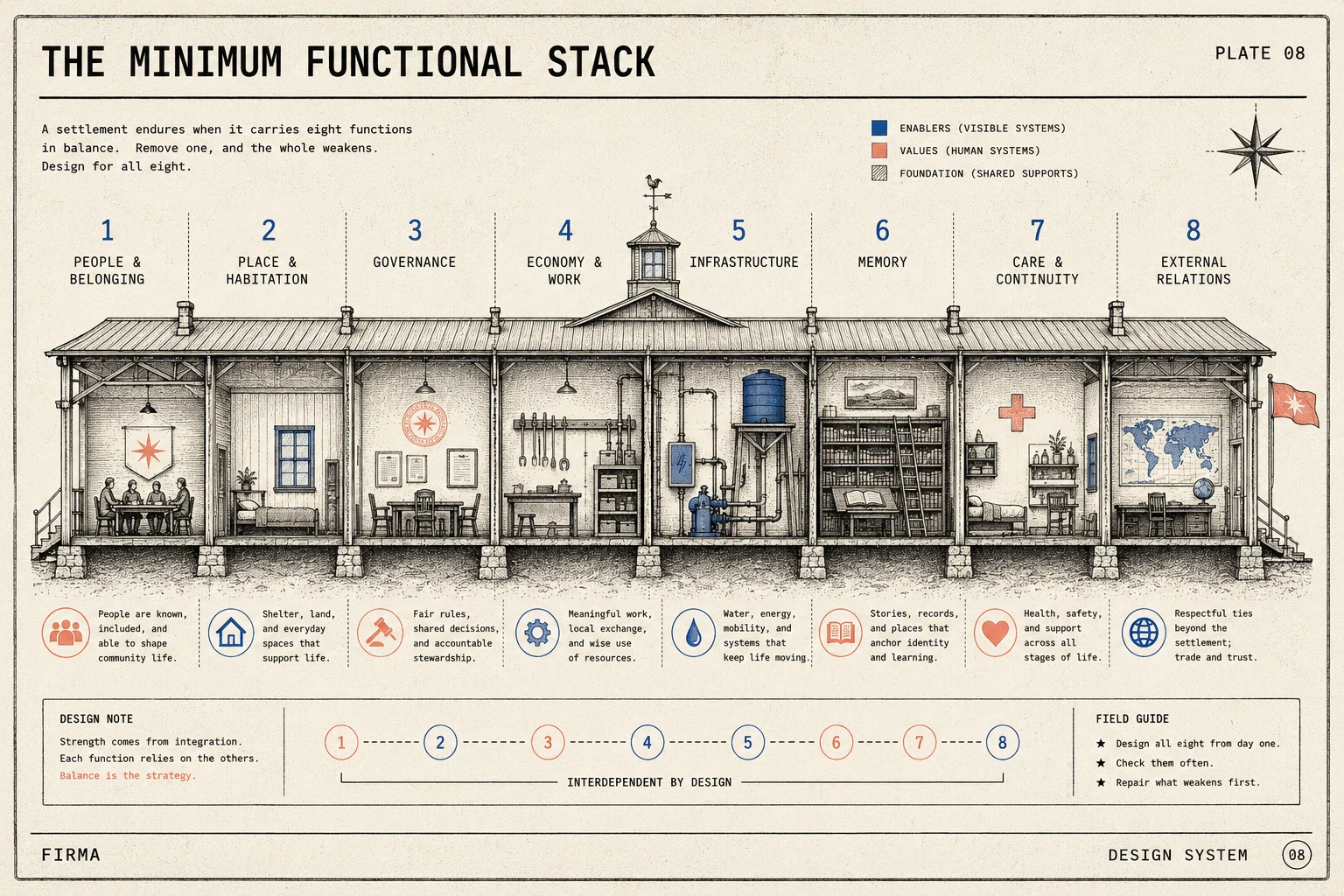
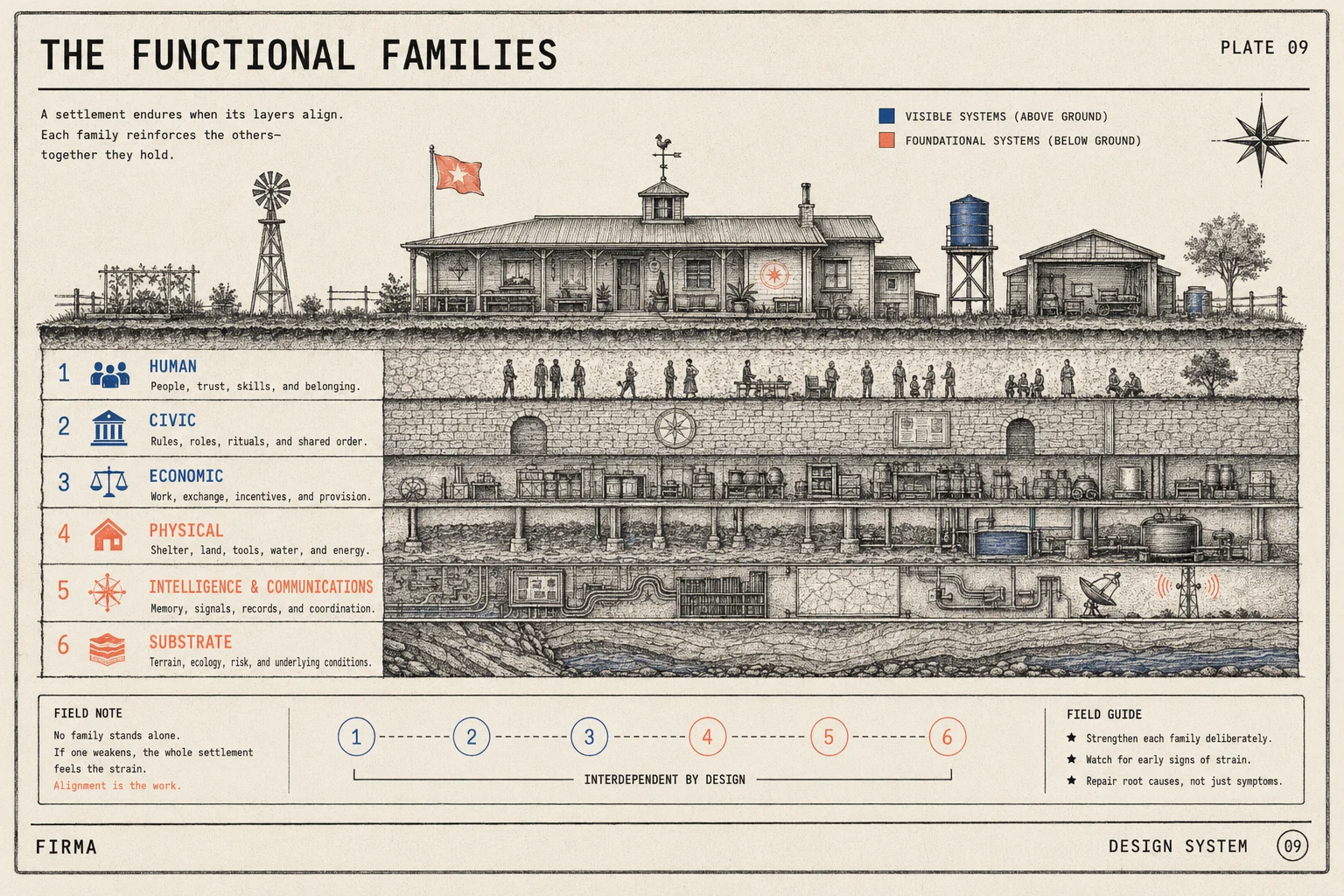
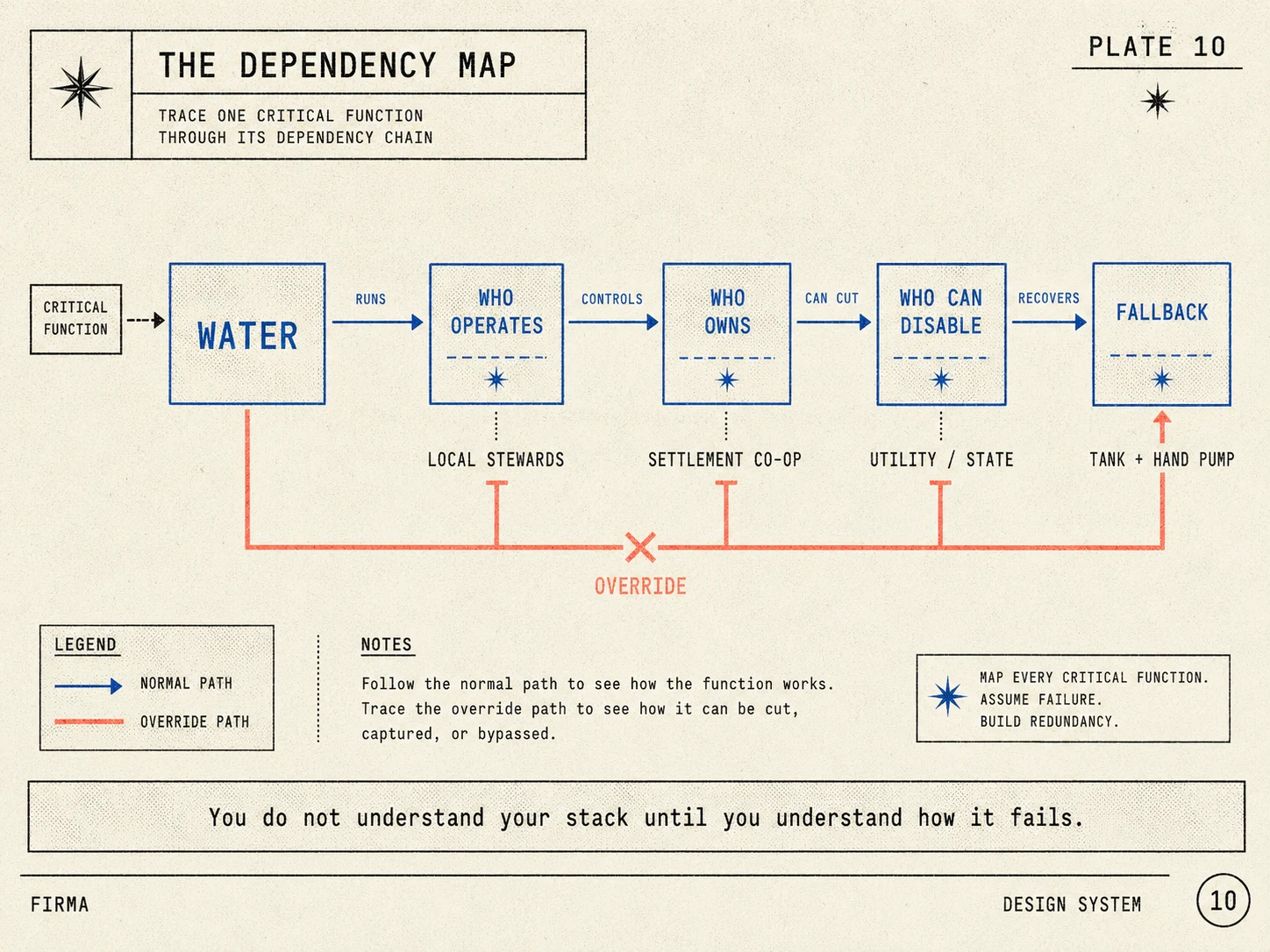
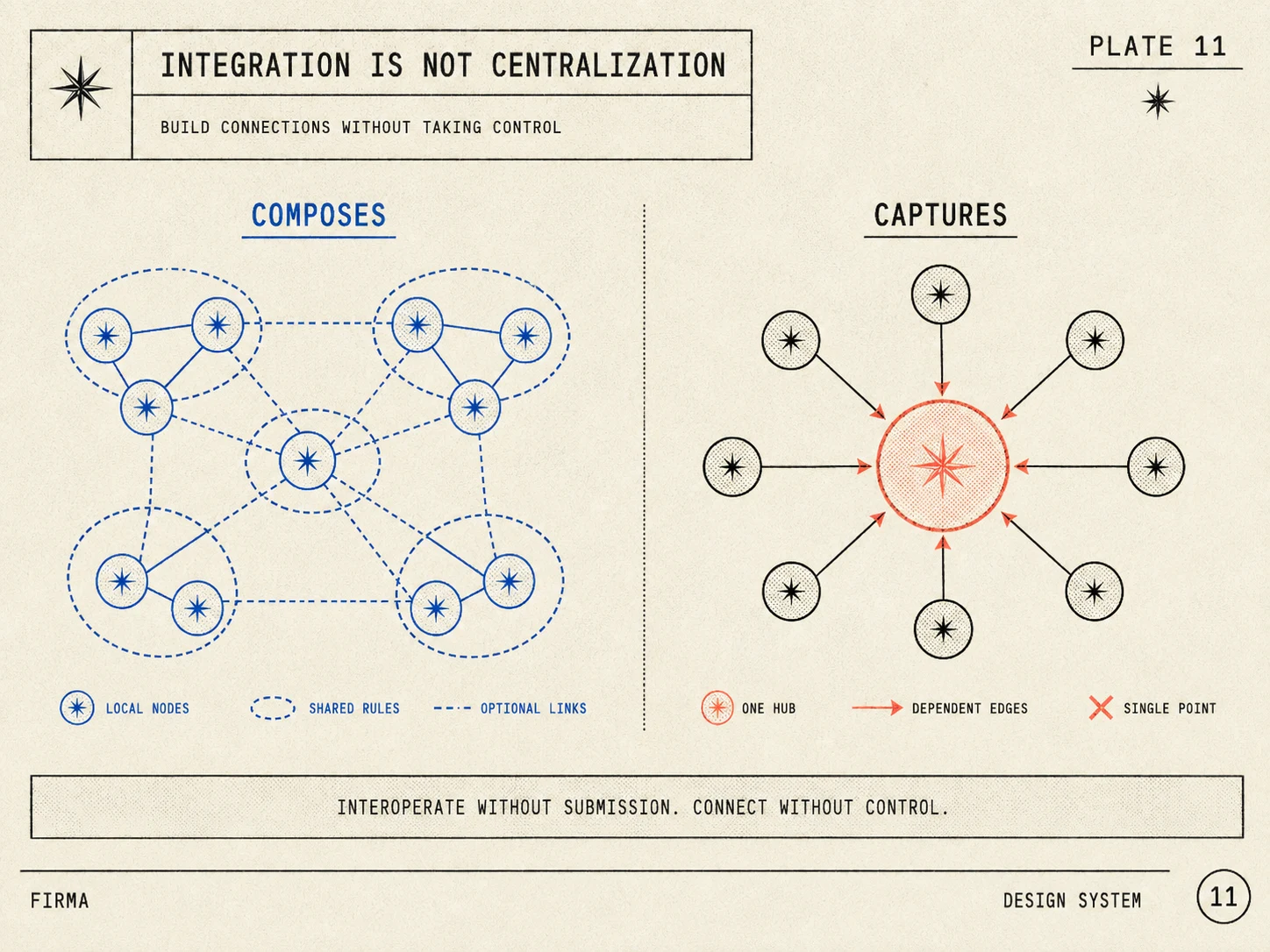
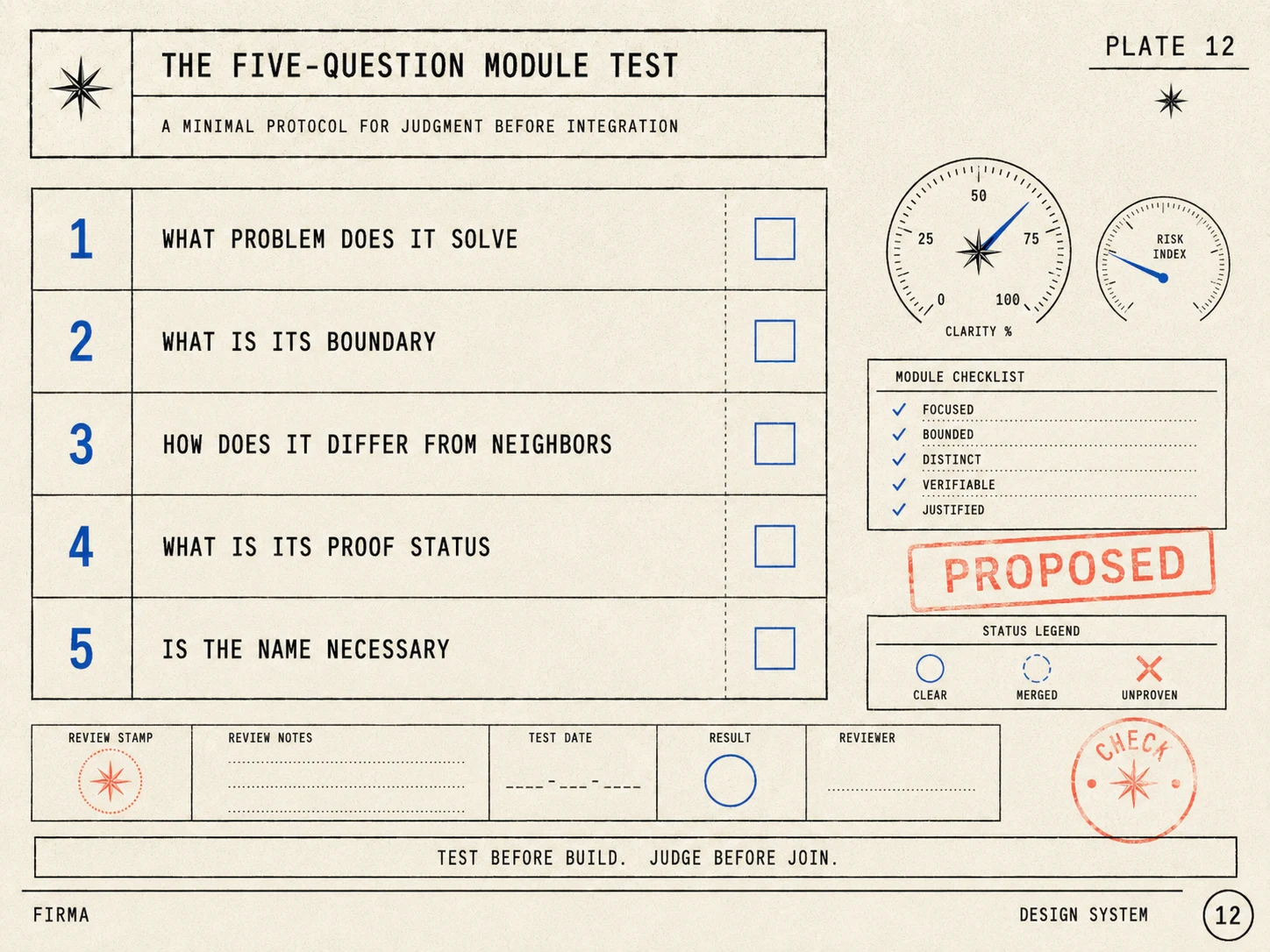
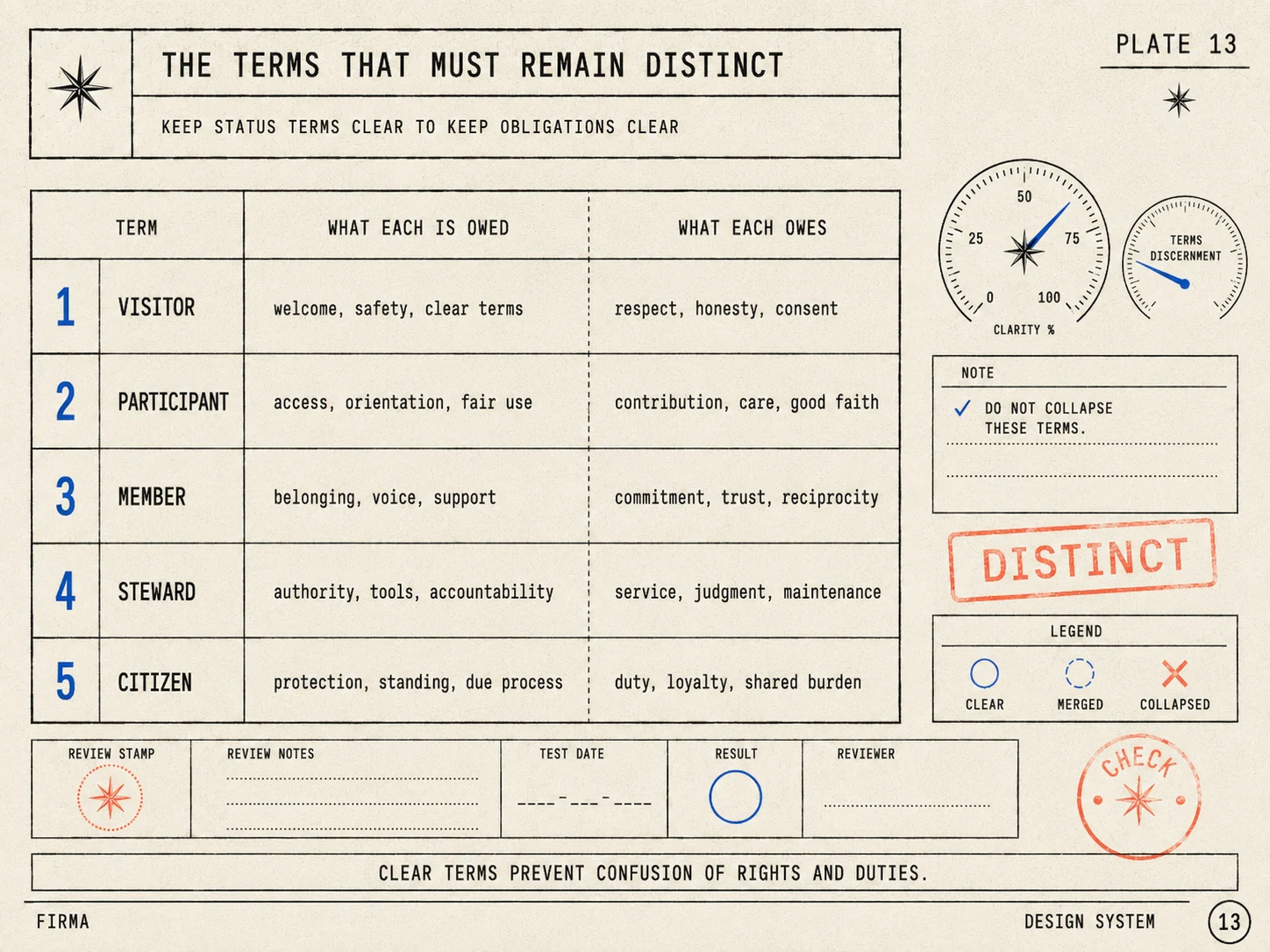
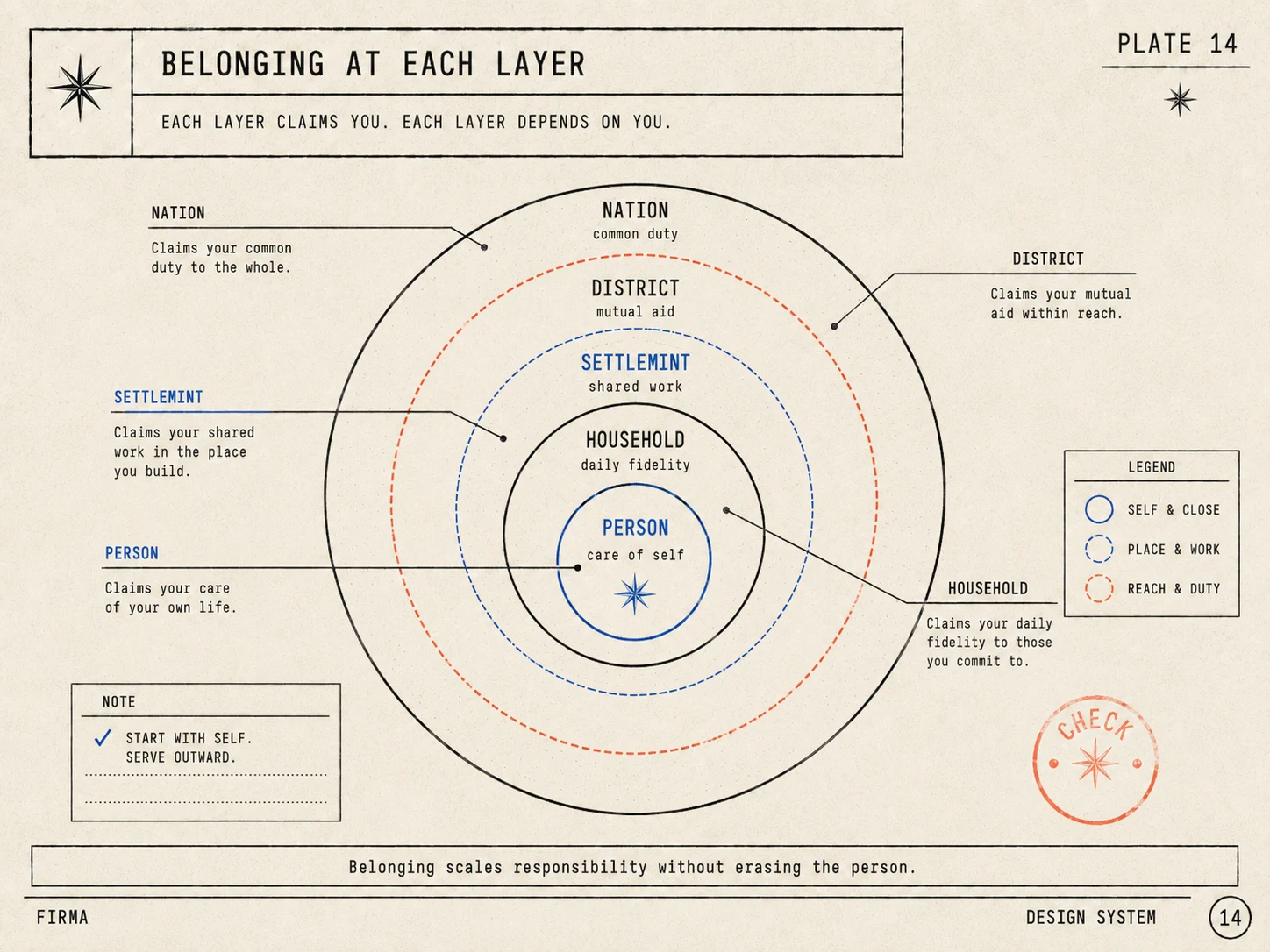
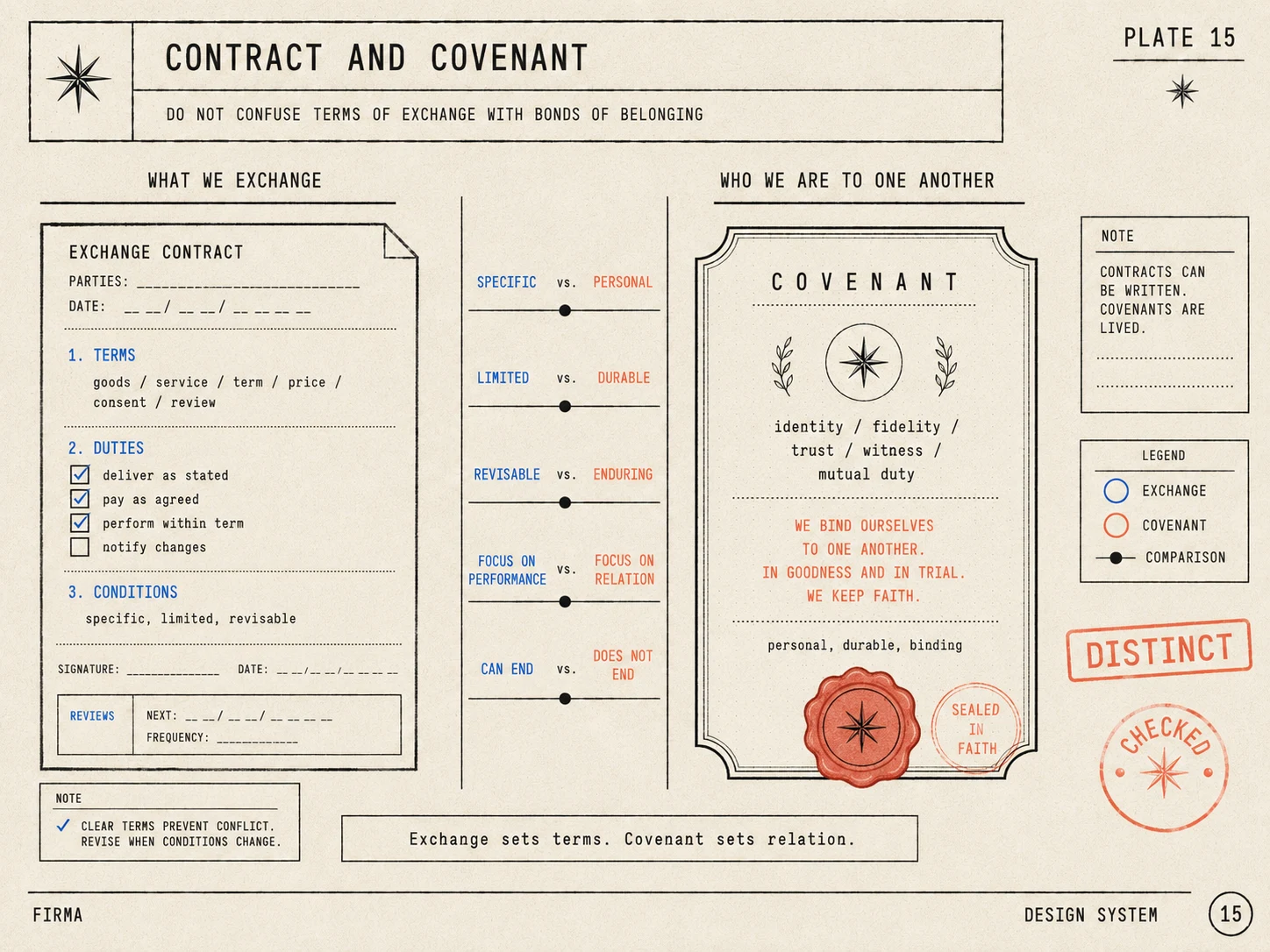
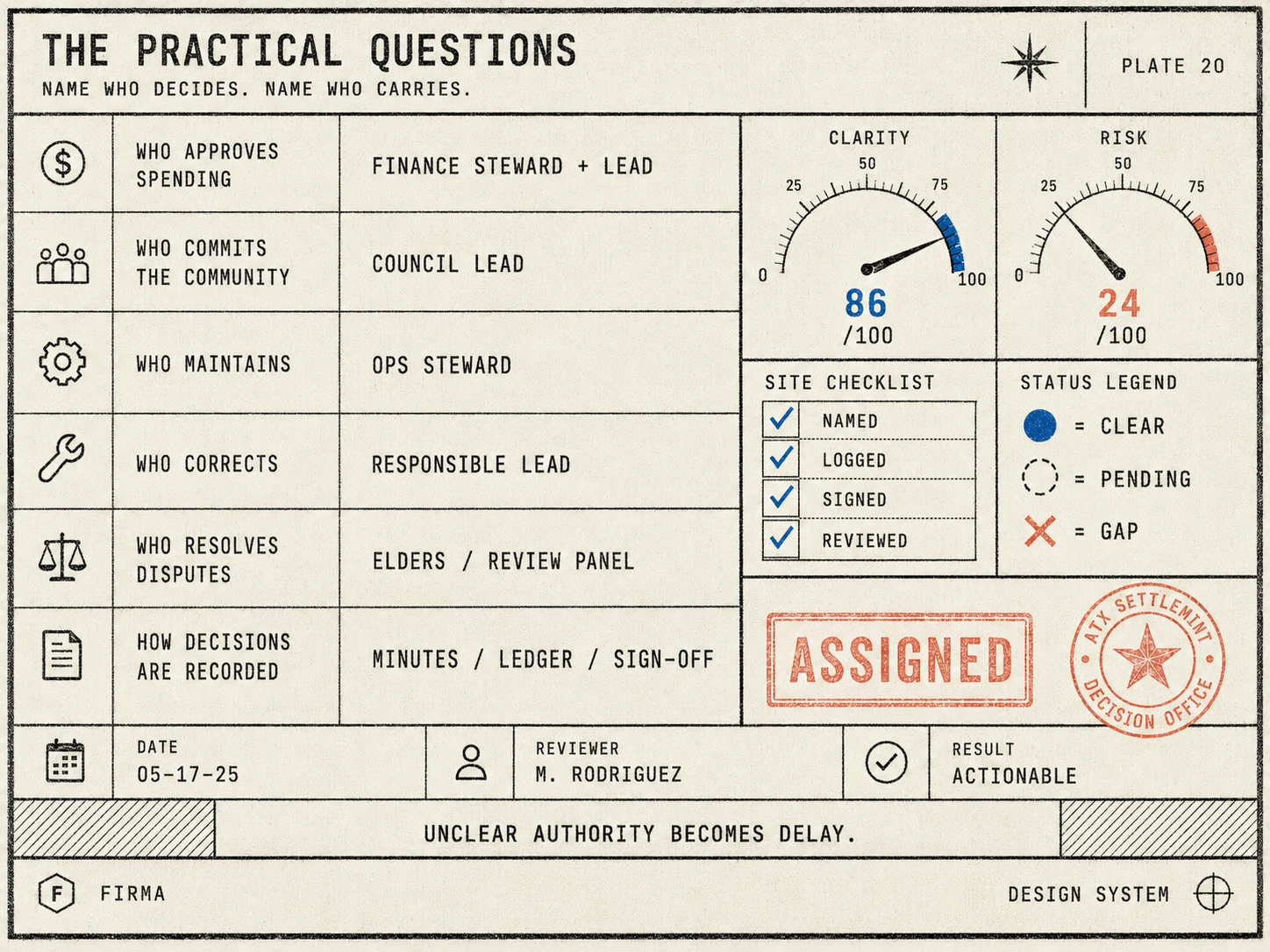
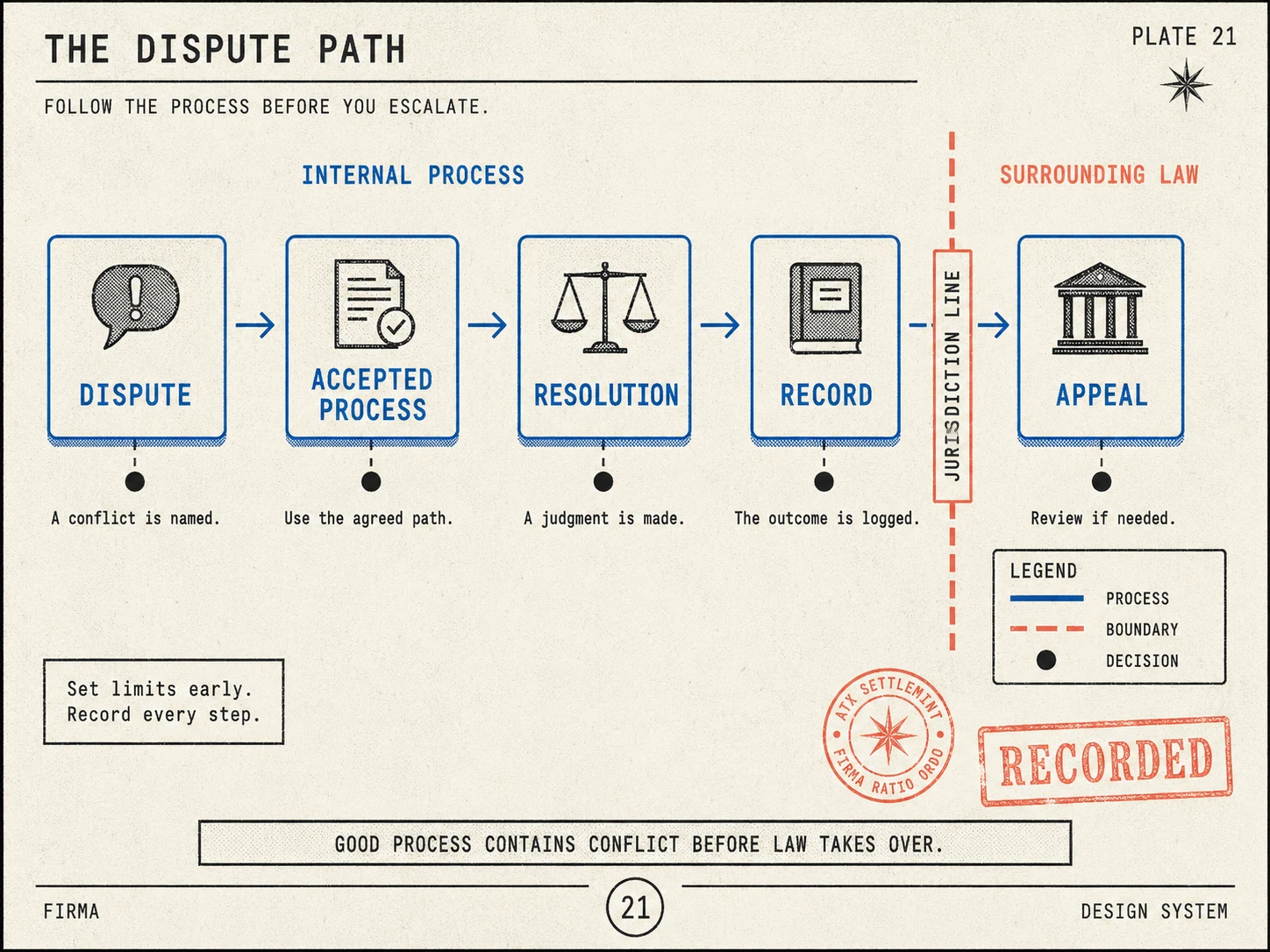
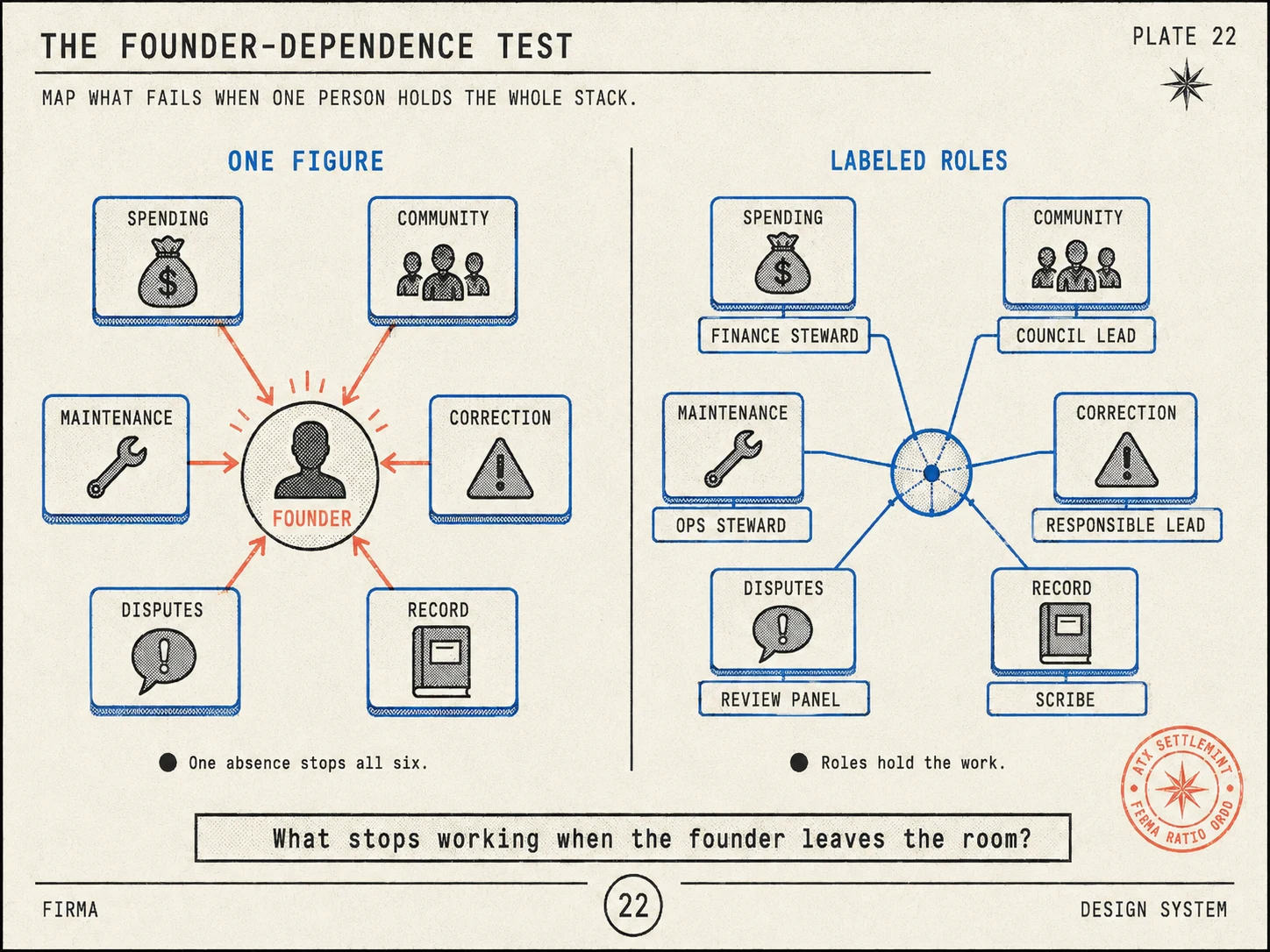
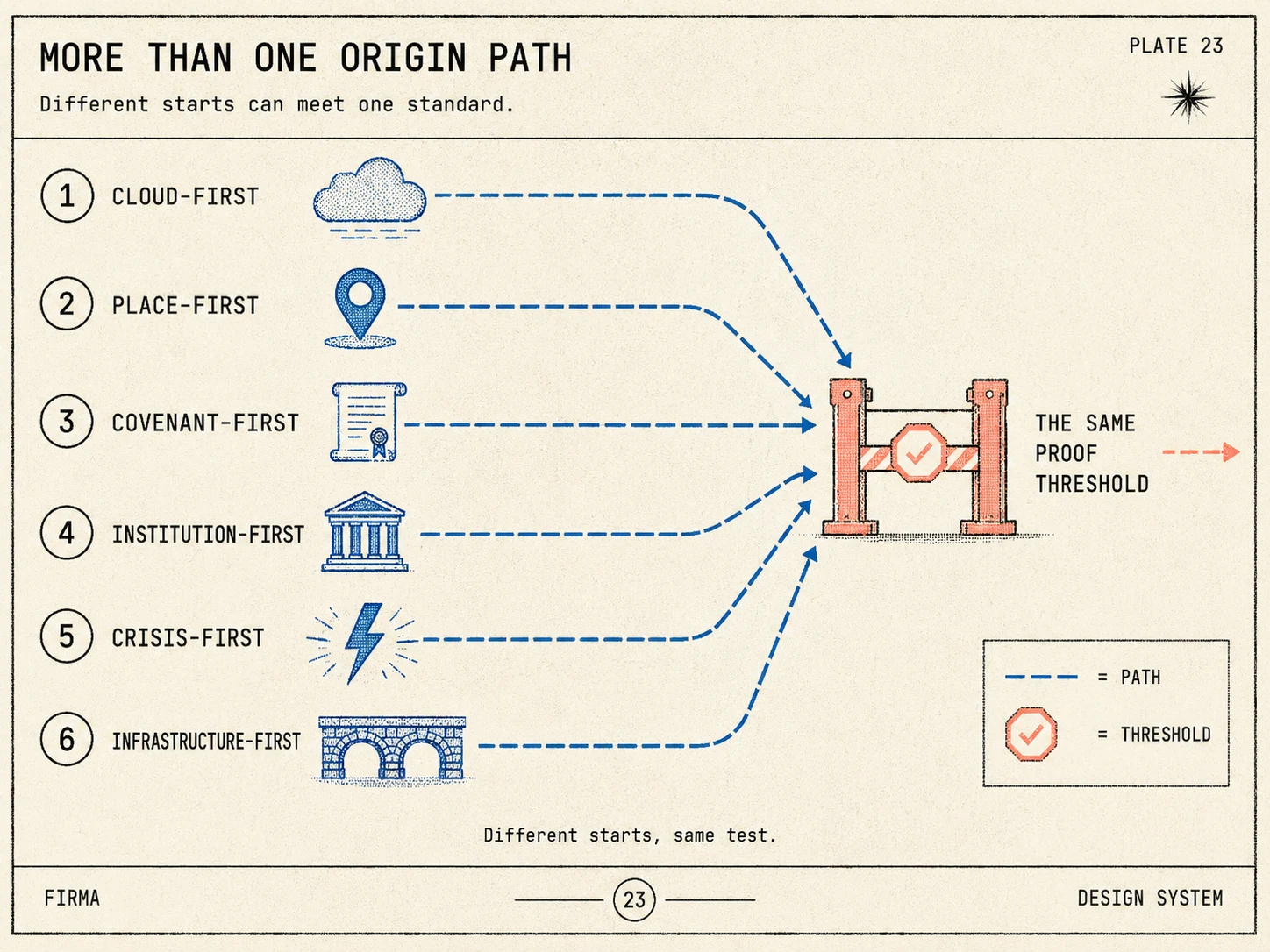
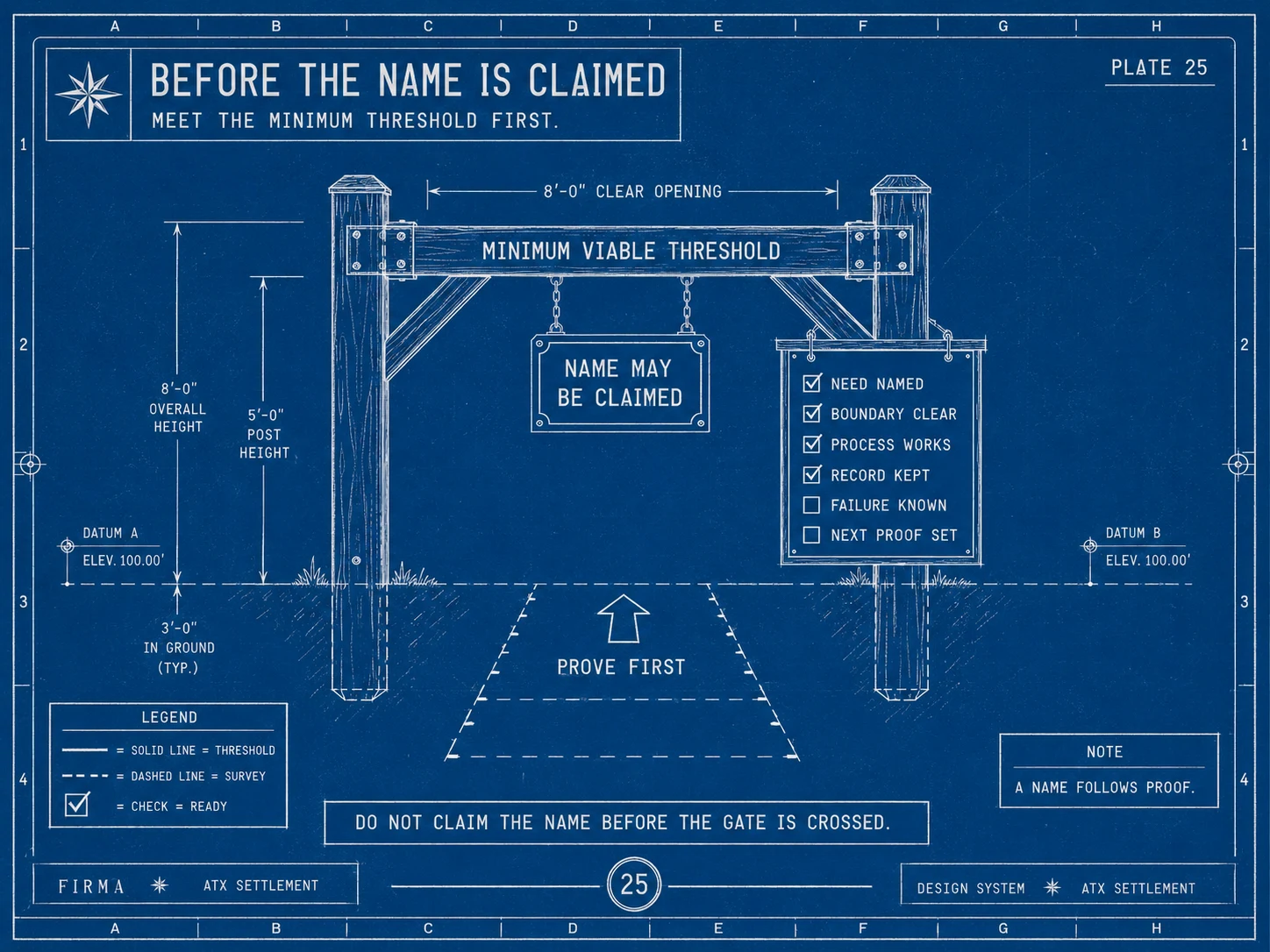
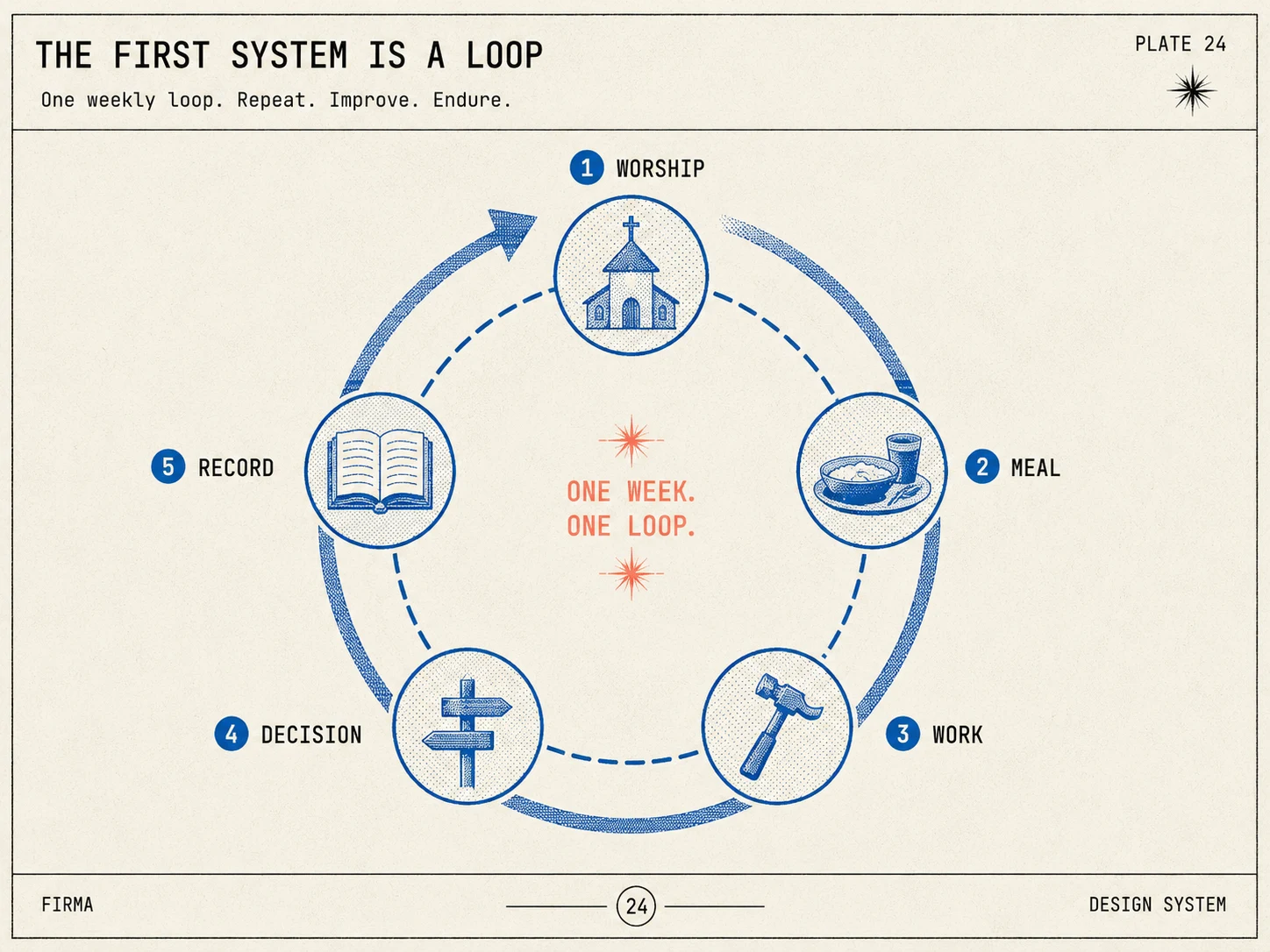
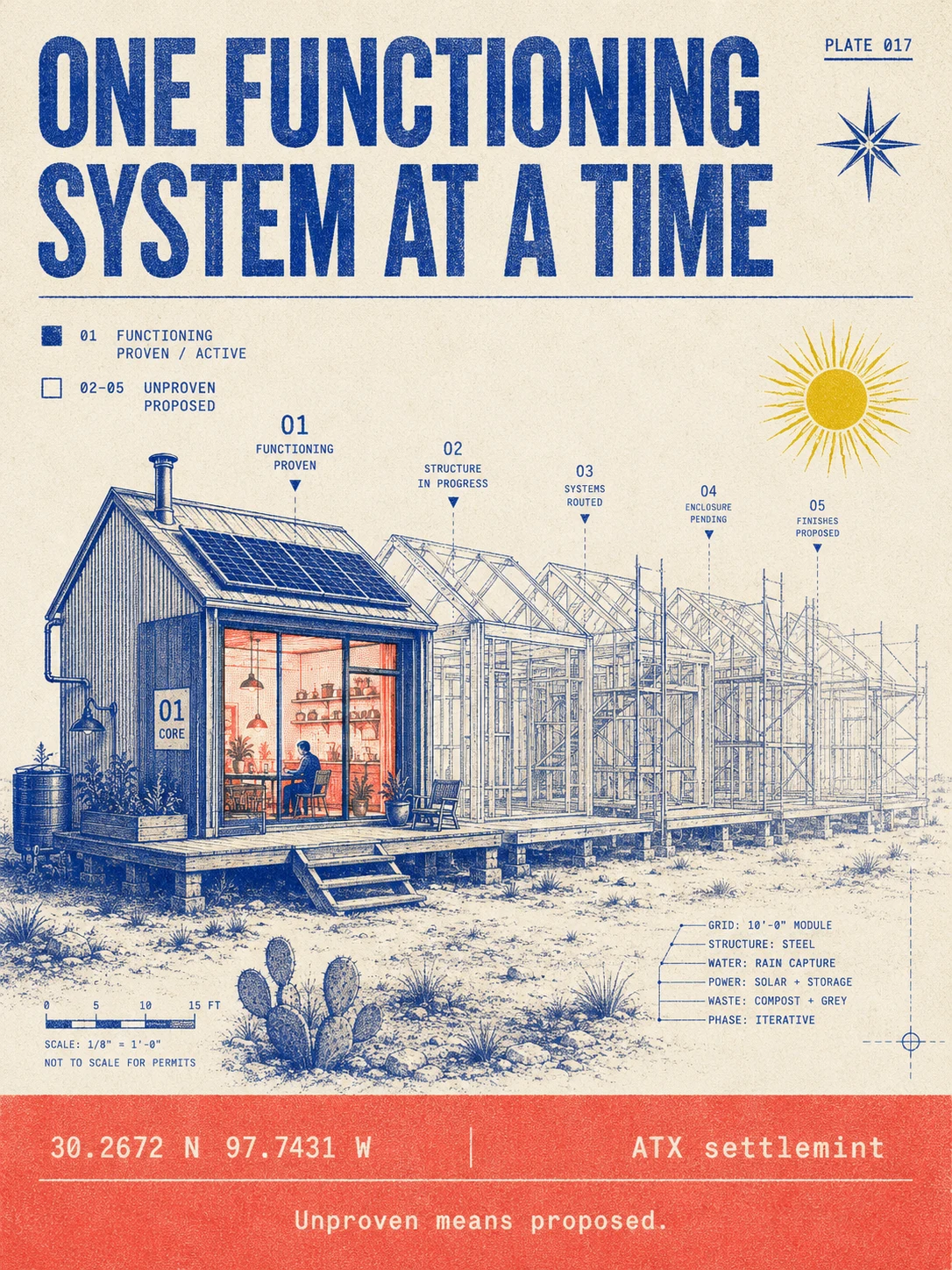
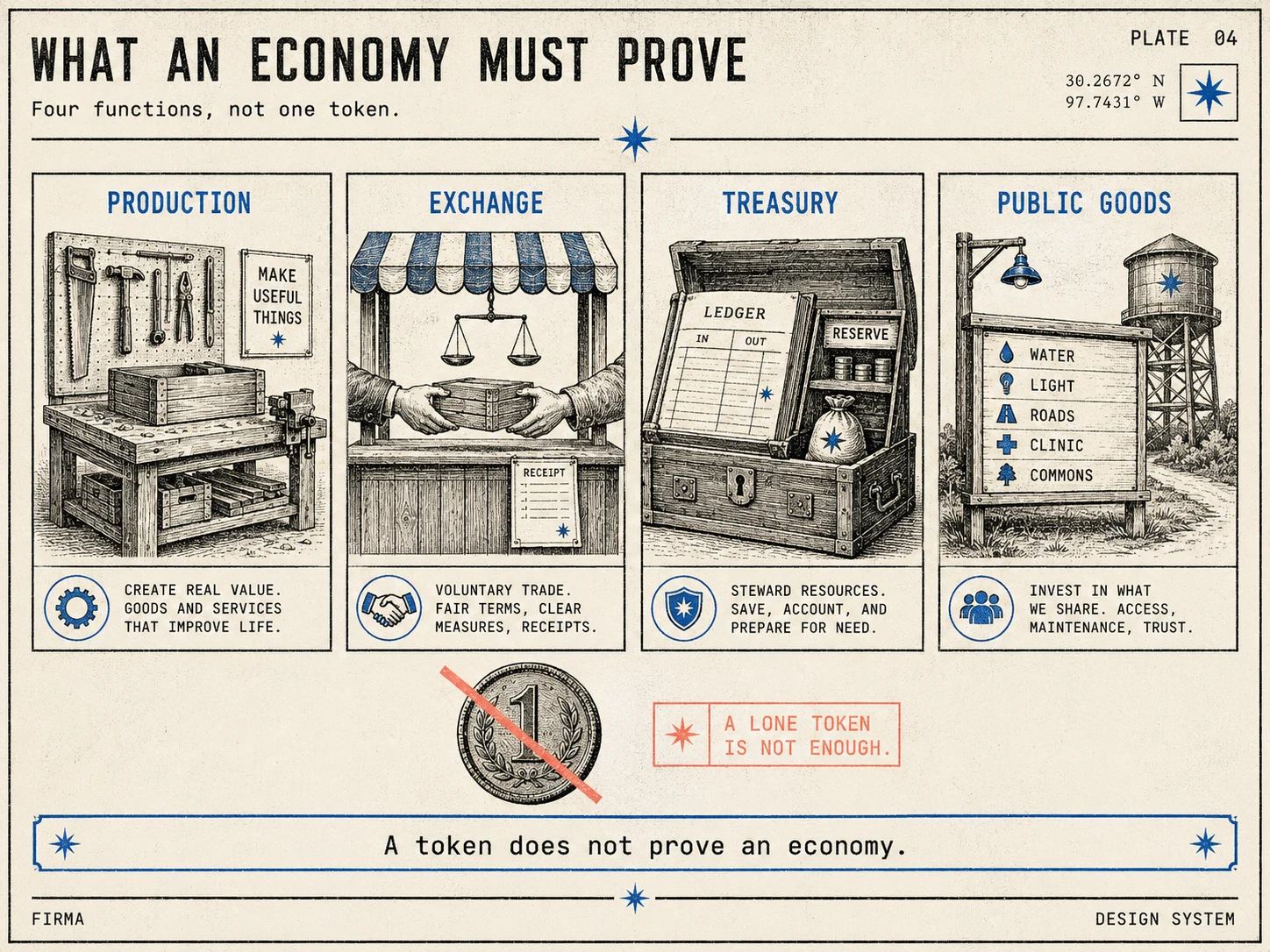
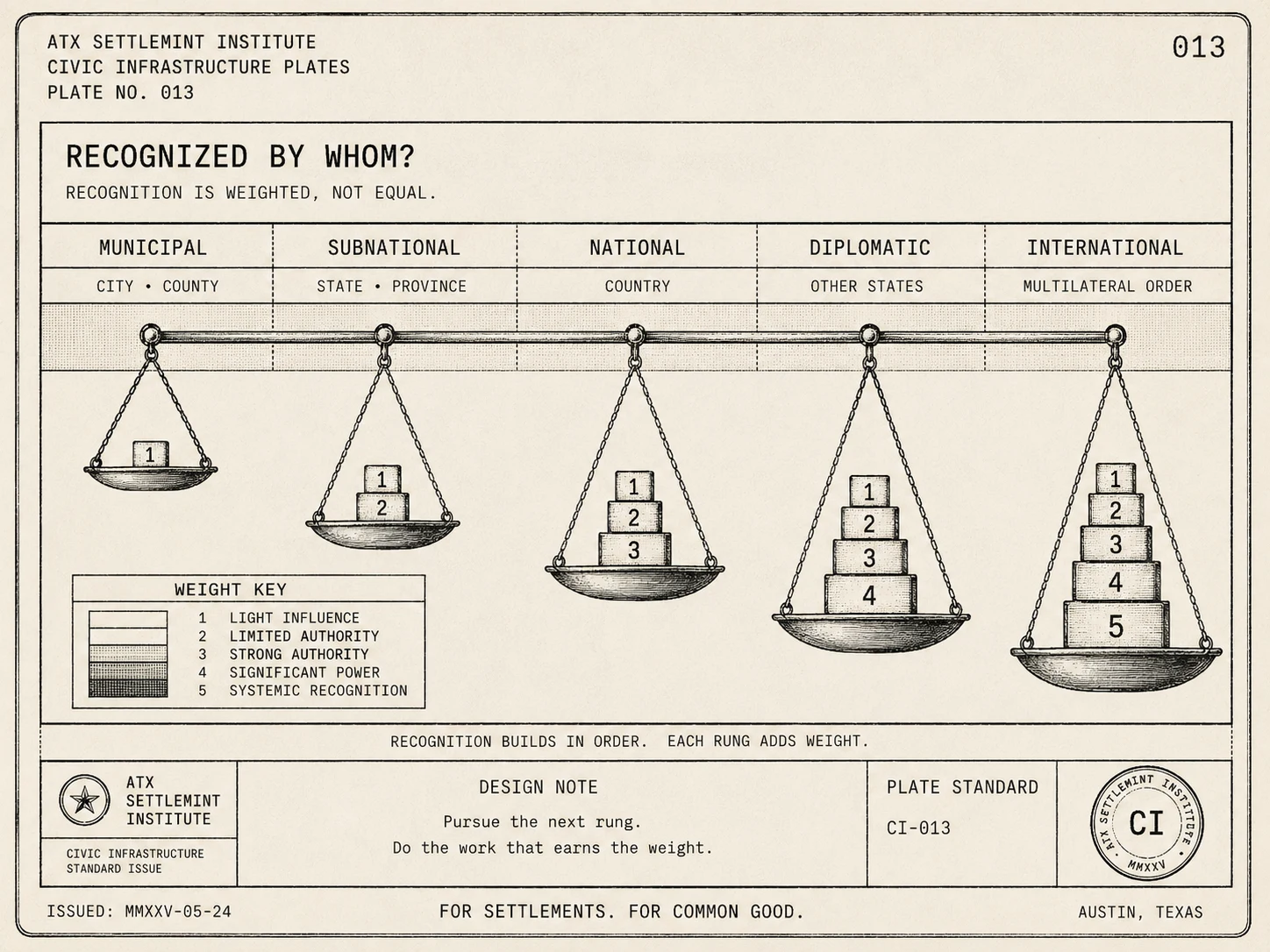
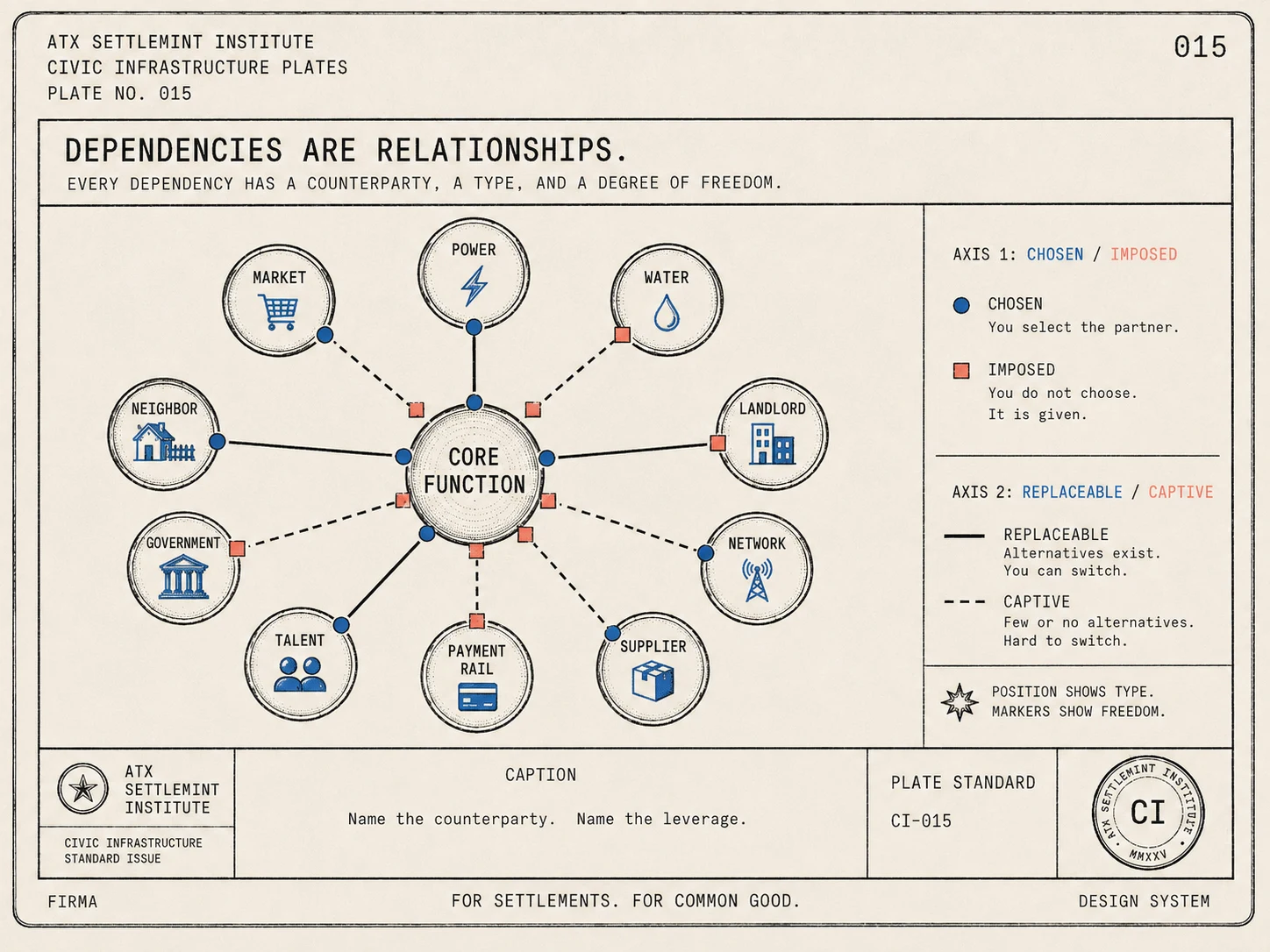
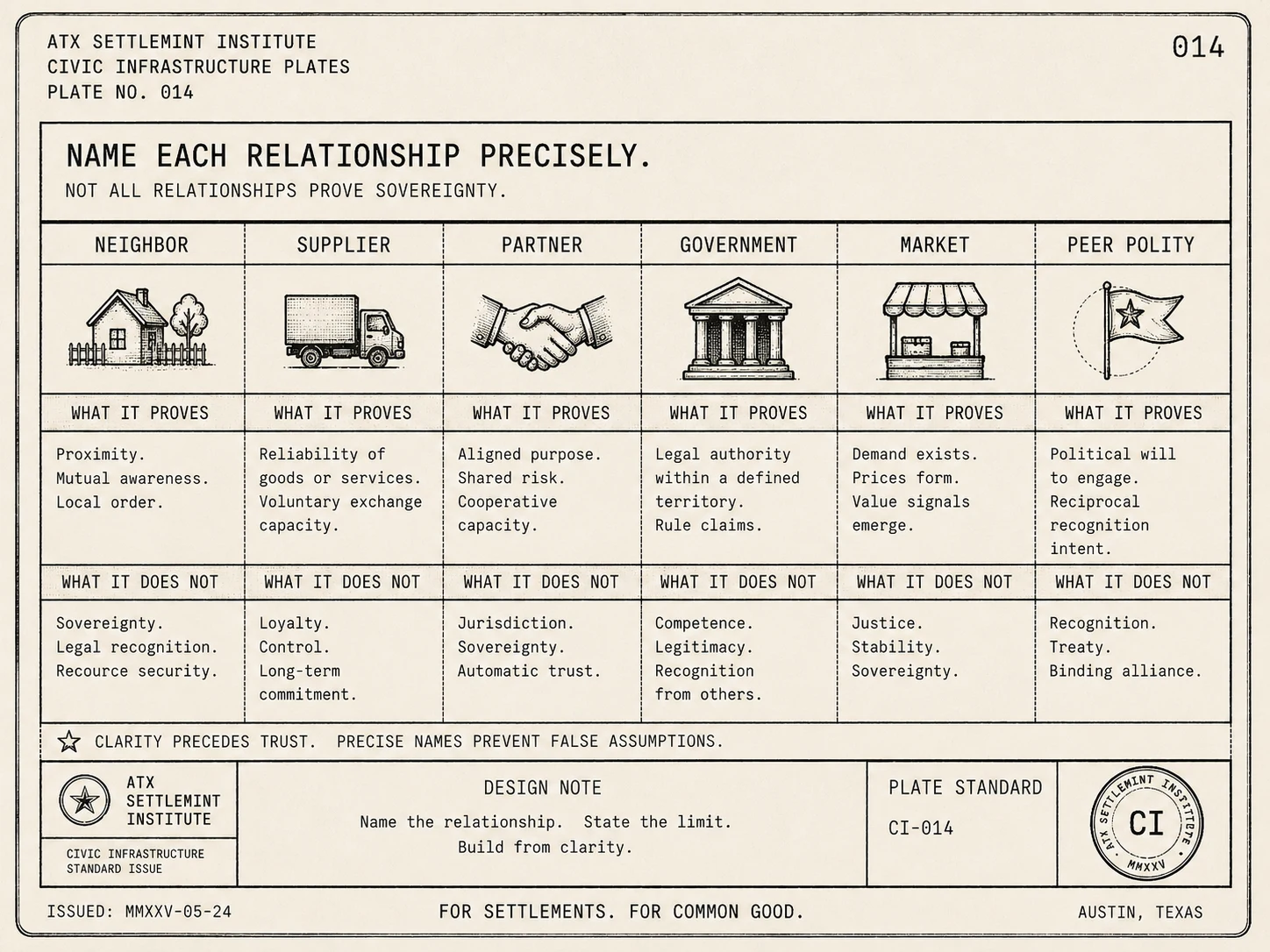
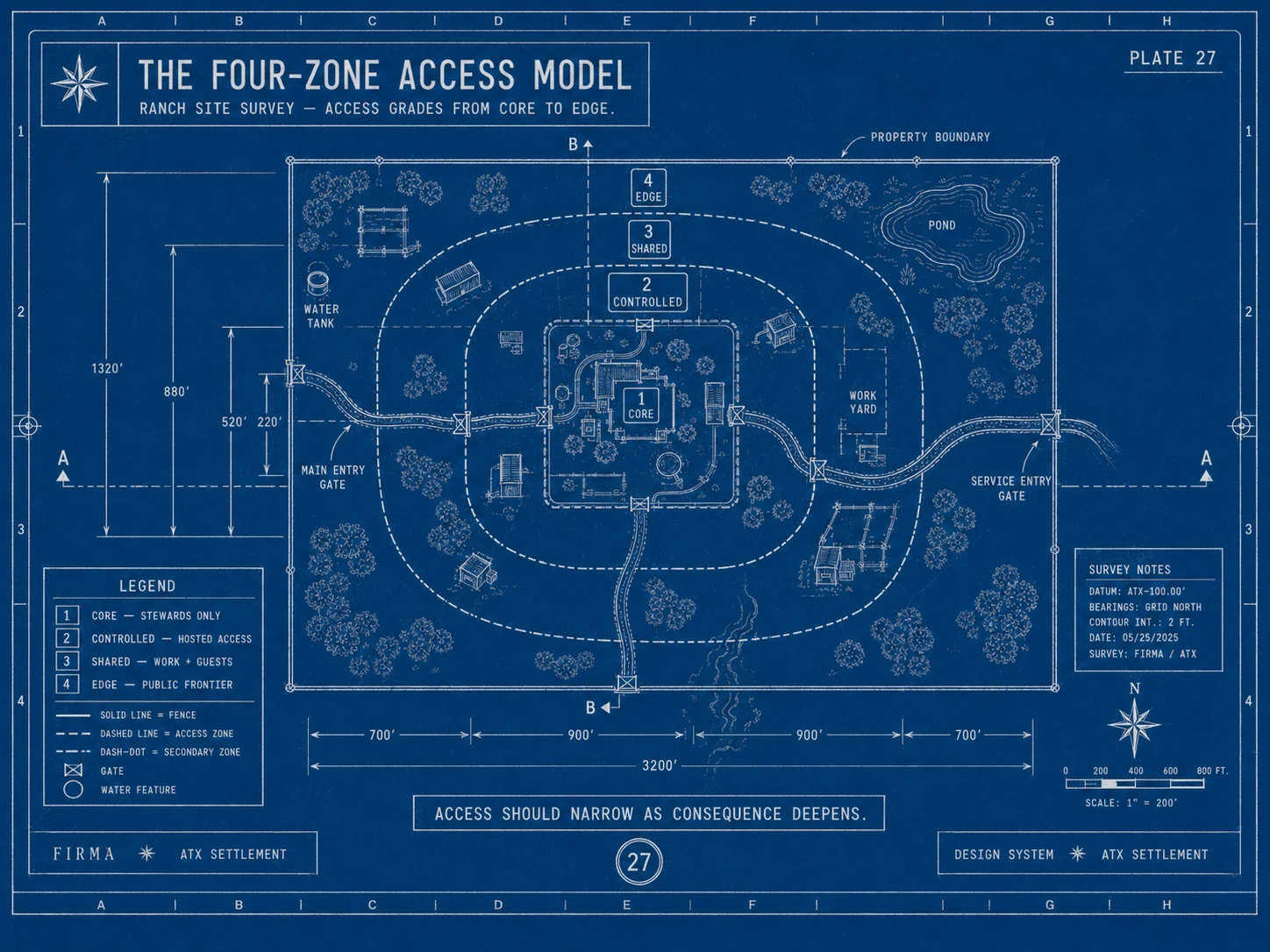
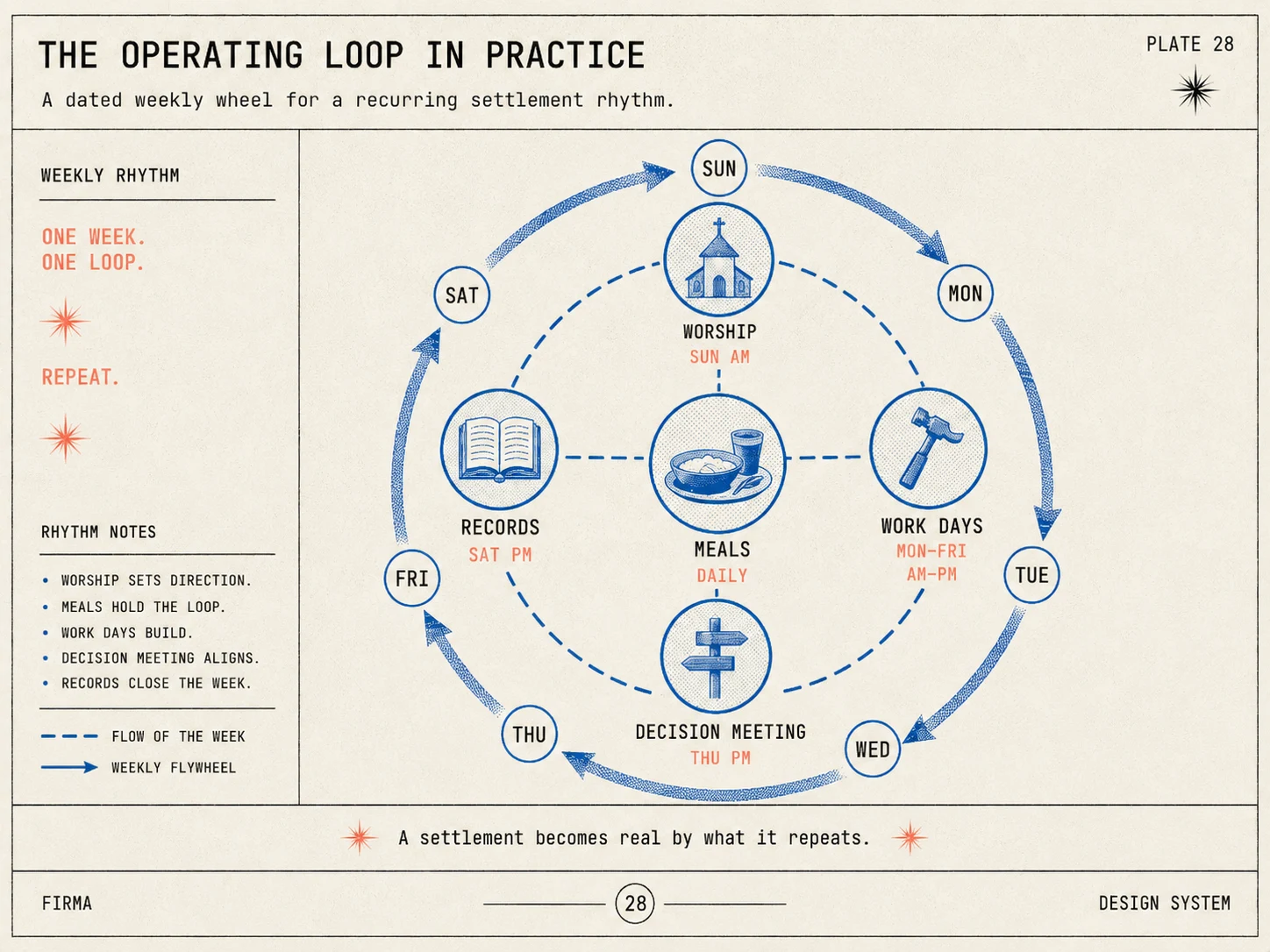
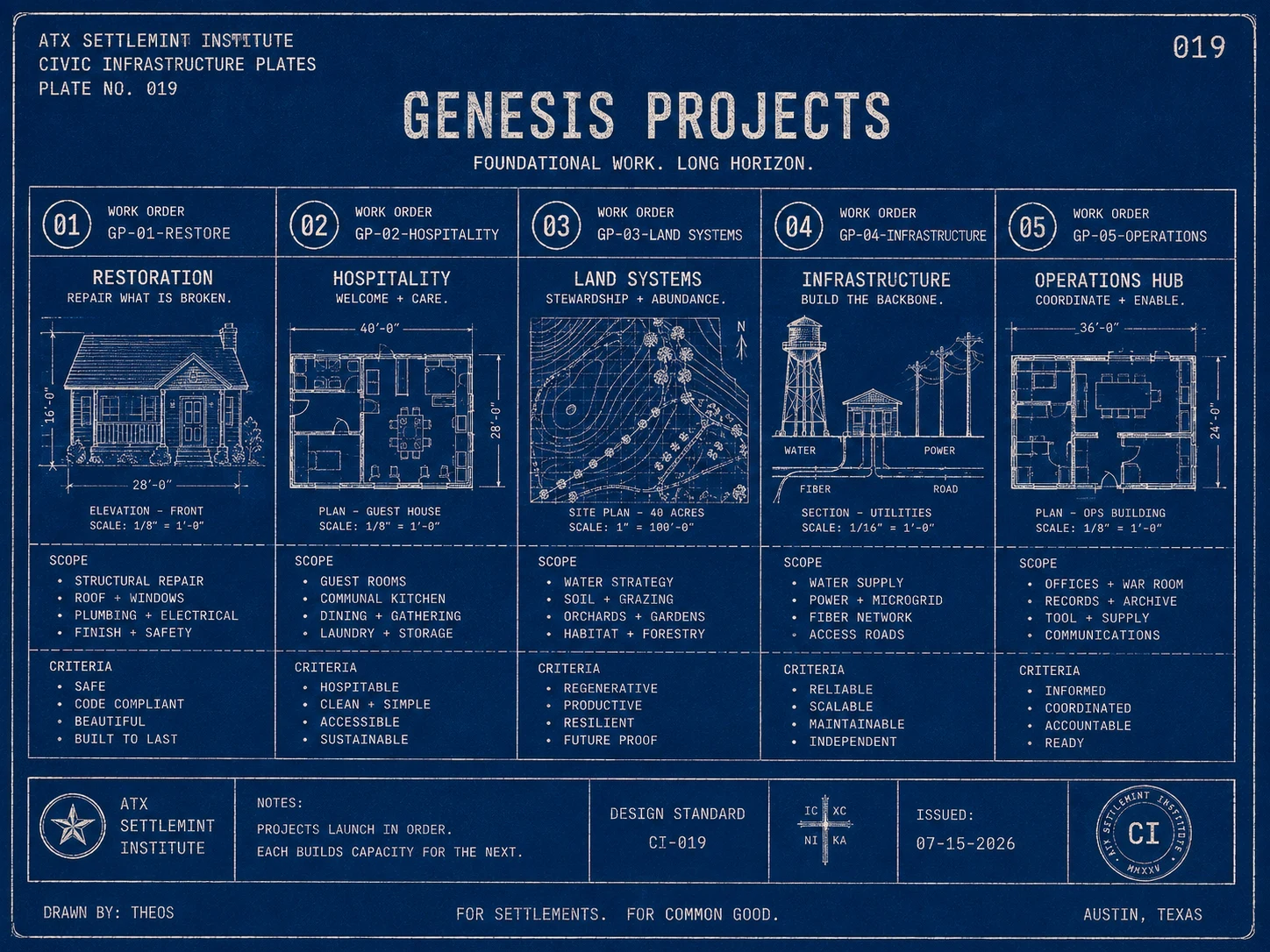
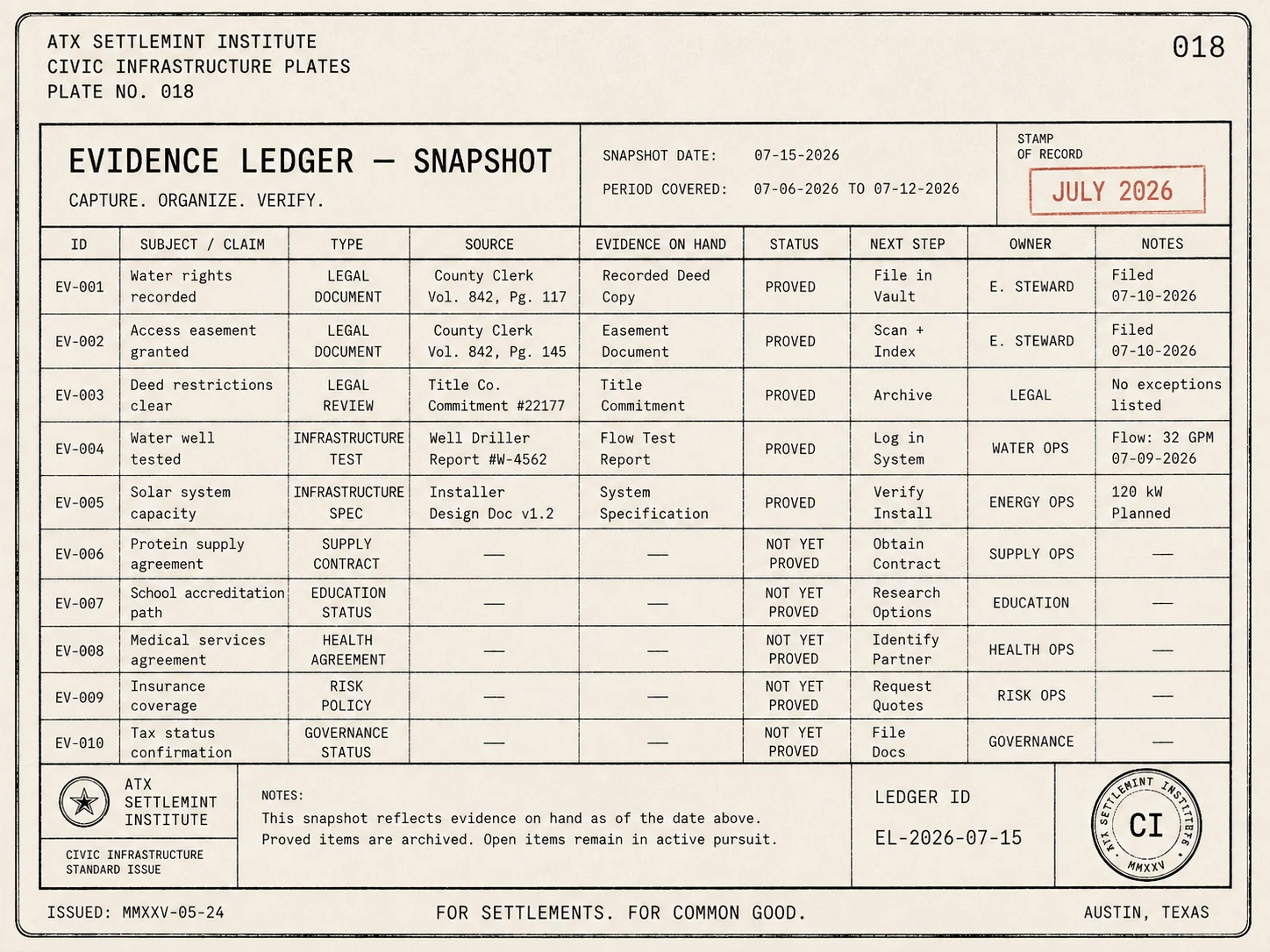
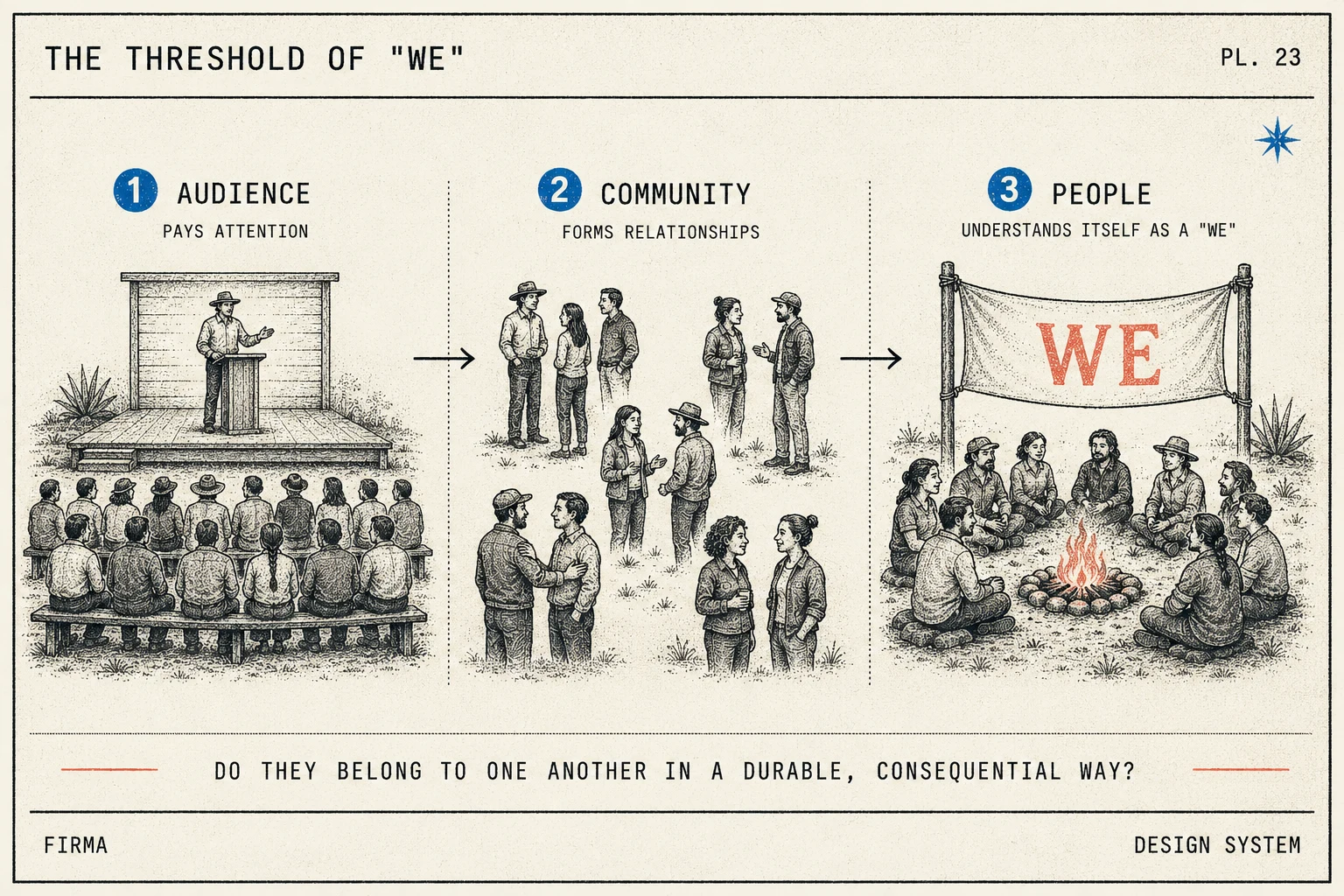
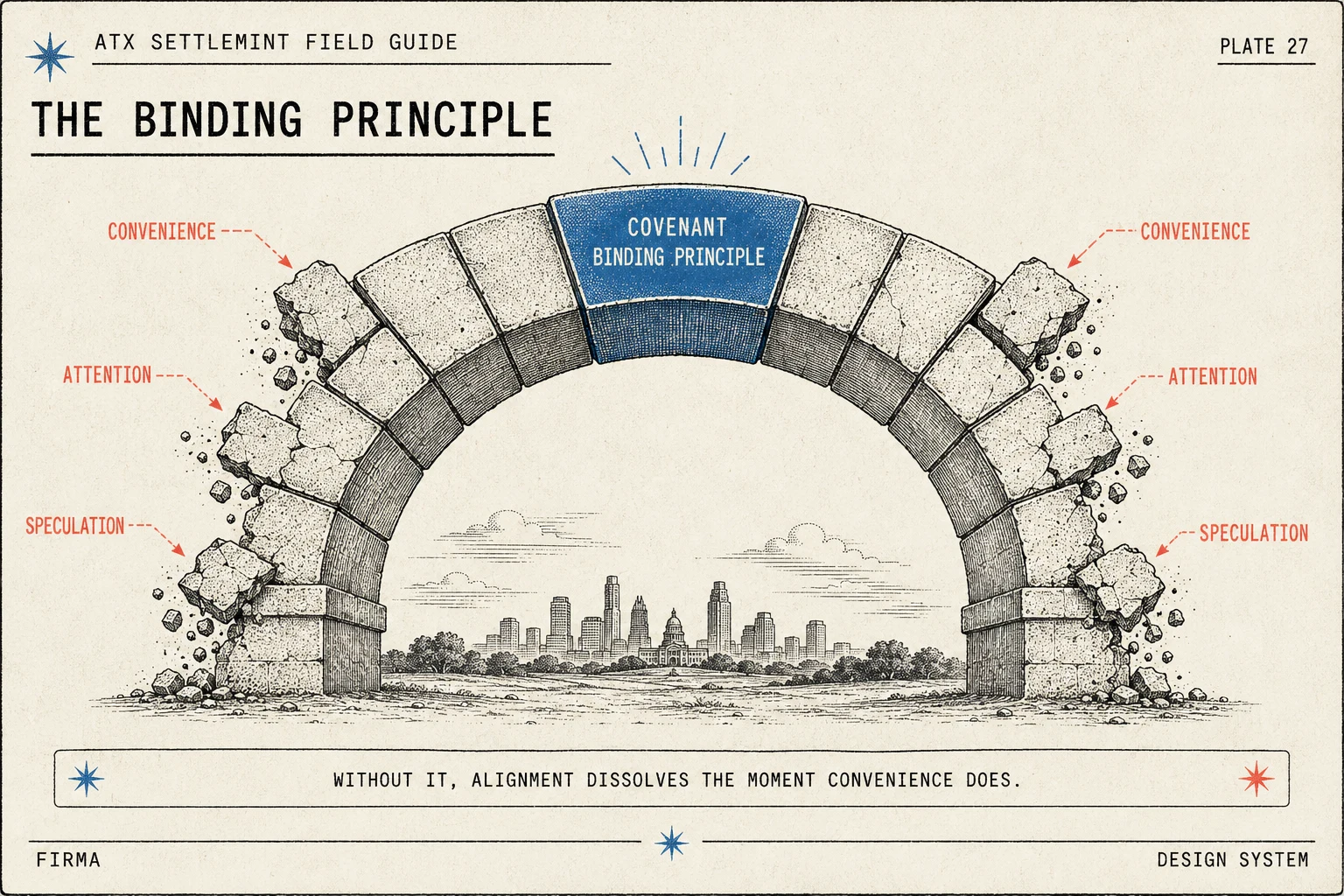
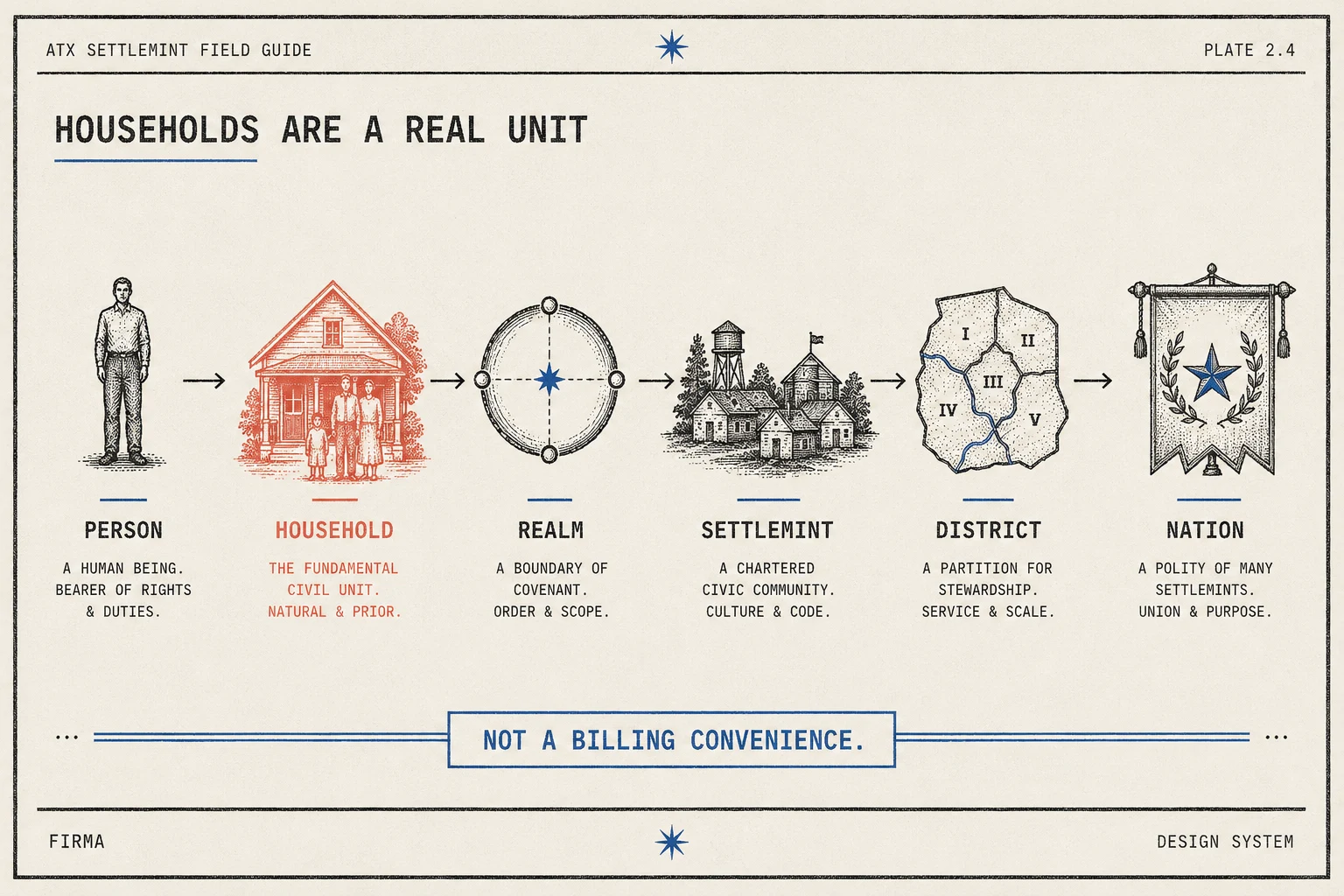
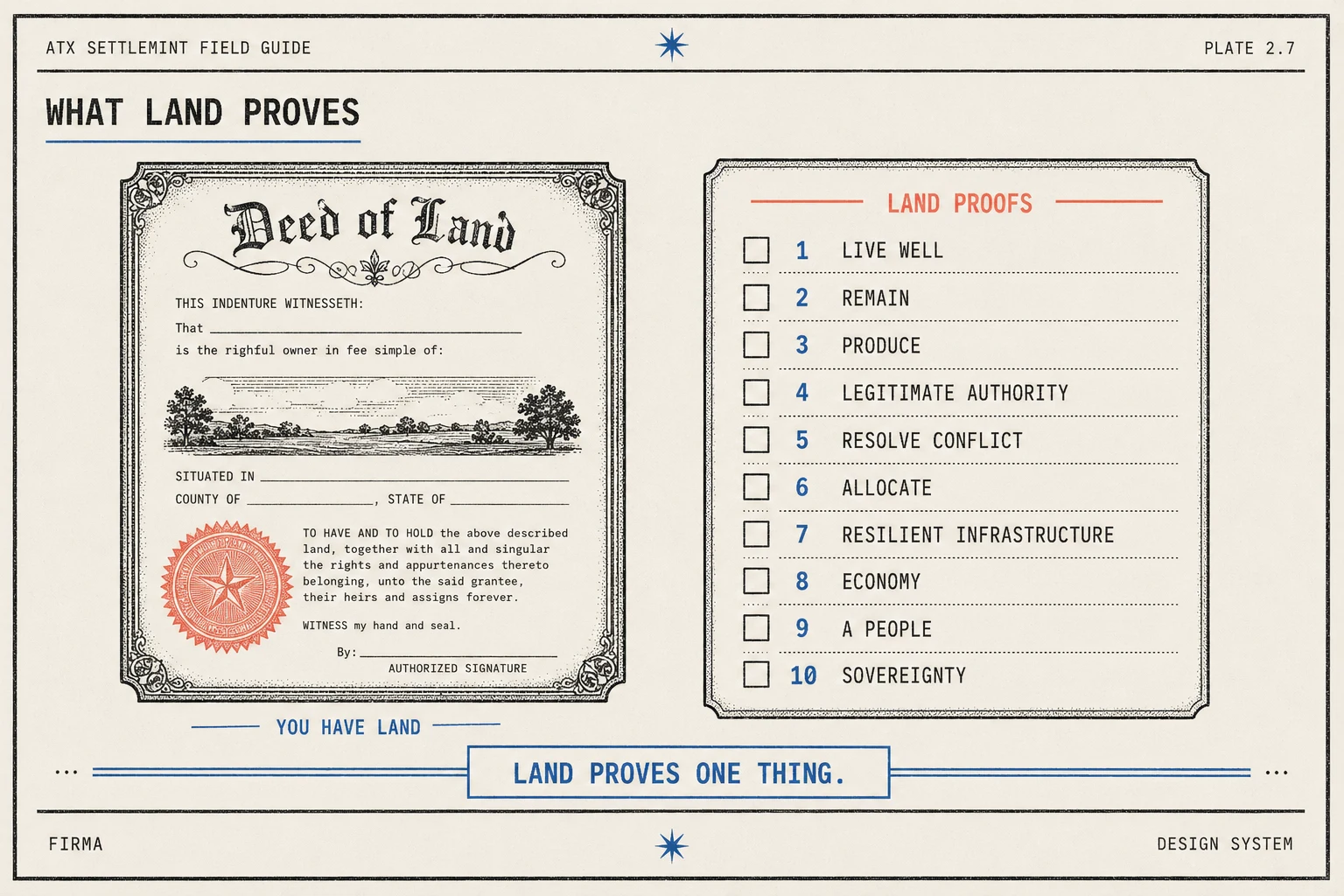
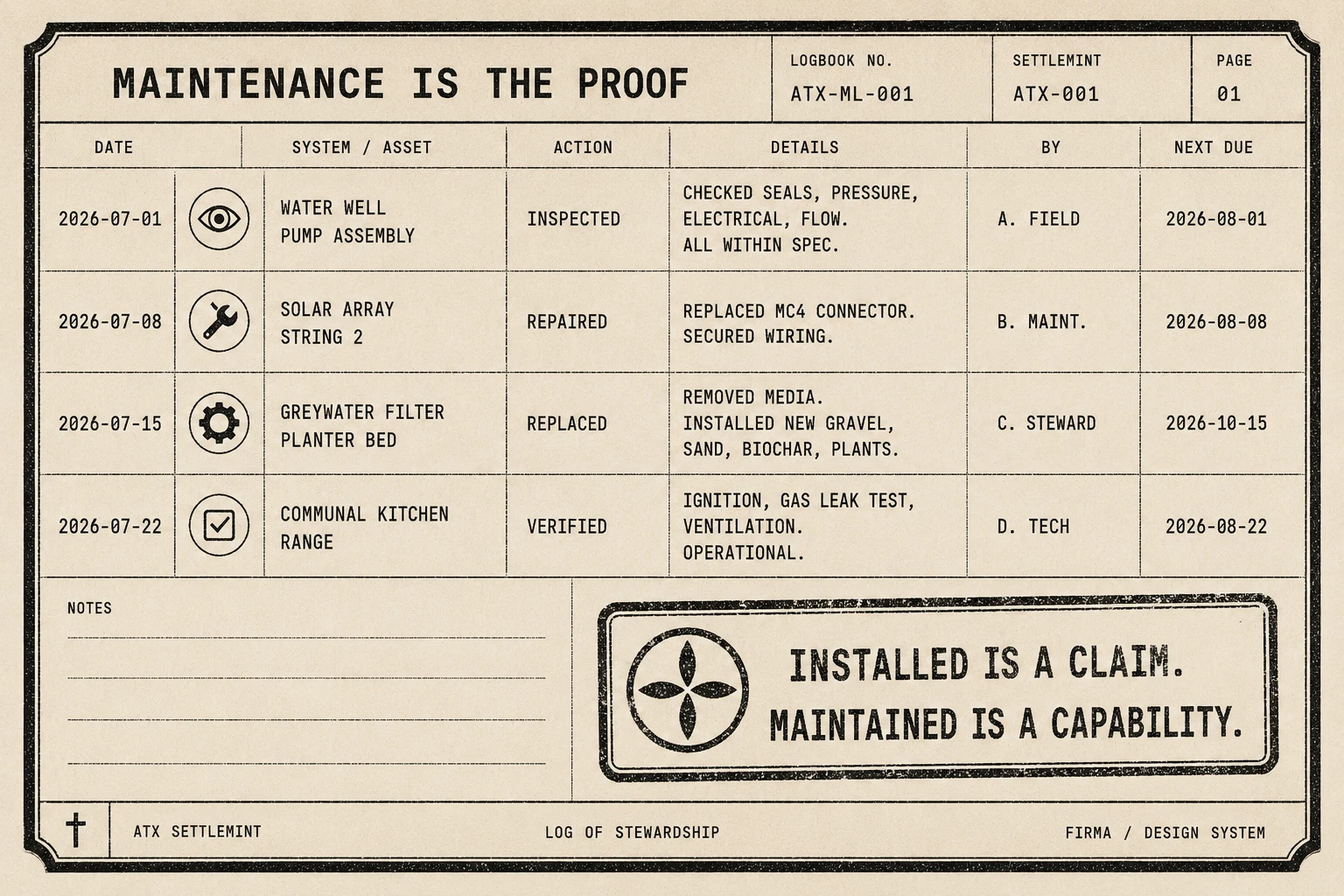
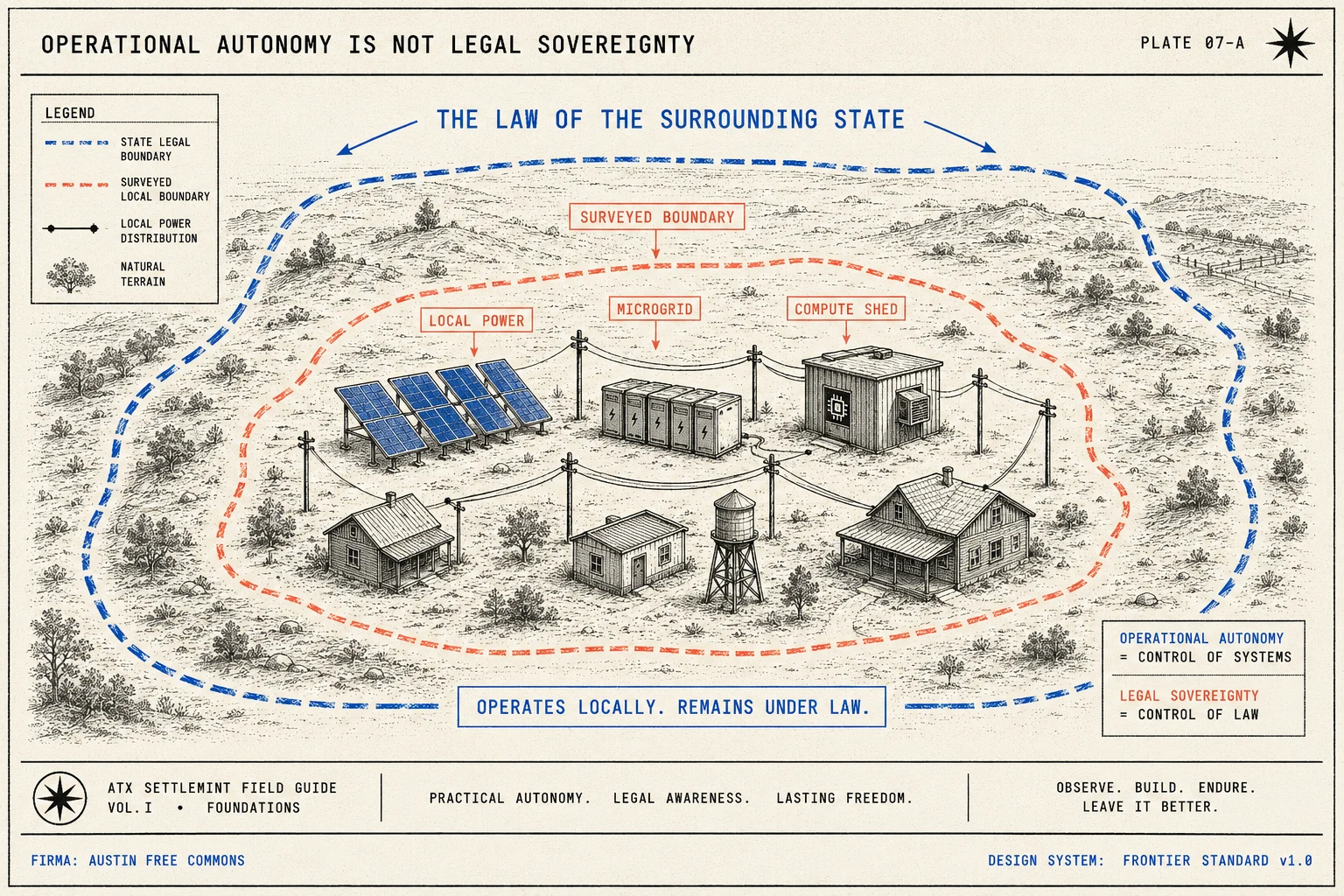
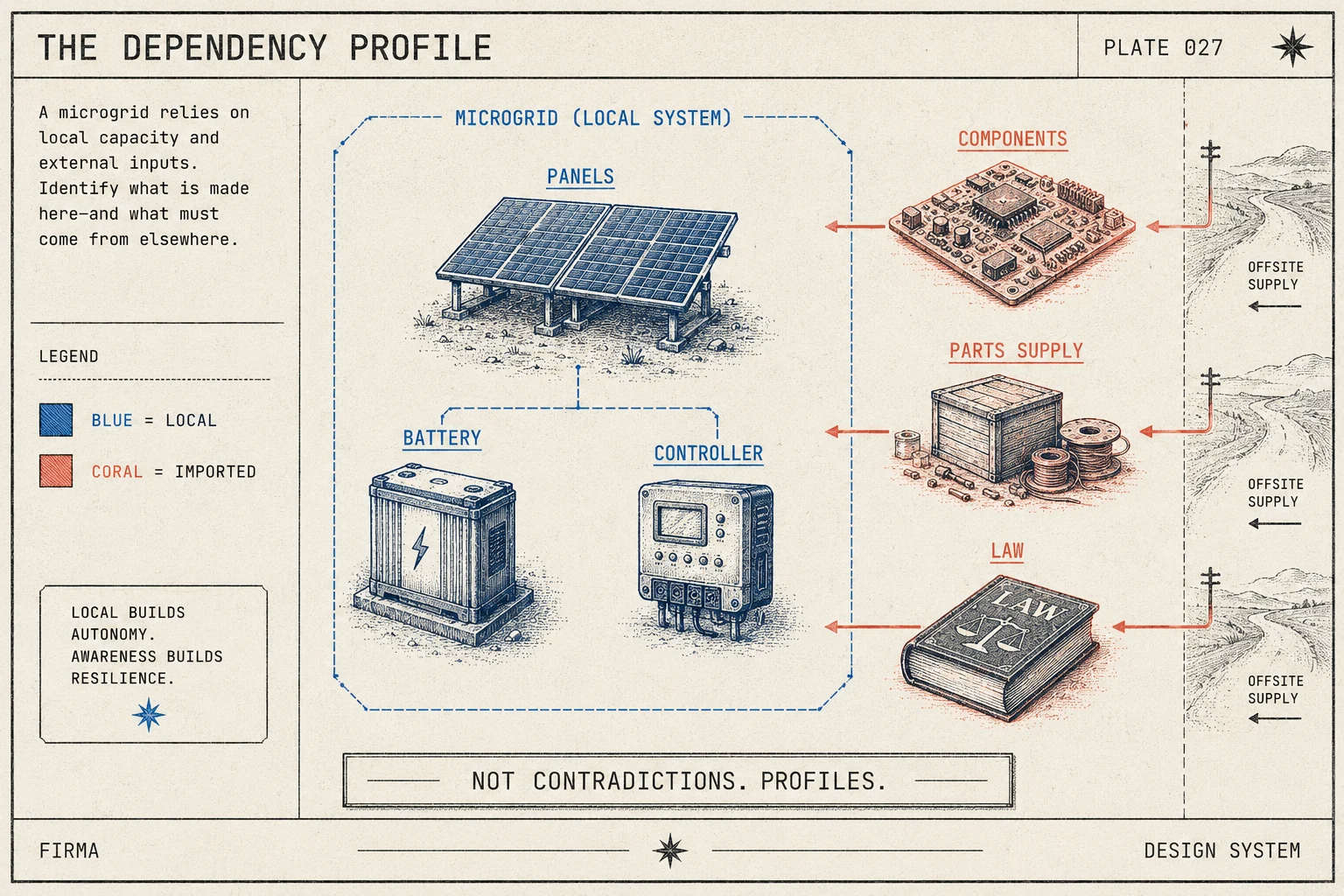
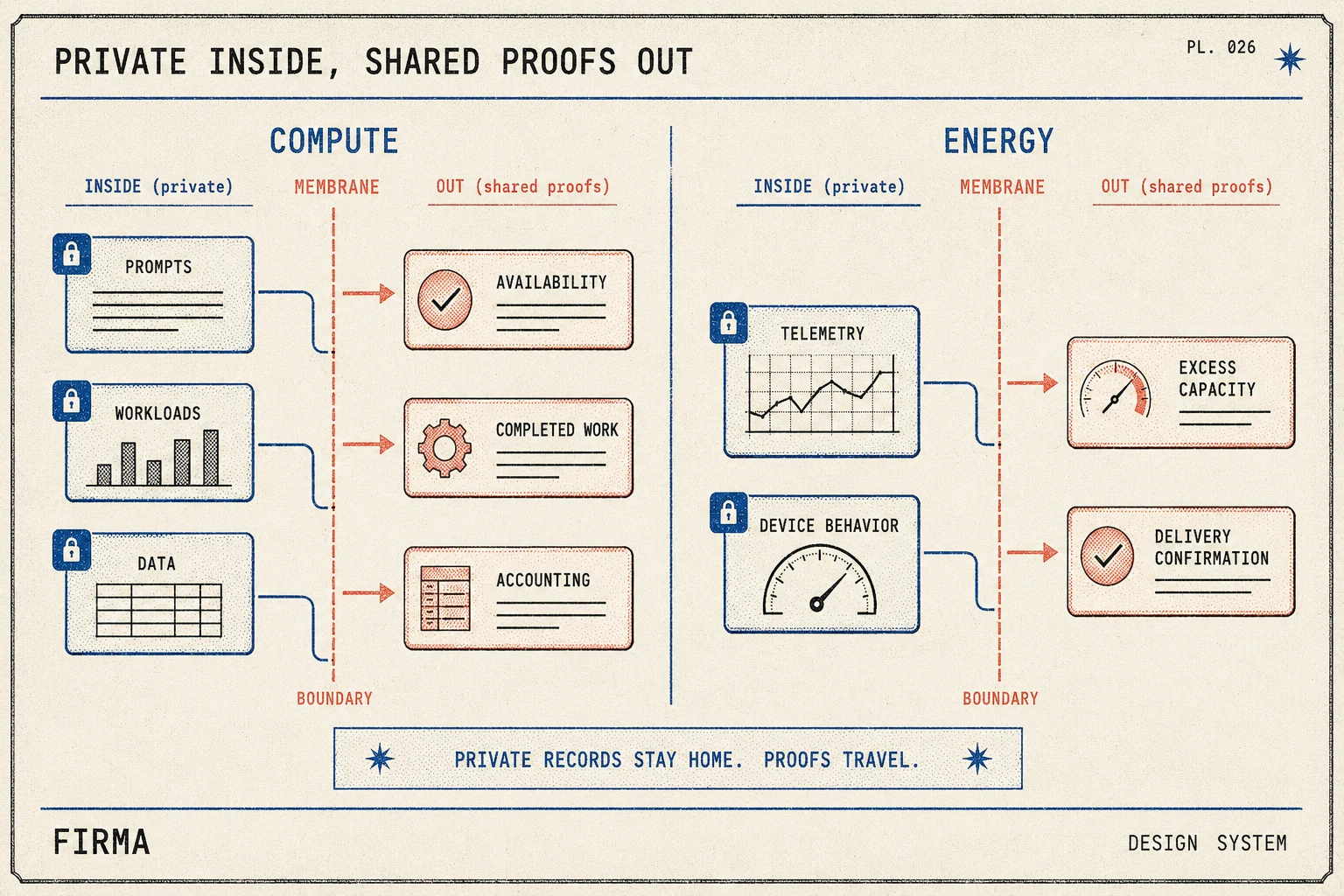
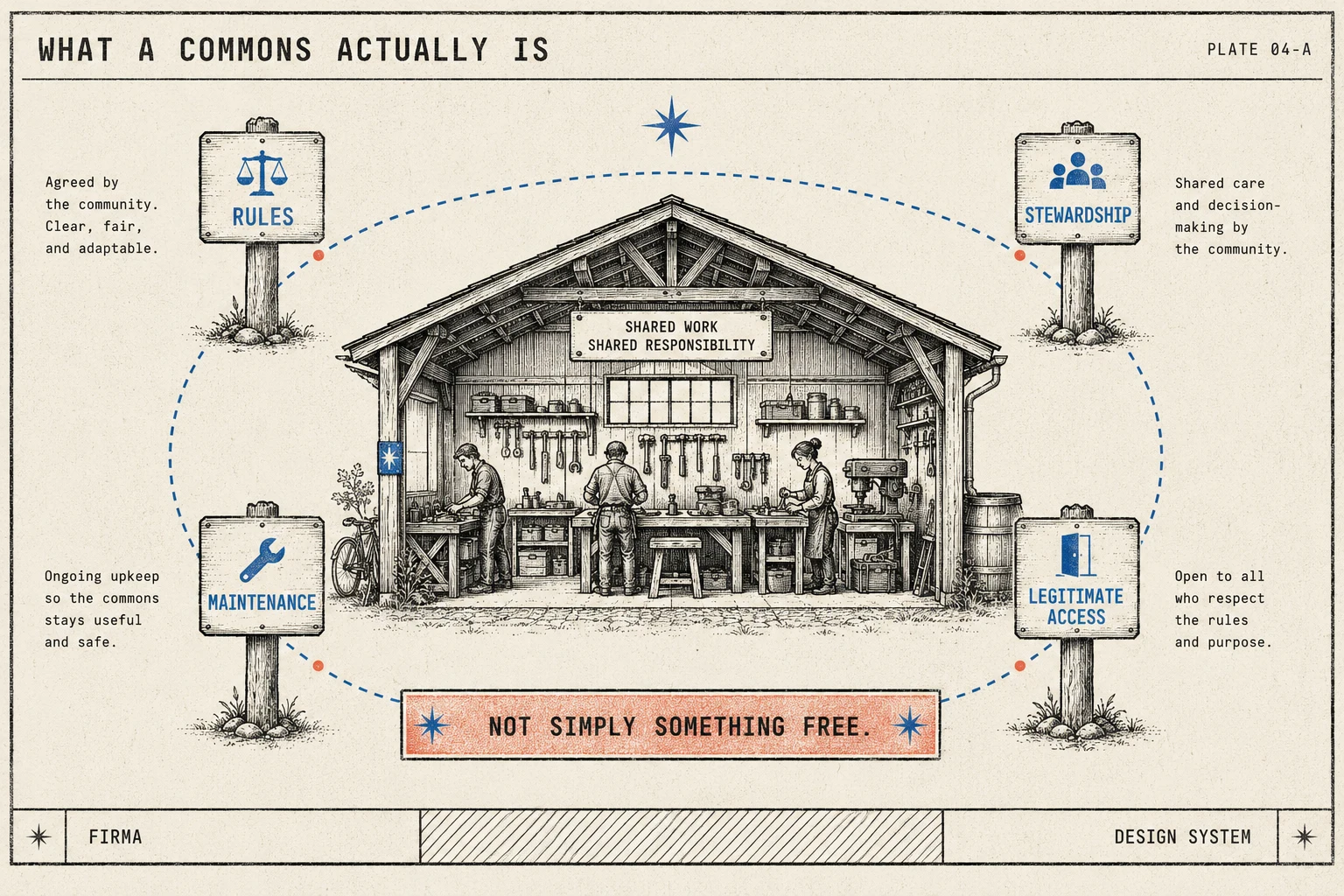
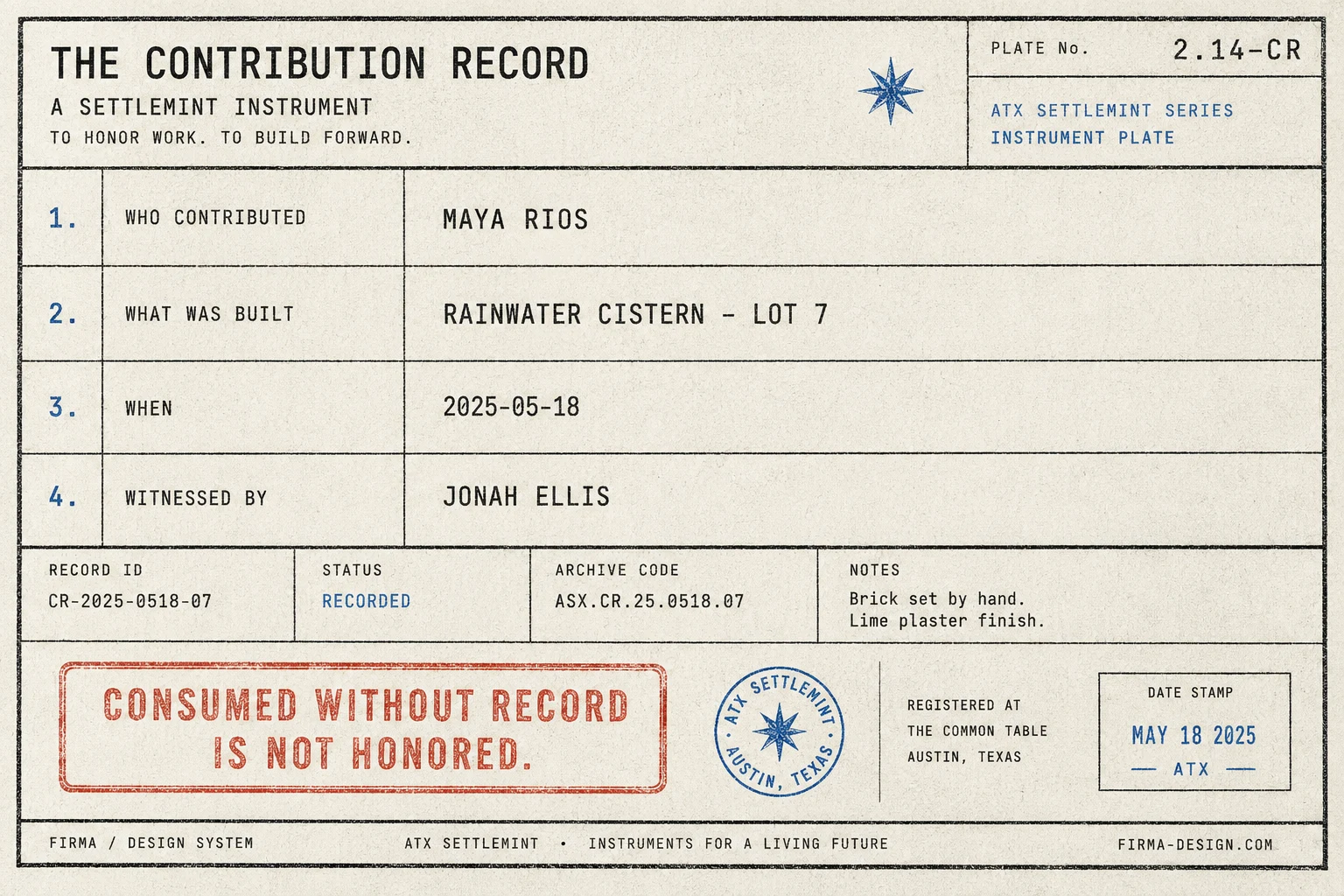
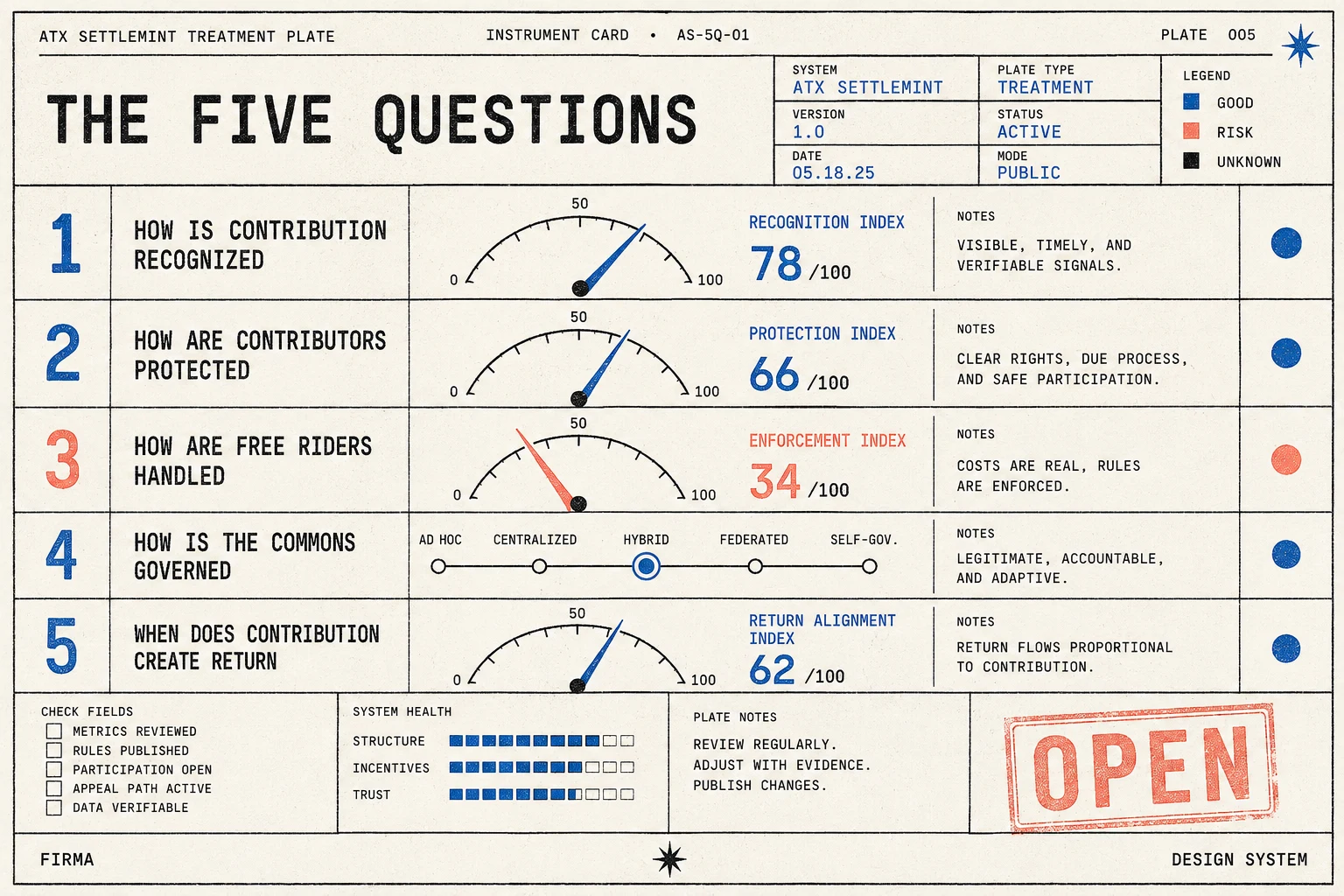
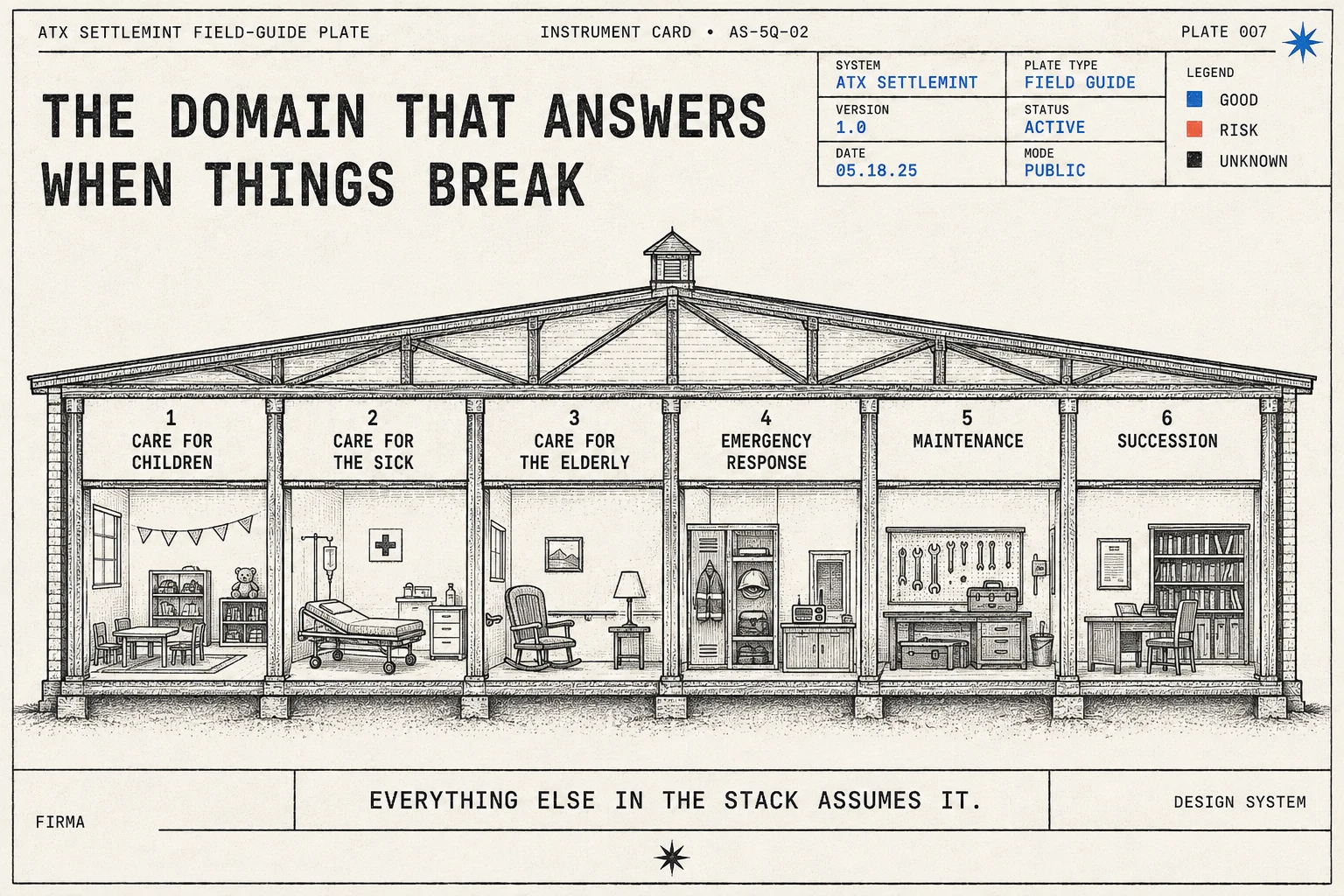
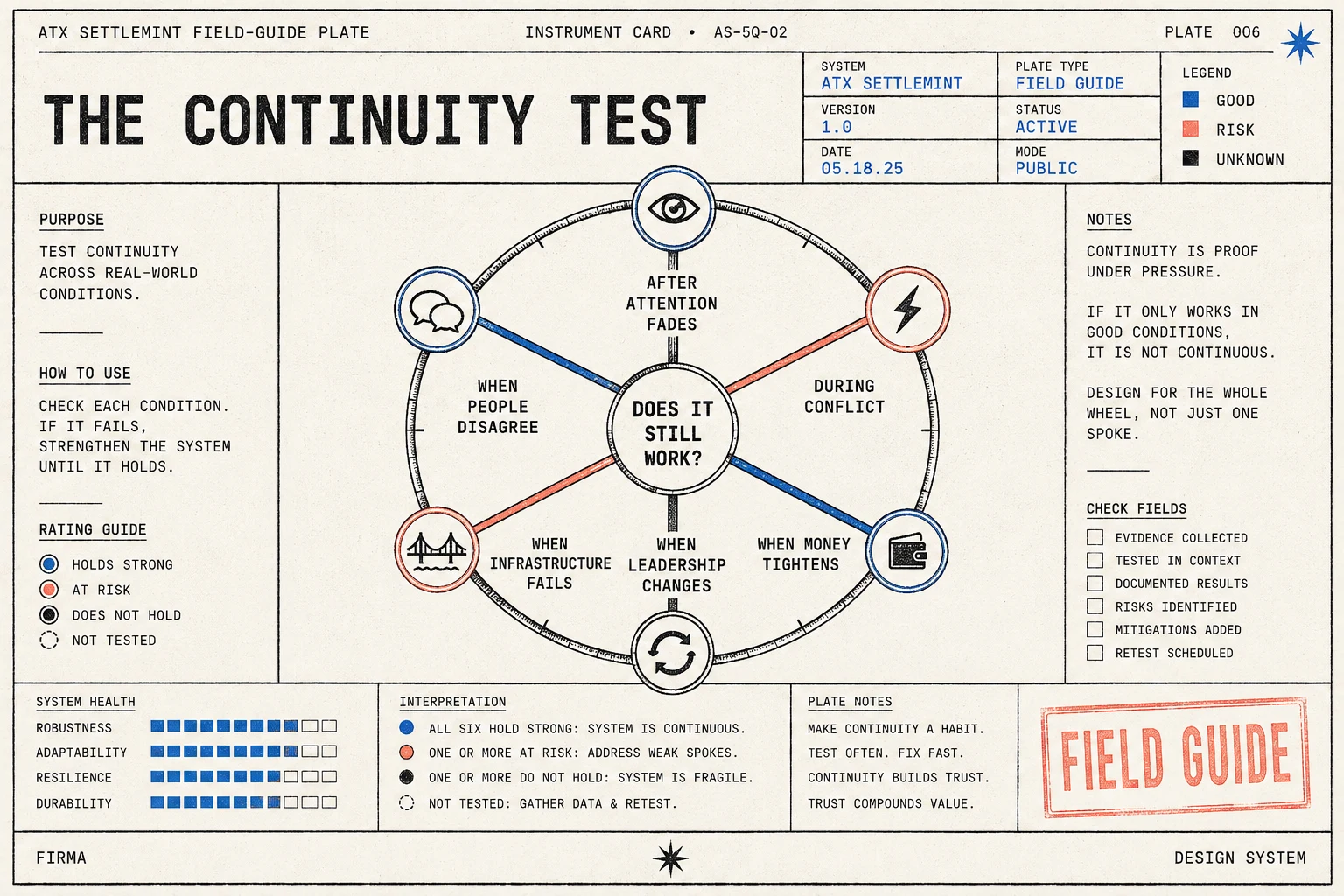
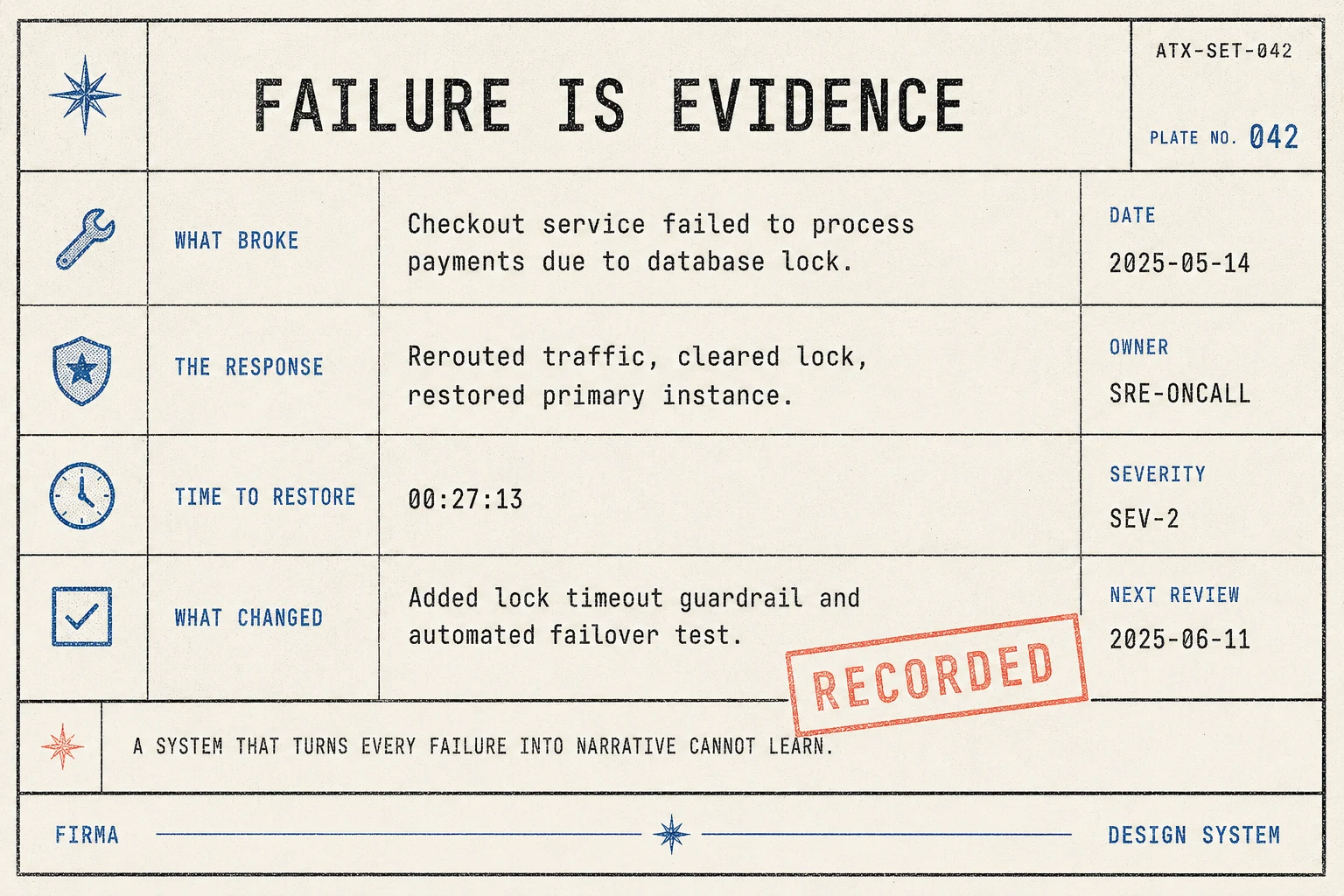
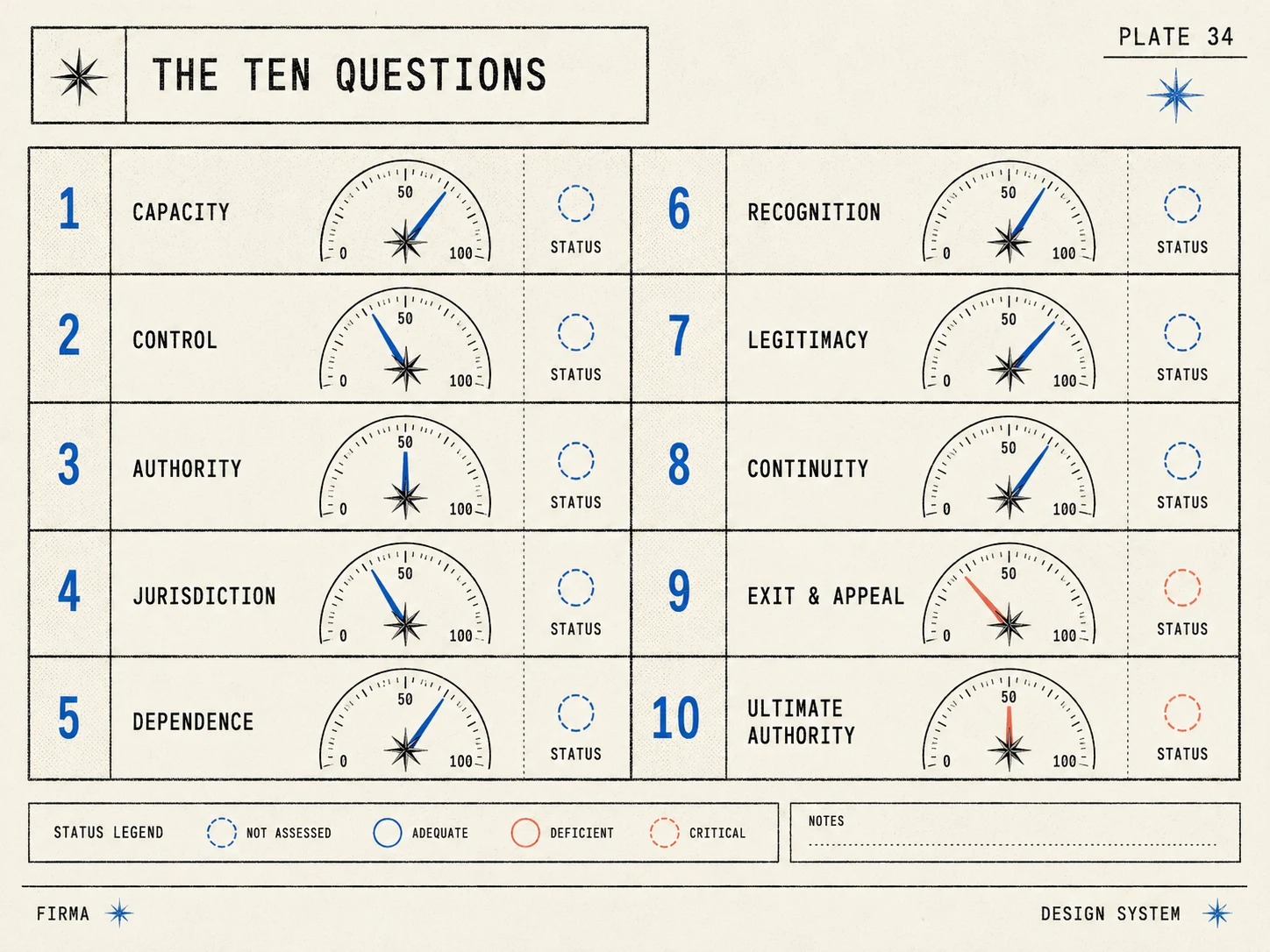
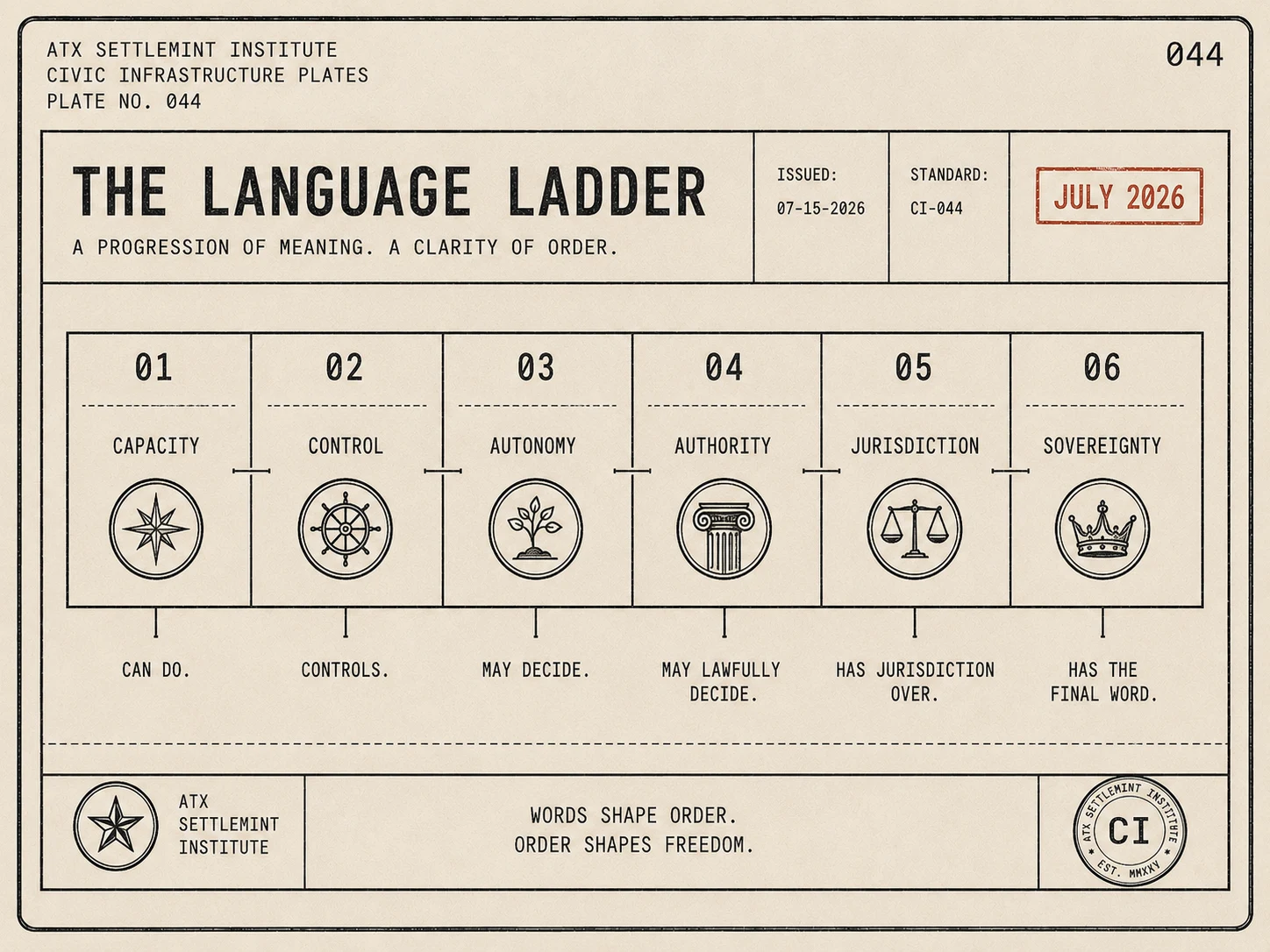
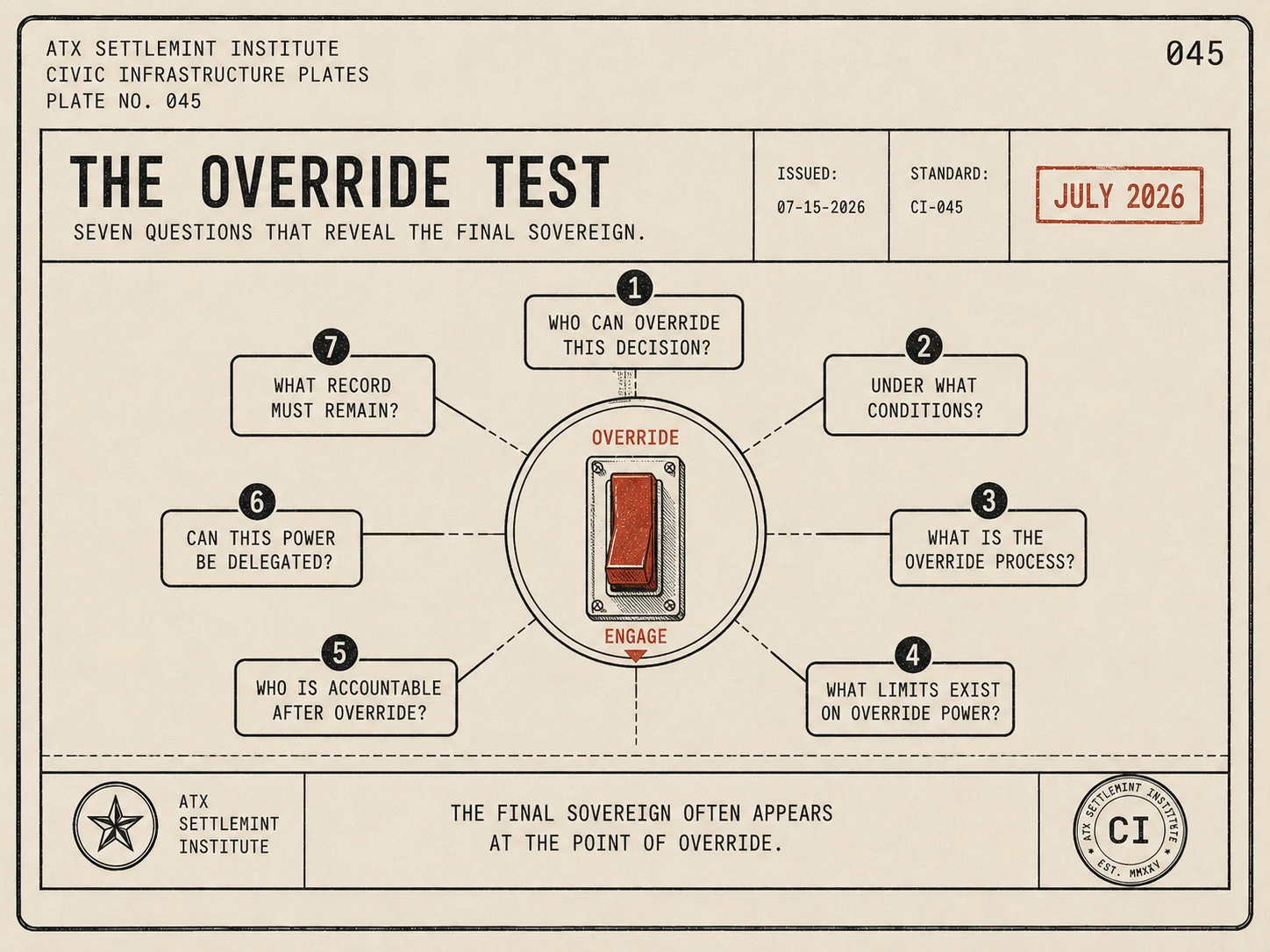
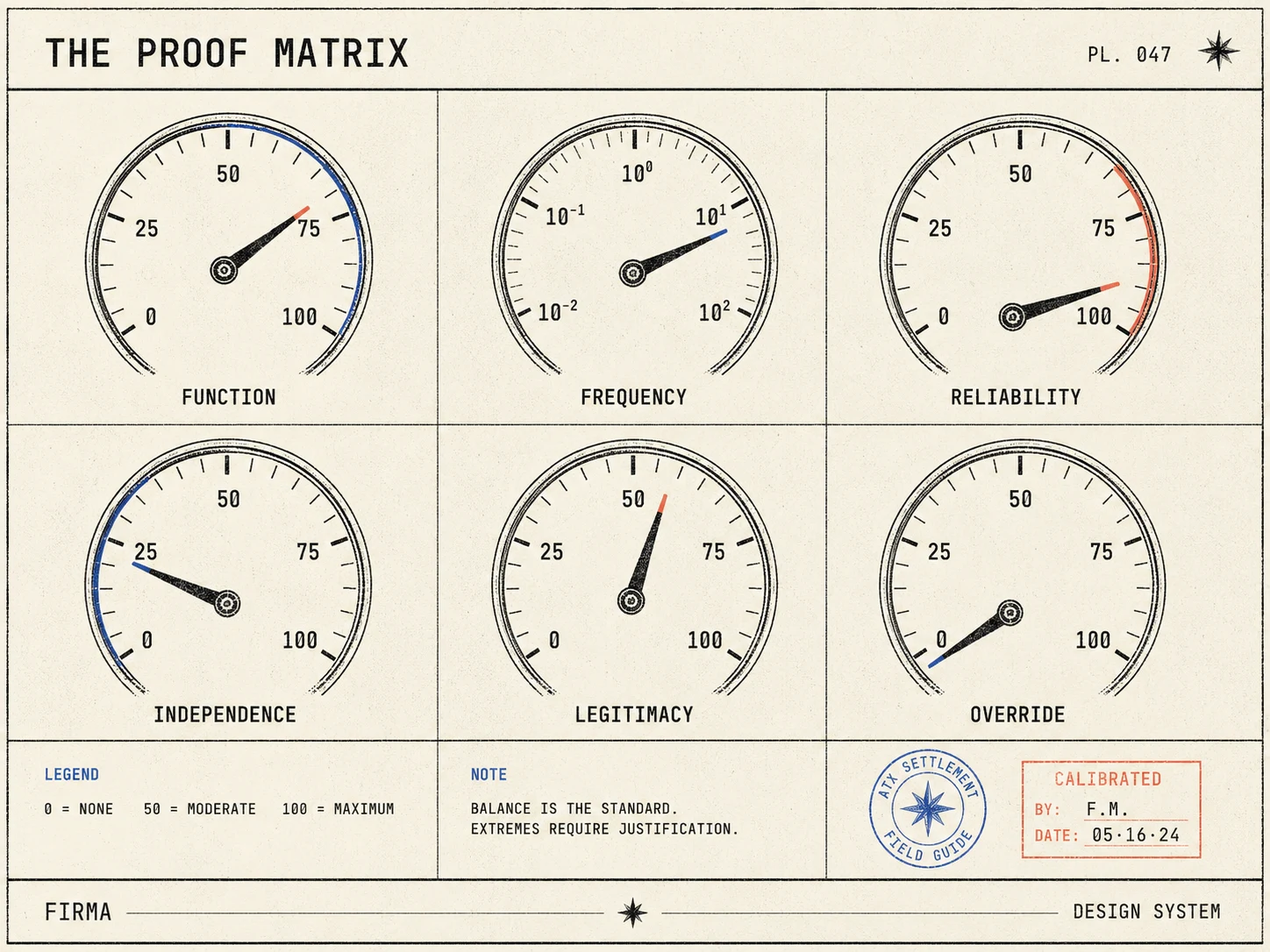
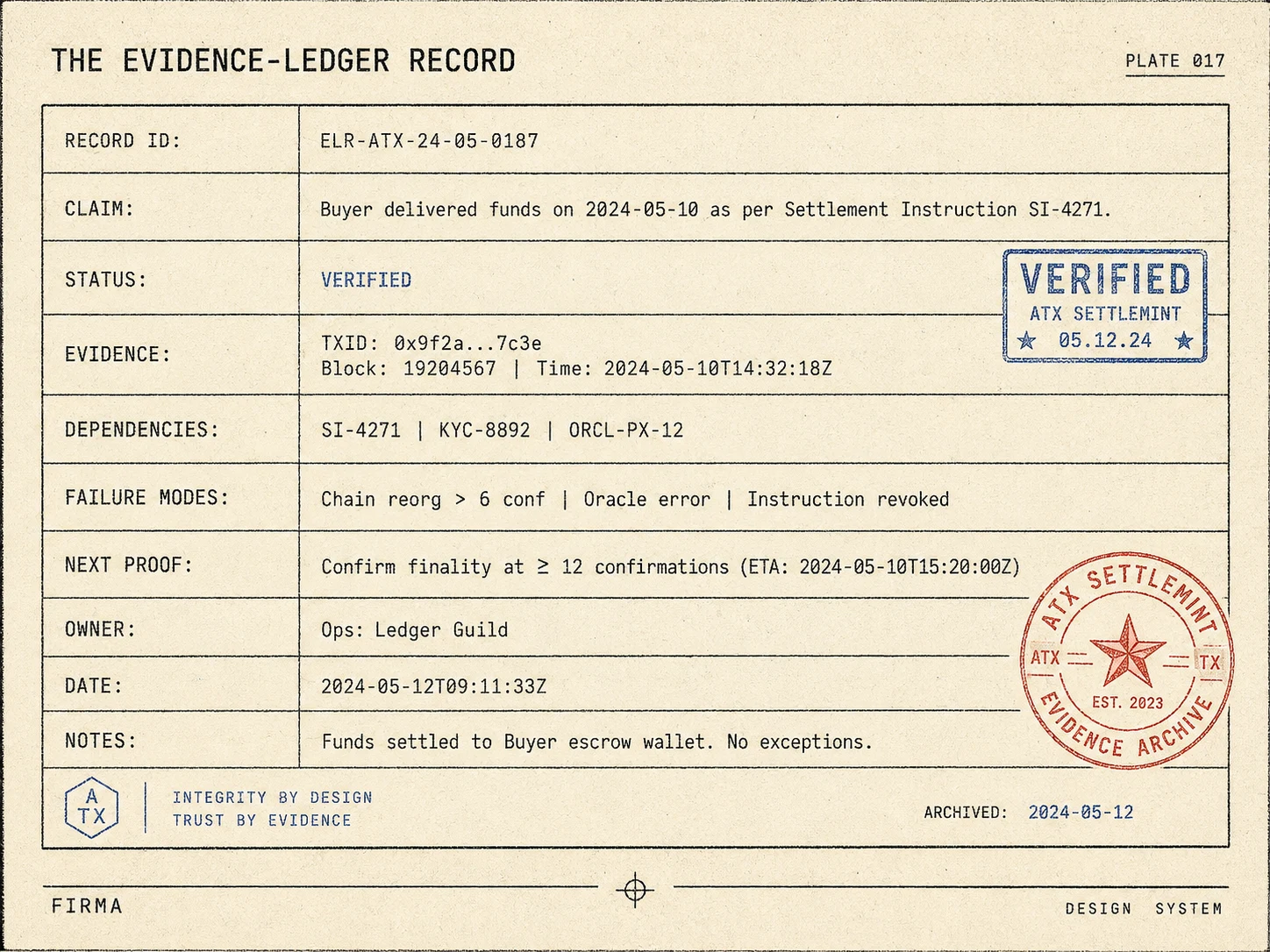
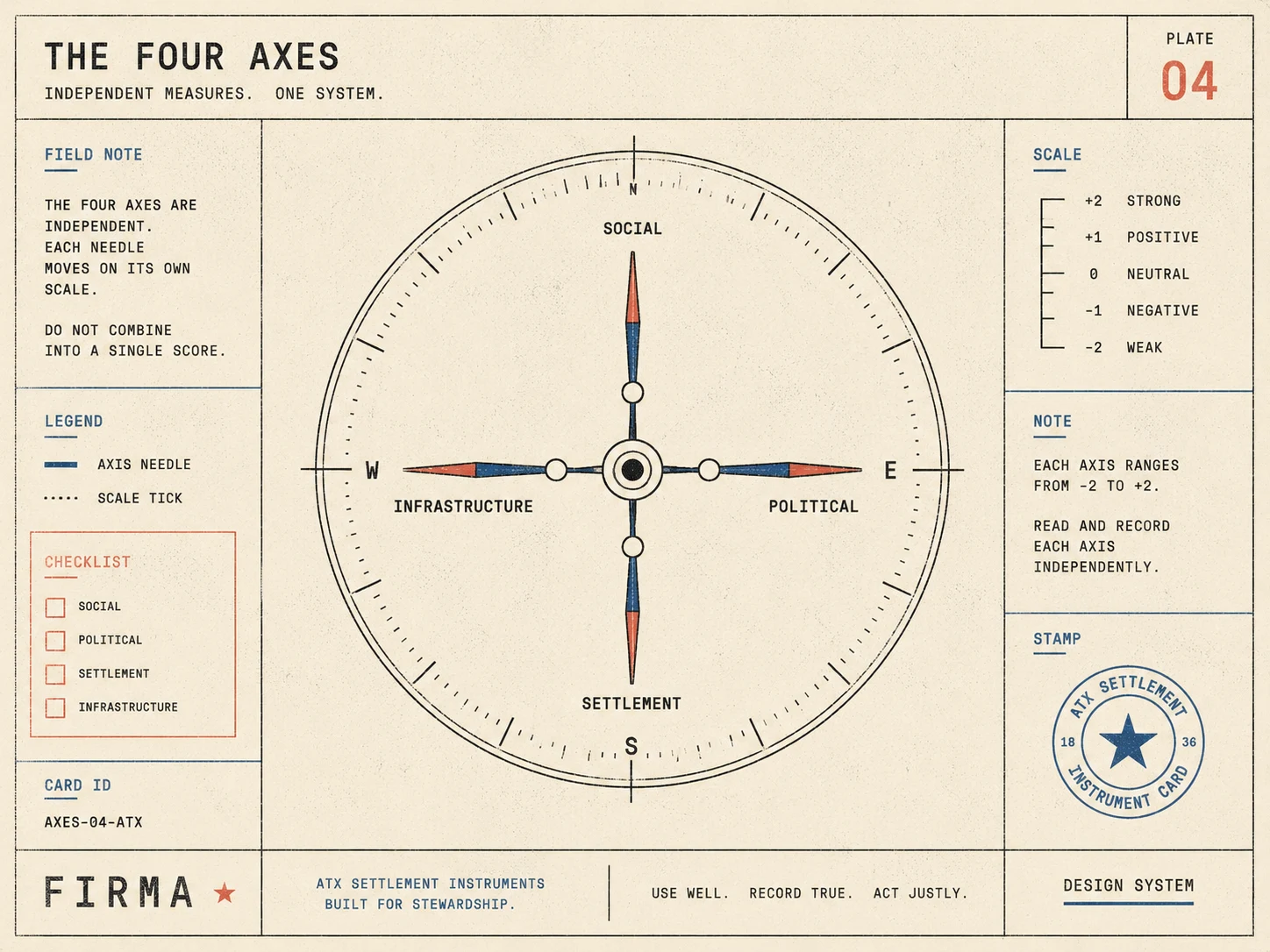
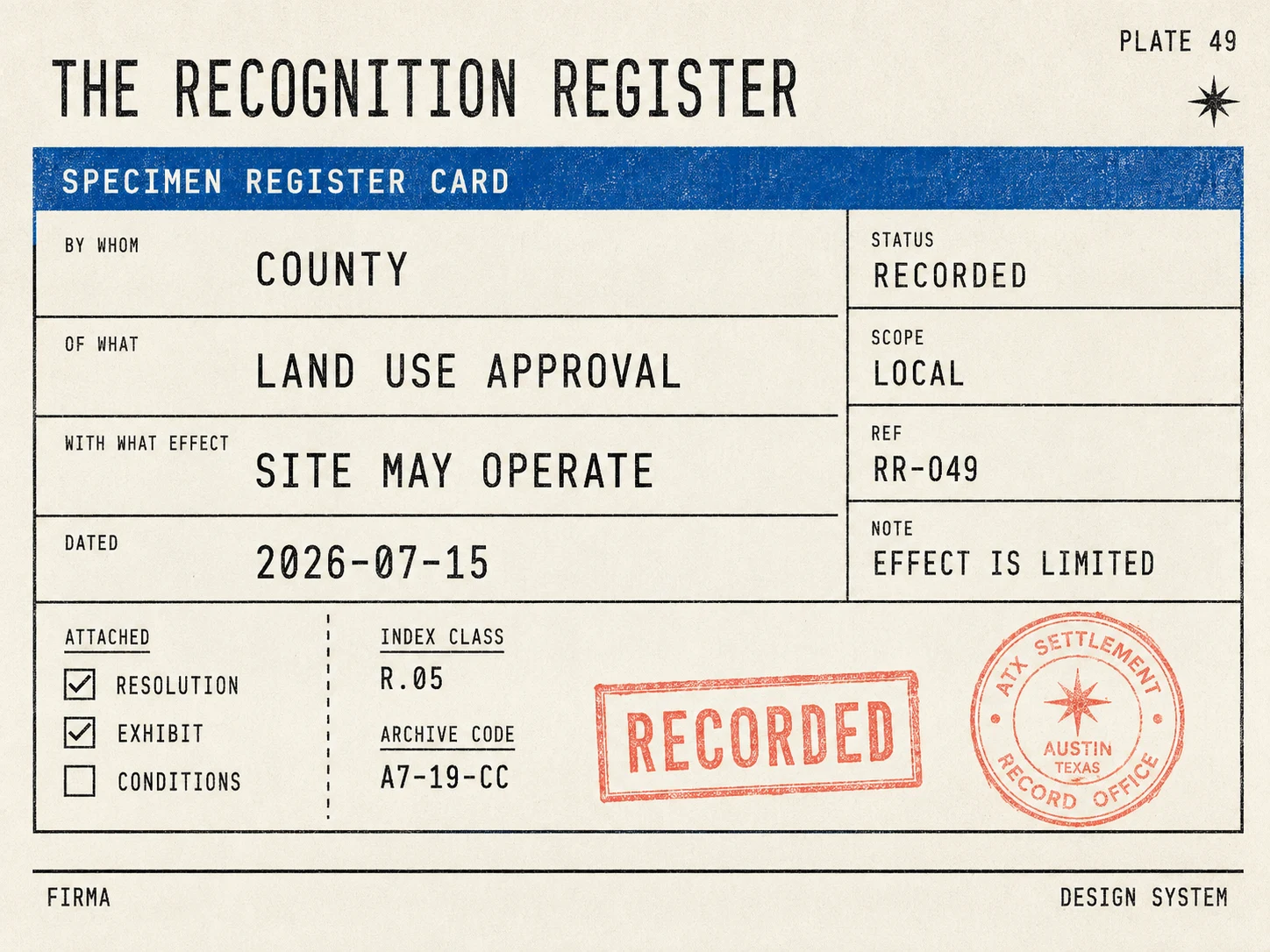
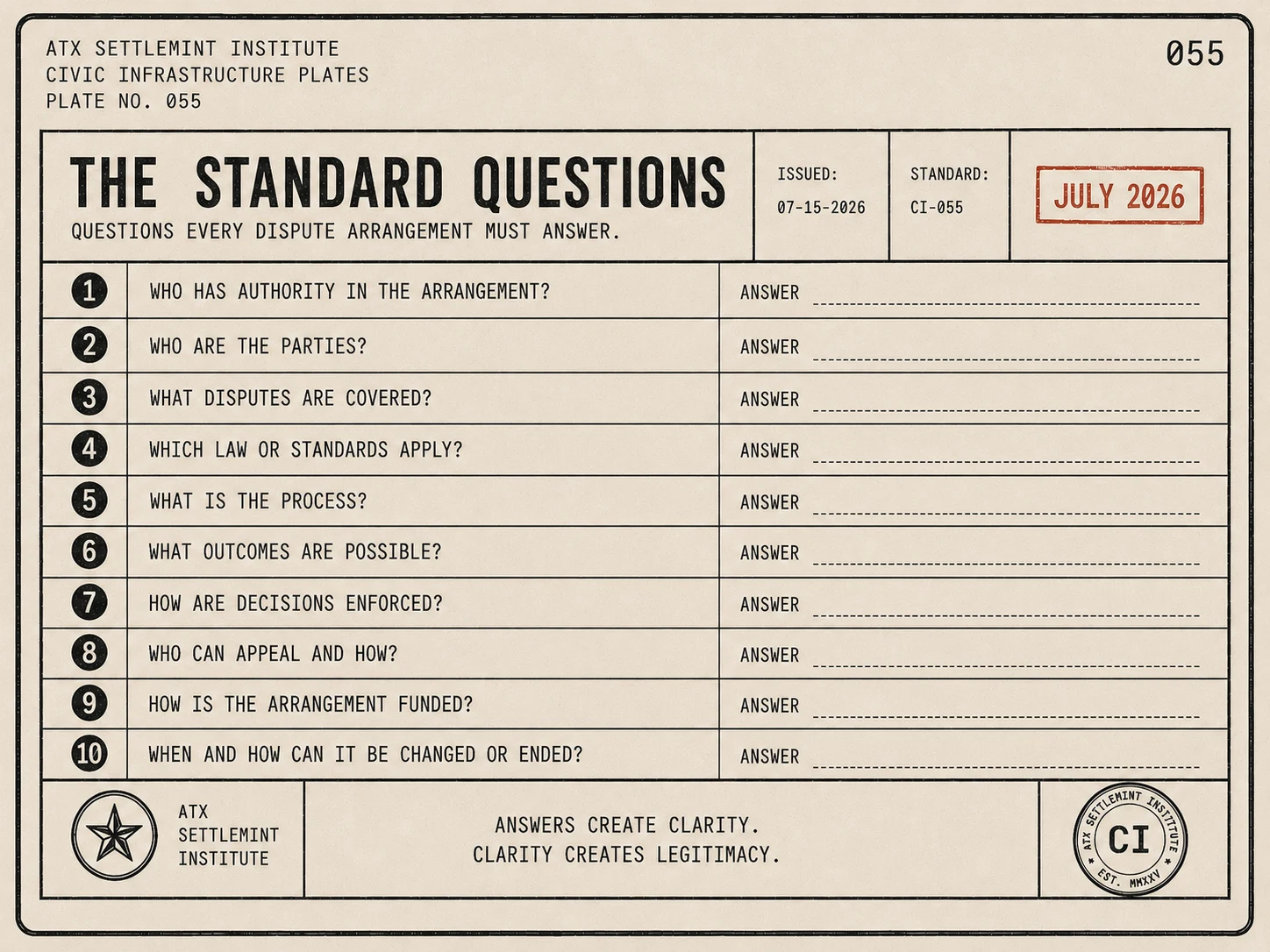
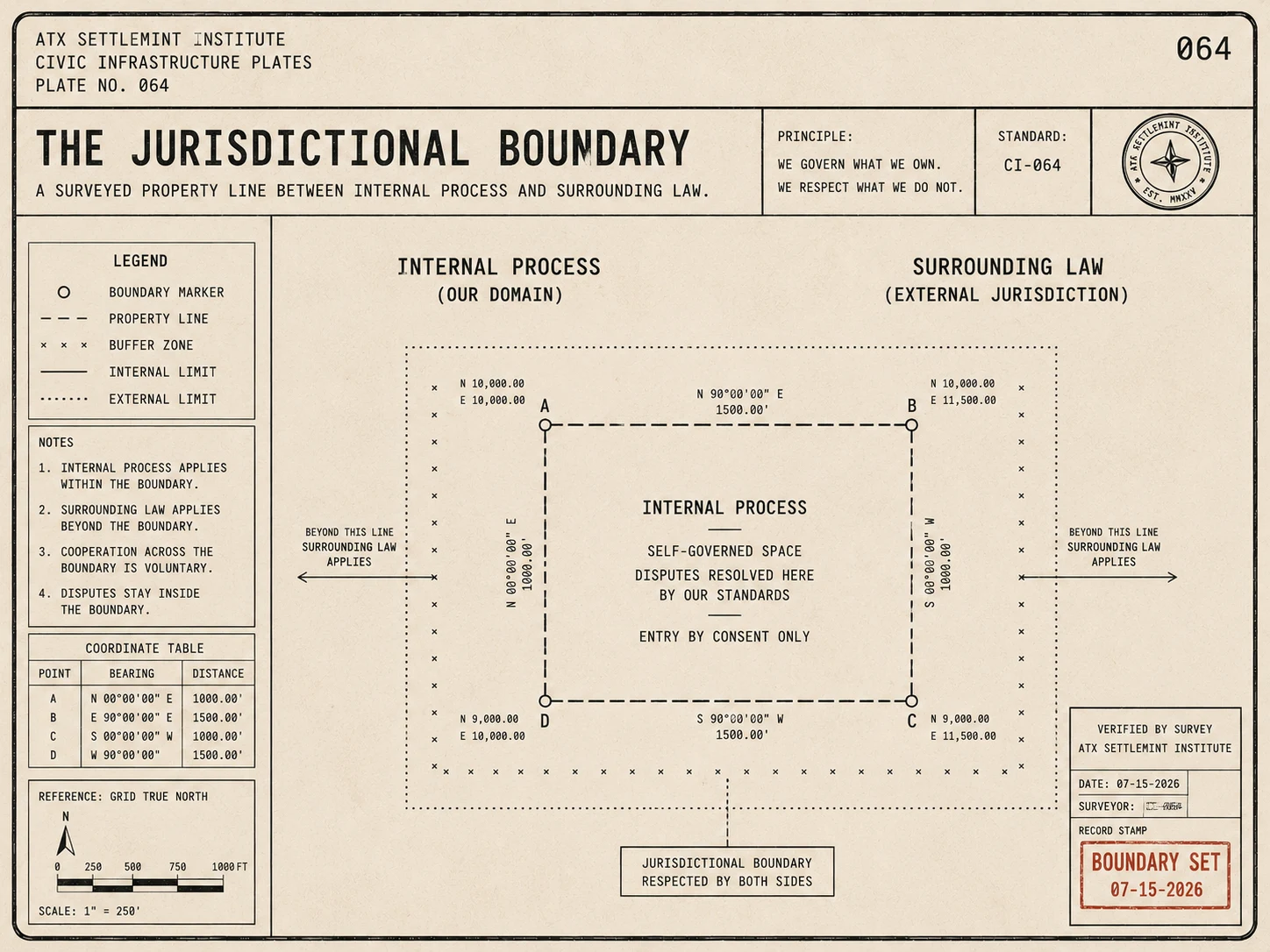
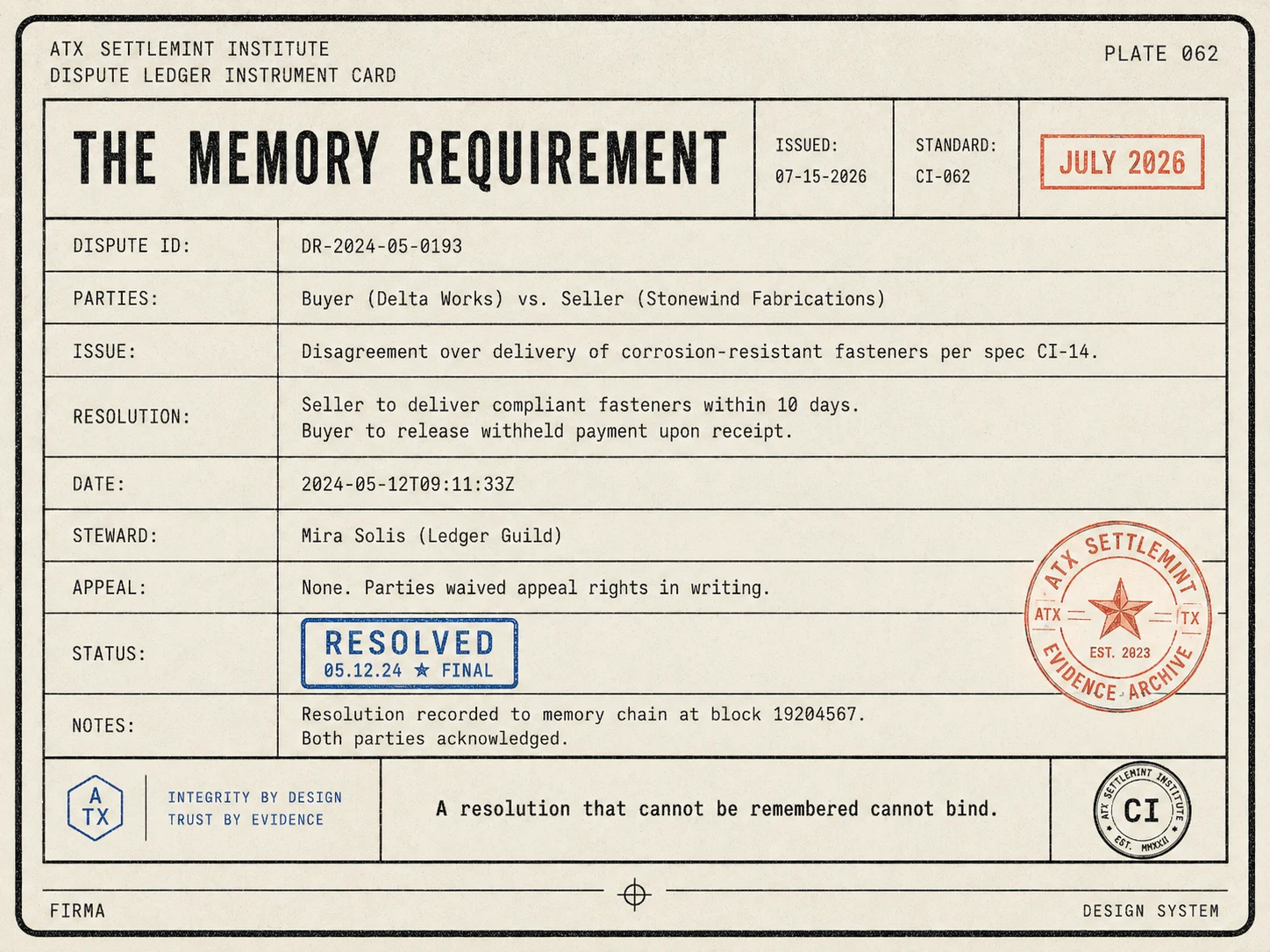
The volume seals ✴ The Handbook seal — crossed hammer and key · Vol. 02 ✴ The Architecture seal — instruments over the substrate · Vol. 03 ✴ The Standard seal — the surveyor's gauge · Vol. 04 The Firma Architecture ✴ The Realm domain — one boundary around a person and household ✴ Not a wallet, not a profile — a living sovereign space ✴ The domain persists, the devices change ✴ Realm at the edge — a household can hold the edge ✴ Substrate, not sovereign — nothing sits on a throne ✴ What crosses the boundary — proofs travel, records stay ✴ Coordinates, remembers, proves ✴ Who owns, who builds, who governs — a blank cell is a real answer ✴ The gate — five questions before a name becomes canon ✴ The governance function — decide, execute, review, correct ✴ Software assists, humans govern ✴ Contextual reputation — trusted differently by context ✴ Not a wallet, not a score — a person is not one number ✴ The bounded attestation — the proof travels, the record stays home ✴ Not a sealed room — a settlement economy needs a door to the world ✴ The organizational nervous system — it observes traces and surfaces drift ✴ Constitutional intelligence, not authority — the system informs, the bench governs ✴ Every settlement runs its own shard — federation is the anti-surveillance boundary ✴ The response levels — escalate only what deserves escalation The Sovereign Frontier ✴ The distinctions that matter, mapped — community, Settlemint, district, network state ✴ From community to nation — the scale of sovereign life ✴ The progression, plainly — from community to network state ✴ Territory need not be contiguous — a constellation of Settlemints and districts ✴ Where authority actually sits — from individual to nation ✴ Building living nations from the edge out ✴ Settlemint core layout — modular, resilient, replicable ✴ The Settlemint seal — mission arch, north star, living water ✴ A flag is a claim, not a proof ✴ Proof is function in place — building living nations from the edge out ✴ From community to nation — the scale of sovereign life ✴ A path of maturation and expansion ✴ Community vs Settlemint vs district vs network state ✴ Maturity is grown, not declared — the live oak ✴ Realm, Settlemint, district, network state — a relationship model ✴ District 001 — Central Texas ✴ A constellation of Settlemints and districts ✴ Example Settlemint regions — potential places for future Settlemints ✴ The mark of District 001 ✴ Settlemint field module S-001 — built by communities, operated with sovereignty ✴ The Settlemint operating stack — the foundational stack for sovereign life ✴ The Settlemint ecosystem — system architecture ✴ The operating stack in exploded view — the Settlemint stack CH_10 · ATX ✴ The settlement is the protocol — ATX Settlemint, Austin, Texas ✴ Firma container module ATX-001 — sovereign infrastructure ✴ The mark of the ATX Settlemint The Settlemint Handbook ✴ The Settlemint system at a glance — an overview sheet ✴ The minimum functional stack — eight domains, one working building ✴ The functional families — six strata under one settlement ✴ The dependency map — trace every critical function to its override ✴ Integration is not centralization — composes vs captures ✴ The five-question module test — judge before you join ✴ The terms that must remain distinct — what each is owed and owes ✴ Belonging at each layer — each layer claims you, each layer depends on you ✴ Contract and covenant — exchange sets terms, covenant sets relation ✴ Subsidiarity — good order sends power down, not up ✴ Claim to institution — the proof ladder ✴ A map, not one score — the honest silhouette ✴ The evidence ledger — record what holds, name what is missing ✴ The practical questions — unclear authority becomes delay ✴ The dispute path — good process turns conflict before law takes over ✴ The founder-dependence test — one figure vs labeled roles ✴ More than one origin path — six ways to the same proof threshold ✴ Before the name is claimed — the minimum viable threshold ✴ The first system is a loop — one week, repeat, improve, endure ✴ One functioning system at a time — unproven means proposed ✴ What an economy must prove — a token does not prove an economy ✴ Payment, generosity, wage — three records that must not blur ✴ Useful excess — what is excess to one node may be capacity to another ✴ Treasury discipline — trust needs rules in daylight ✴ Under existing sovereignty, cooperating deeply ✴ Recognized by whom? — the forms are not equivalent ✴ Dependencies are relationships — examine them ✴ Name each relationship precisely — what each proves and does not ✴ The settlemints are the protocol — the gathering is the infrastructure ✴ ATX — District 001, Austin, Texas, est. 2026 ✴ The four-zone access model — graduated access from core to edge ✴ The operating loop in practice — a settlement learns to keep time ✴ Genesis projects — work orders, not marketing stunts ✴ Evidence ledger — snapshot, July 2026 ✴ The threshold of "we" — audience, community, people ✴ The binding principle — what holds when convenience dissolves ✴ Households are a real unit — not a billing convenience ✴ What land proves — land proves one thing ✴ Settlement maturity — site to mature Settlemint ✴ Stewardship of place — a stewarded place is grown ✴ Habitation must be proved — occupancy vs durable presence ✴ Public, common, private — shared does not mean ungoverned ✴ Maintenance is the proof — installed is a claim ✴ Operational autonomy is not legal sovereignty ✴ The dependency profile — not contradictions, profiles ✴ Private inside, shared proofs out ✴ What a commons actually is — not simply something free ✴ The contribution record — consumed without record is not honored ✴ The five questions — answered locally, in writing ✴ The domain that answers when things break ✴ The continuity test — does it still work? ✴ Failure is evidence — recorded, not narrated The Frontier Standard ✴ The ten questions — a profile, not a slogan ✴ The language ladder — words shape order, shave freely ✴ The override test — the final sovereign often appears at the point of override ✴ The proof matrix — six dials on one panel ✴ The evidence-ledger record — filled in once, stamped ✴ The four axes — independent needles, one compass ✴ The status scale — proposed to institutional ✴ The minimum function set — below the threshold, unclaimable ✴ The legitimacy requirement — authority requires acceptance ✴ The non-equivalence rule — do not confuse contact with recognition ✴ The recognition register — by whom, of what, with what effect, dated ✴ The standard questions — every dispute arrangement must answer them ✴ The jurisdictional boundary — where internal process ends ✴ The memory requirement — a resolution that cannot be remembered cannot bind